Service Cats: Fighting or Posturing: Introducing Cats

MeOW Welcome to another Service Cat Monday. It seems like furever since our last Service Cat Monday posty, but we’re back. We have a great question ‘bout specific trainin’ methods, but we want mommy to be tip top to tackle it, so tune in next week fur that post. Today, we’re gonna focus on a topic we got via email. Let me get the business pawrt outta the way furst. The followin’ will be written in human English fur reader and translator ease. Our Service Cat Monday posts aren’t meant to be a step by step Trainin’ manual but rather Tips/Tricks/Techniques used/developed by mommy throughout her many years of animal trainin’, cats in purrticular. Training is all ‘bout Repetition and Rewards. Ifin you have any questions, you can leave them in the comment section below or send us an email. Ifin askin’ ‘bout a behavioral issue, purrlease be as specific as pawssible. And, ifin you’ve missed any of the posts in this series, you can ketch up by clickin’ the links at the end of this post. Now, let’s get to our question fur today.


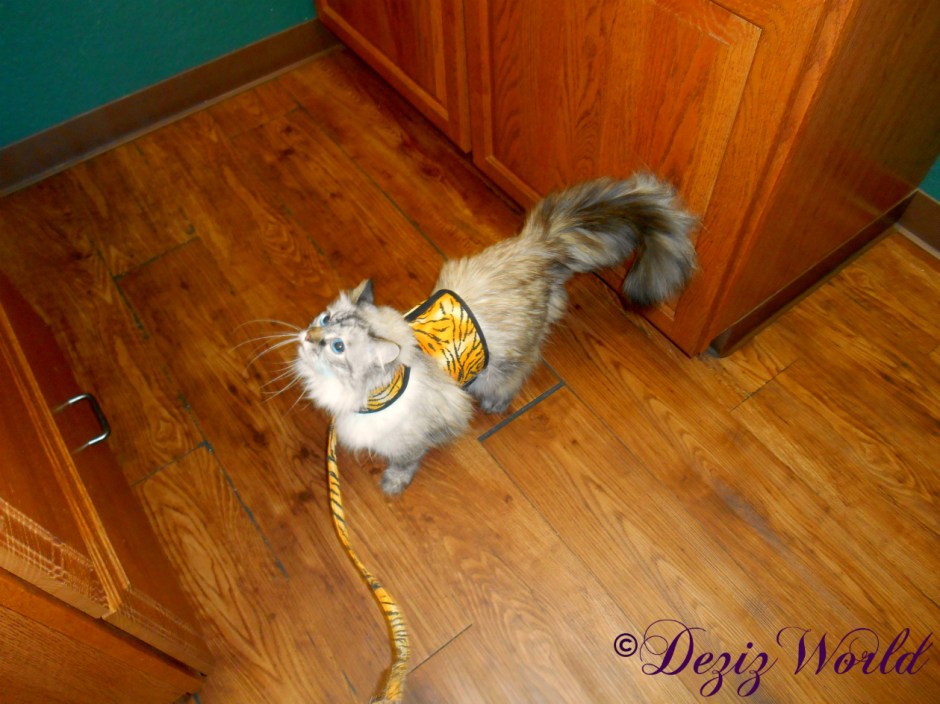
 Dezi laying in cat tree in new harness


A new reader sent us an email and asked, “When bringing a new kitty into the home with a resident cat, how do you know when there’s a fight or just growing pains? And how do you know when it’s safe to leave them alone together?” That’s a wonderful question. And we’re thrilled that you’re adopting and saving another life. We have another friend going through this very thing right now, so this is perfect timing. This post is not about Aggressive Cats. If you’re dealing with Cat Aggression, please see our post series Calming the Tiger in Your Kitty (links below). So, you’ve decided to adopt a new friend for your existing kitty. Introductions and preparation are crucial to a long and happy relationship between all of you.
 

 Dezi and Raena posture


Make sure you have all the supplies you’ll need before bringing kitty home. You’ll need a new litterbox. The rule of thumb is one per cat and one extra. Most cat owners will tell you that they can get by with less, but don’t expect to start out that way. Remember, if you set the stage for success, you’ll get success, if you set the stage for failure, you’ll fail; or your kitties will fail. The last thing you want is for your resident cat to start acting out. So, a new litterbox and a spare, new food and water bowls or a fountain. Mommy always likes to buy at least one new toy for the new kitty. Mind you, all toys are fair game for all cats in the home, it’s just that something special for the new kitty. And, it can be something as simple as the little dollar mice at the checkout. Since becoming bloggers, we’ve learned about the Yeowww nip nanna, and the wonders of kickers. If the kitty you are adopting is over the age of 5 months old and you already have a Yeowww nip nanna, PLEASE GET A 2nd banana before you bring kitty home or as quickly as you can. This will help avoid some territorial spats over the “mine” attitude. Yep, even sis Lexi and me had a few spats over the nip nanner until mommy got us a second one. Mommy also recommends some of the prime grade A treats. You know, the ones your kitty flips over?.
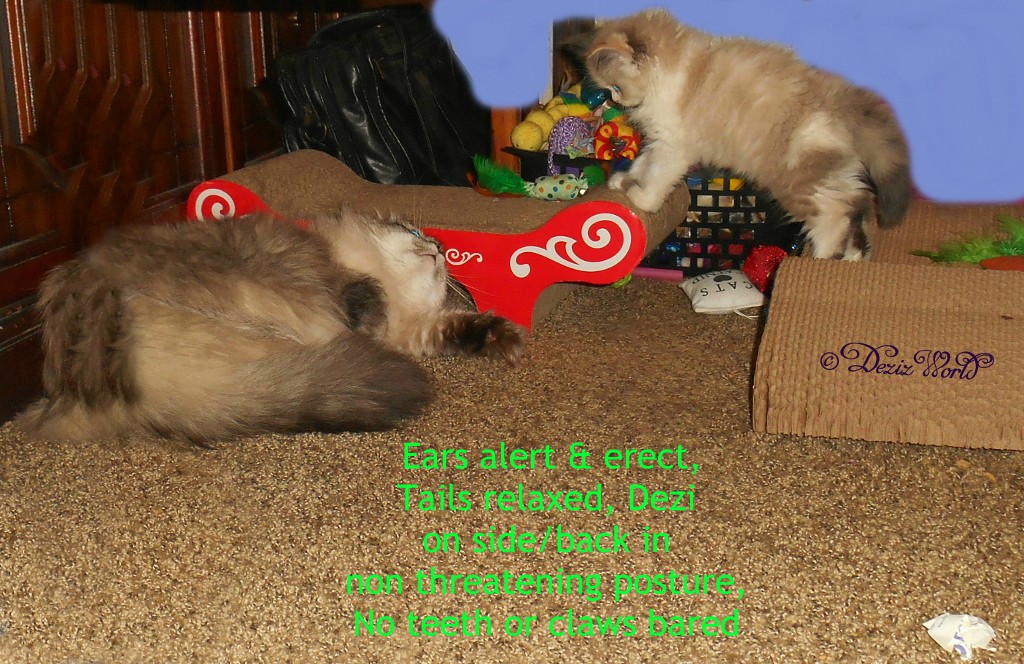
 

 Dezi lays on side while Raena play attacks


Okay, you’ve got the extra basic necessities, now what? Get everything set up in a quiet secluded area (Decompression Room) where the new kitty will spend their first couple of days. You want this transition to go as smoothly as possible and be as free of stress as it can be for the resident cat. We don’t personally have the space for kitties to have their own rooms, but we’re going to address this today as if we do. When bringing the new kitty home, mommy suggests putting kitty in the carrier on the floor for a few minutes before taking them to their “Decompression Room”. This will allow the resident kitty a moment to smell the new kitty and vice versa. There may be a hiss or growl, but don’t leave the kitty long enough for this to escalate. Take the new kitty to their room and leave the carrier door open. It will be tempting to stay and coax kitty out and spend time with them. Do Not!!! Resident kitty needs to know they are still valued and that nothing has changed. Leave new kitty to come out and explore their new room in their own time. Return to resident kitty and give them extra love and some of those Grade A treats. Trust me, we’re not fooled. We know something’s up.


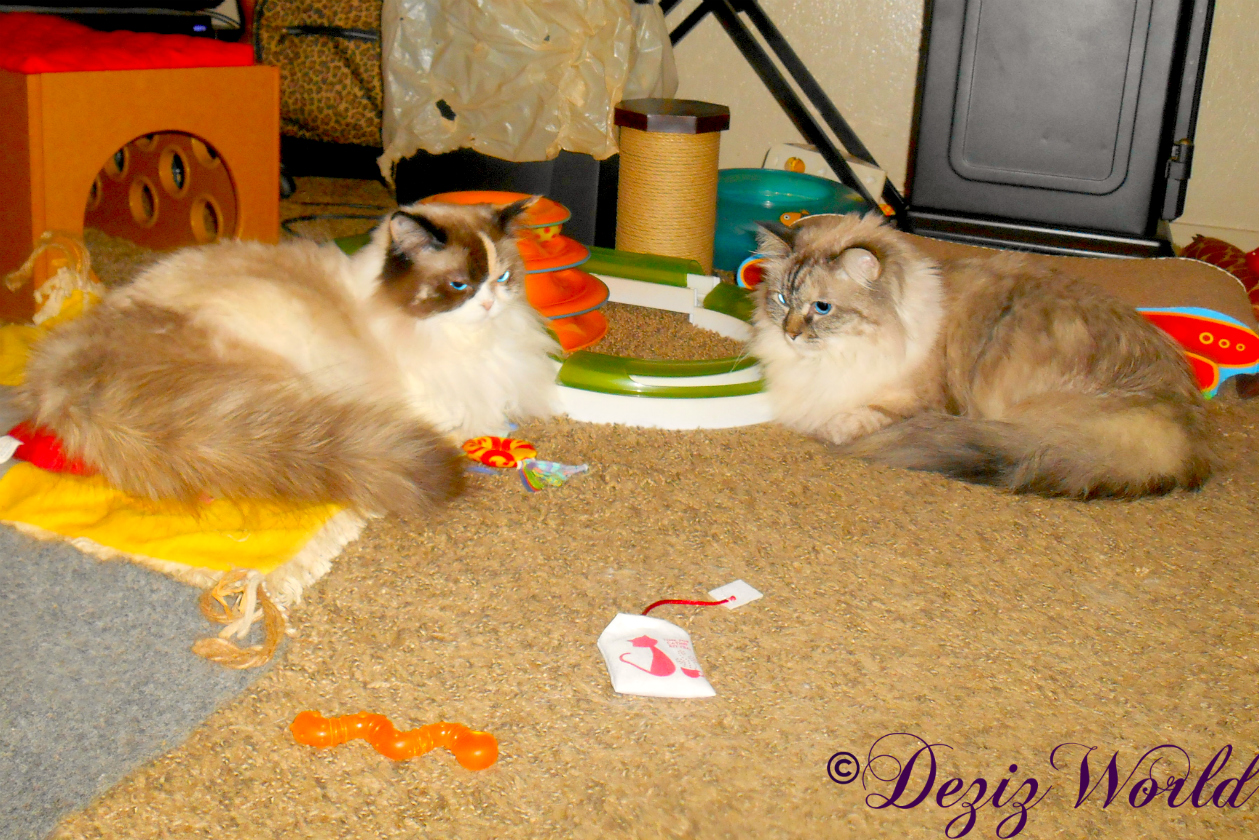
 Dezi lays and Raena sits in front of her


 Angry CatAngry Cat: Ears flat, Fur standing, arched back, tail fluffed and
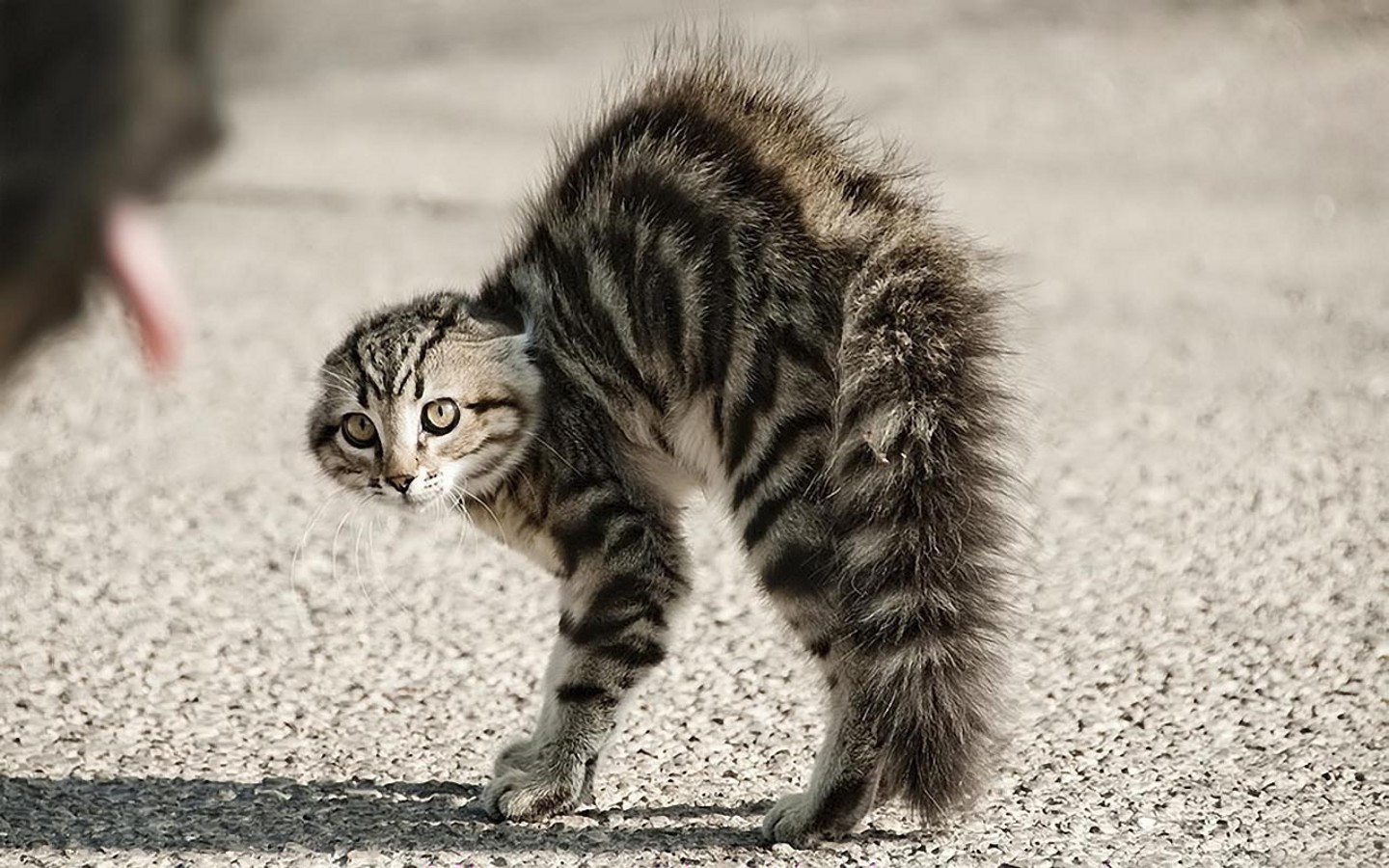
down, pinpointed pupils


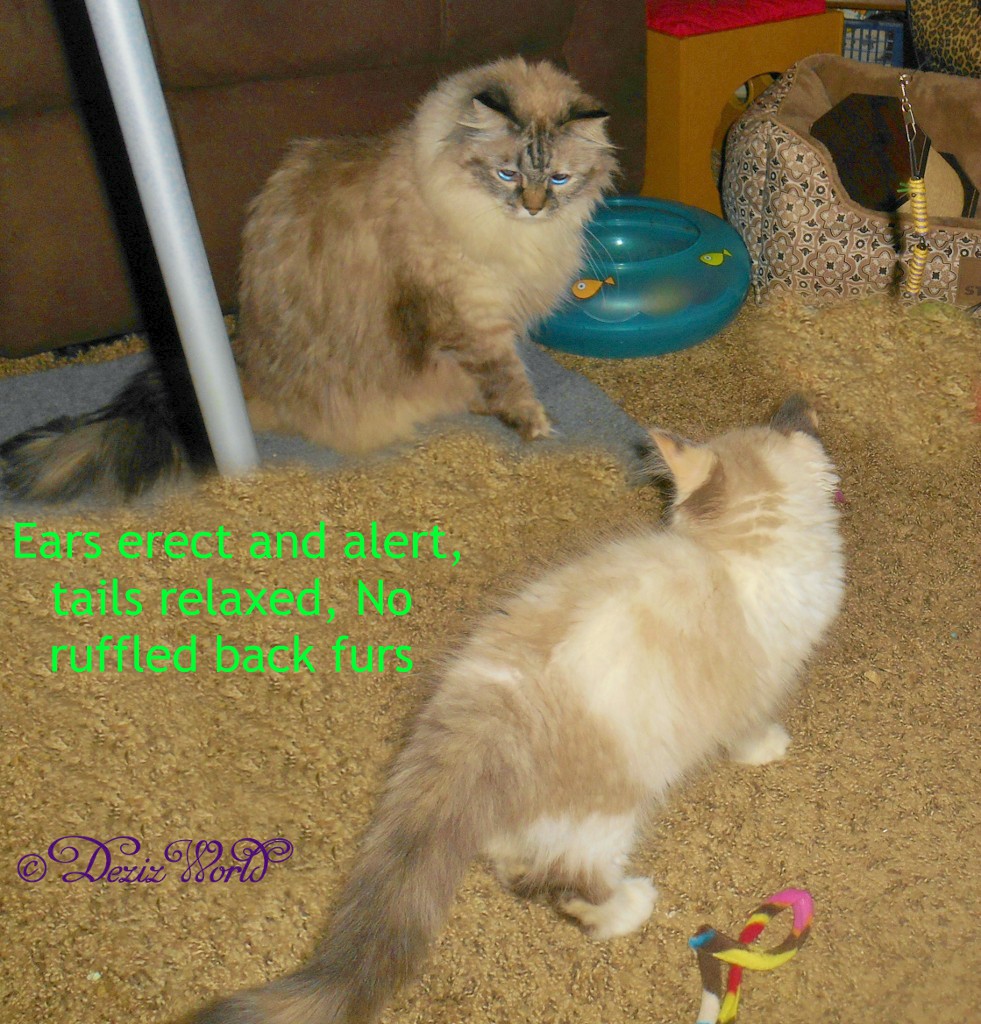
Anyways, once you’ve gotten to the introductions and kitties are spending time together in your presence, you need to start watching body language. There will likely be some hissing, growling and posturing. These are all normal. You’re looking for signs of acceptance or a fight. Try not to over react. There may be a tussle or ten. This is also perfectly normal. You know your resident kitty, so watch them especially, for signs of stress. Curious cats will approach one another with ears alert. If kitty’s ears are flat and the back fur is standing erect, Do Not Panic, but be alert, especially if both kitties are displaying this behavior. This is the tricky part. Mommy says, in your mind, you must be thinking positively. Believe this will go well. Expect your kitties to get along. Do Not let them see you sweat. (MOL)  An exchange of swats is normal. As long as the claws are retracted, you have nothing to worry about. If kitty’s ears are flat, fur is standing on end and they begin a low rumbling growl and/or bob/lower their head or turn it slightly, remove new kitty immediately and try again later over some of those Grade A treats or a favorite toy.
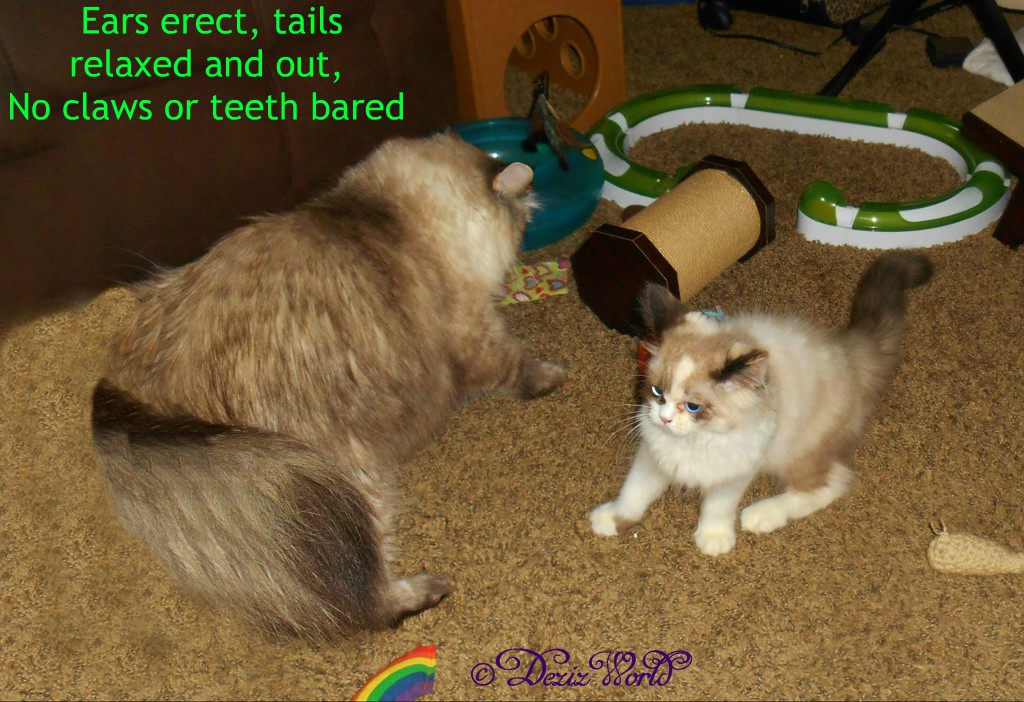
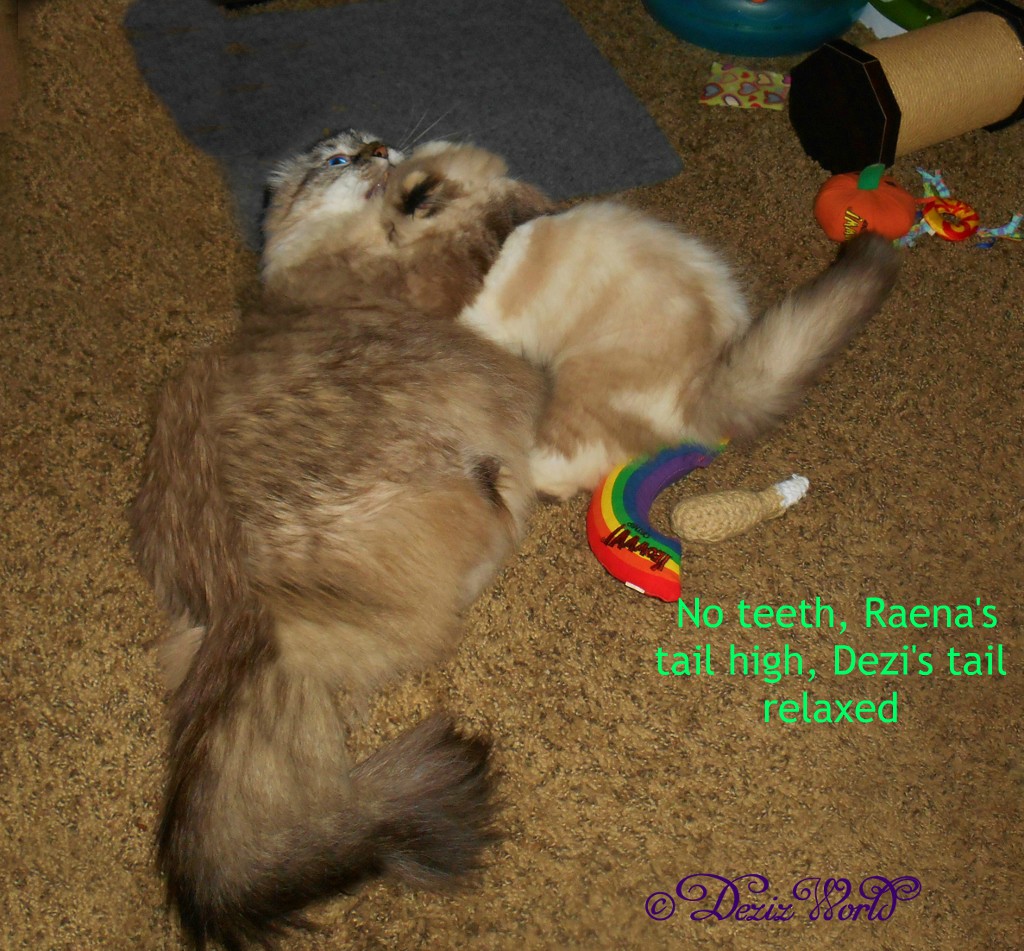
 

 Dezi and Raena circle each other


Dezi n Raena tussle


As long as both kitties can get up/away from the other and they’re not greeting each other with ruffled furs and flat ears, it’s safe to leave them together. Now, we don’t mean after 5 minutes, but rather after several days of no knock down drag out fights. Remember, cats rolling around together is NOT a fight. Cats rolling around together with ears flattened, fur erect, claws out and teeth bared and gnashing at the neck of the other…That’s a fight. More often than not, these meetings will go successfully. Especially if you’ve set kitty up for success and expected it. We know that sounds silly, but remember, kitties feel your emotions and act accordingly. As long as you can remain calm, positive and expecting the best, things should go well.
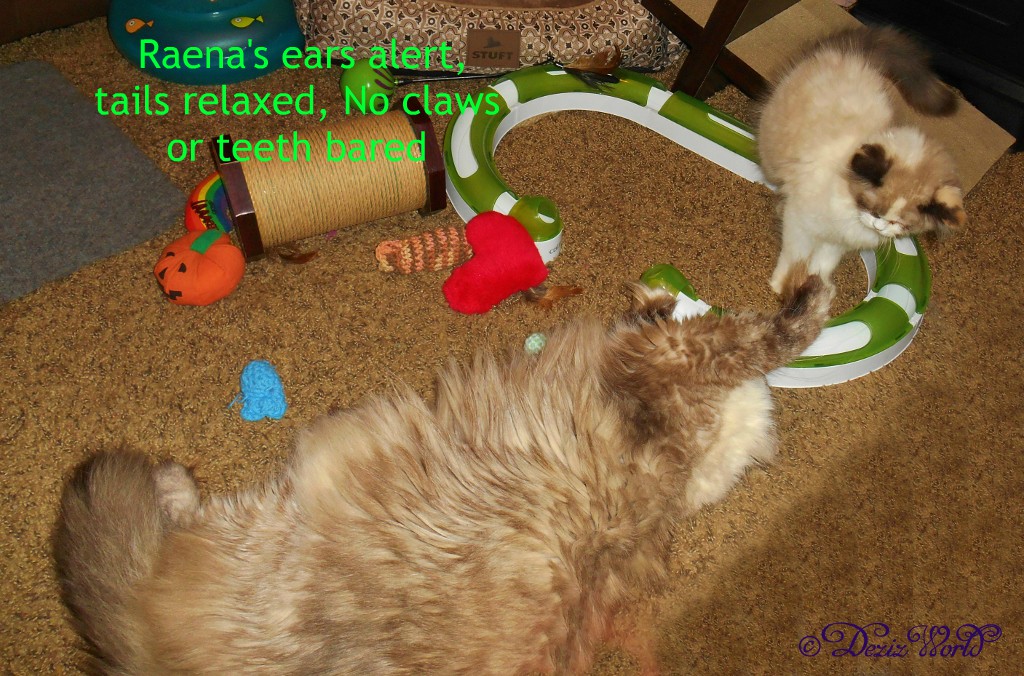
 

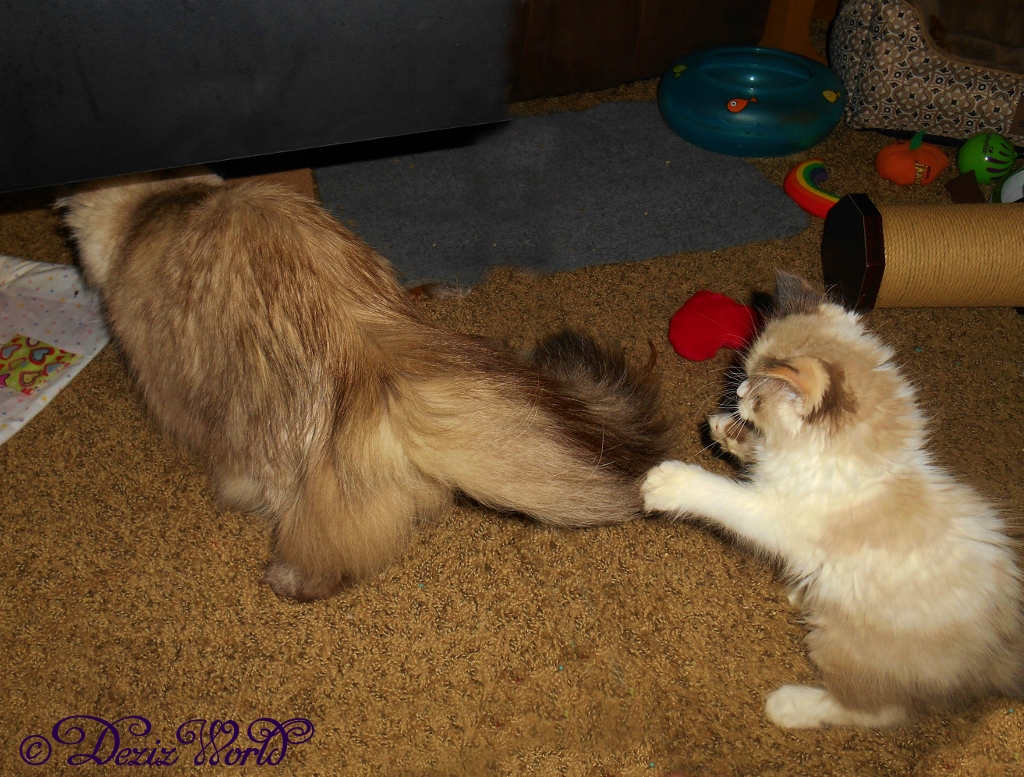
Dezi and Raena play fight


 Dezi and Raena paws out for swats


Cats learn the boundaries from their mothers and littermates/housemates, so expect some biting and swatting. That’s natural and just your kitties way of determining rank. And remember, during this entire process, be sure to give resident kitty lots of extra love and reassurance. We know how easy it is to want to spend time with the new kitty, especially if new kitty is a kitten. Don’t!!! Resident kitty needs to know they’re not being replaced. Try to remember, that resident kitty’s life should be as stress free and normal as possible throughout this whole process. And lastly, sit back and enjoy, you now have two furry purrers to warm your lap and rule your house.
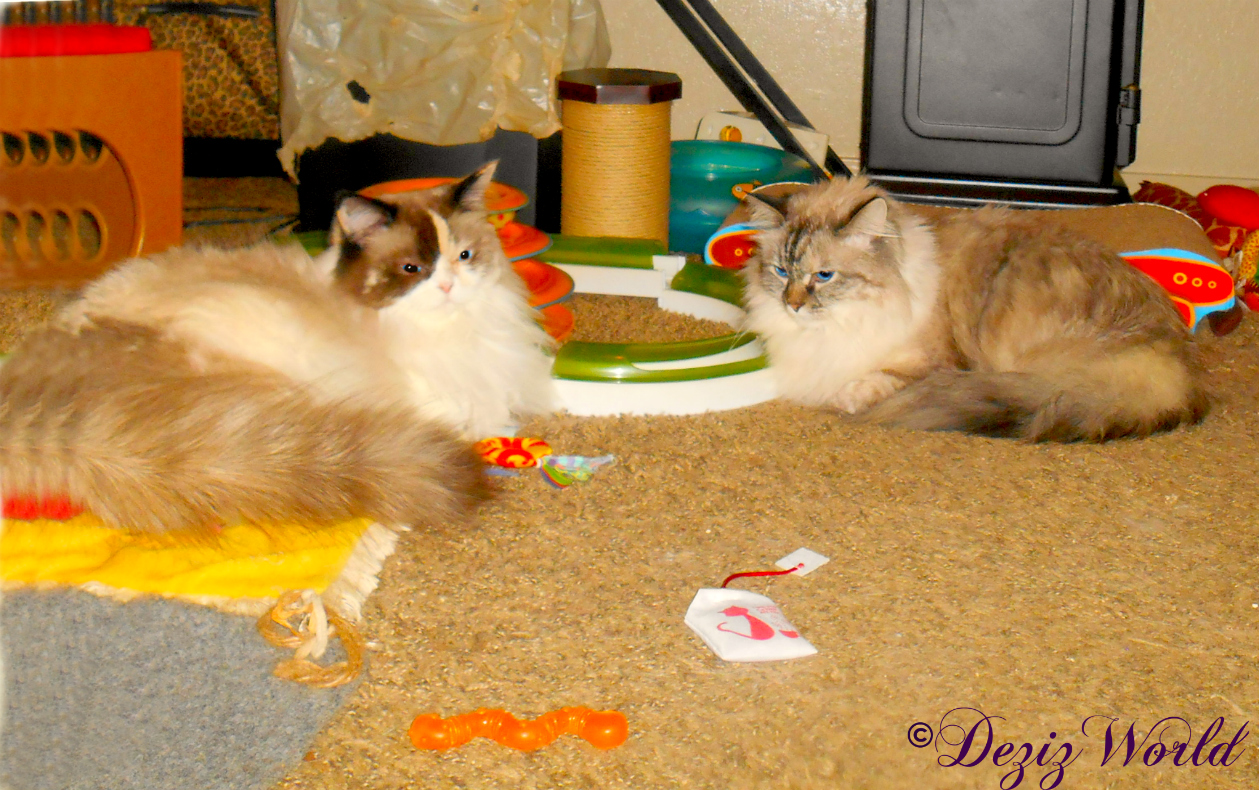
 

Dezi and Raena lay together on the floor

Well, we hope this helped. Mommy says the cases of one kitty trying to kill another or cause serious injury is actually rare. But you do want to take the time to transition successfully to avoid bad behaviors and increase the possibilities of a long and happy life together. If you have any questions, please leave them in the comments or send us an email. And remember, you can ketch up on any posts you may have missed in this series by clicking the links below.


Till the next time……………………………………..Be Blest!!!


Luv and Hugs and Kitty Kisses


Deztinee and RaenaBelle


 Service Cats 

What to Look For      Training Foundations      Train Kitty To Massage

Smelling Disease      Do You Need One      Who Bears the Cost

Housing Laws & Exceptions      Accommodations & Common Sense

When the Handler Dies      Proper Training Methods Pt. 1 & Pt. 2

Easiest Task to Train      Getting Kitty Ready for an Outing

Discipline: Stop Countersurfing Kitty      Internal Disputes

Calling Emergency Help      Just What Is Kitty Capable of

Shad: Original Service Cat      Harness, Vest, Leash or Stroller

Dezi, the Wheelchair & Chest      Round and Round We Go

Tumble & Fall Response      Raena Calls for Help

The Rest of the Story     Raena & the Wheelchair Pt. 1 Pt. 2 Pt. 3 Pt. 4

When to Train      Explaining Rewards & Kitty’s Feelings

Stop Kitty’s Begging     Calling For Help Options Pt. 1

Medicating Kitty

Training the Pig Headed, Stallion Strong, Submissive Pup & Conniving Cat

Cats Love Training & Social Media Downfalls

Reintegrating the Scared or Bullied Cat      There’s No Bully Cat Breed

Going for a Walk When in a Wheelchair     Calming the Tiger Pt.1 Pt. 2 Pt. 3

Surviving A Remodel      Taming A Feral Cat

Designer Cats & Scent     DNA Doesn’t Change

Service Cats: DNA Doesn’t Change

Welcome to a brand new Service Cat Monday. We were really surpurrised by the variations in comments we got last week ‘bout “Designer Cats”. And, we think some of you were surpurrised by our view on the subject. Either way, we really ‘purreciate the discussion. As we said last week, Service Cat Monday has really taken on a life of it’s own and not only covers Service cat stories, but also general Trainin’ Tips/Tricks/Techniques as well as health, behavioral, and well, all things cat. That really excites us. As with all our Service cat posts, the followin’ will be written in human English fur reader and translator ease. Ifin you have any questions, purrlease leave them in the comments or send us an email. All Trainin’ Tips, Tricks and Techniques have been used/developed by mommy throughout her many years of animal trainin’, cats in purrticular. And, not intended to be a step by step Trainin’ manual. Ifin you’ve missed any post in this series, you can ketch up by clickin’ the links below.


 Dezi laying in cat tree in new harness


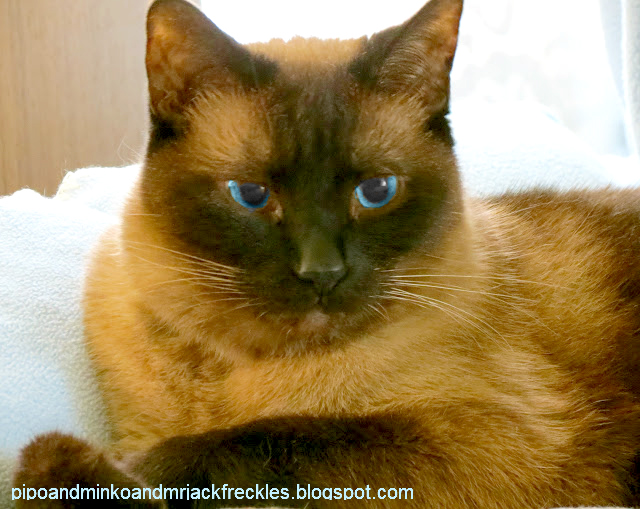
First up this week, we want to speak just a little more about those “Designer Cats”. Our sweet friend Pipo thought he was one of ‘em. Truth is Pipo, Siamese, at least the traditional robust apple headed Siamese Cats, are a naturally evolving breed. Now, the Siamese in show rings today are a whole other story. Although technically not “Designer cats, they have been selectively bred to create a kitty that looks far different than their origins. But, the Traditional Siamese isn’t going anywhere. The DNA for the Traditional Siamese traits are in the genes of all Siamese cats today. As for us Ragdolls, again, we were a naturally occurring mutation from the pairings of a non pedigreed white alley cat and her cohorts. Seems Josephine, the mother of the Ragdoll breed, ain’t meowing (telling). Altho’ Josephine wandered the alleys, she actually had an owner. The owner shared an alley with a breeder that thought some of Josephine’s kittens were pretty remarkable and purchased several of those non pedigreed kittens and set out to create a breed she called, the Ragdoll. Unfortunately, disreputable breeders continue to cross breed, and call them “Designer Cats”. Cross breeding is no longer necessary, desired or allowed by the cat registering organizations.


 Pipo the Siamese

Photo courtesy of PipoandMinkiandMrJackFreckles.blogspot.com


Raena, the result of a Ragdoll to Ragdoll pairing, is a prime example of poor breeding practices and the resurgence of some of those “undesirable” DNA traits. Me is stocky and boxy, with a heavy set of bones, per breed standard. Raena is long, tall and delicate. The Persian cat traits in her DNA have surfaced and resulted in a more smooshed face with those nasty tear duct issues and a longer than normal neck ruff. Her body type is most likely due to the Oriental cat DNA in the breed. This is why even reputable breeders of all breeds have what they call “Pet” quality and “Show” quality. You can’t change DNA, and at some point, kittens will be born with traits resembling some of those in past cross pairings which do not meet the so called Breed Standards. Now, please understand, we LOVE Raena and wouldn’t change her for the world. But, we do wish people didn’t try to play God.


 Raena looks out from stroller

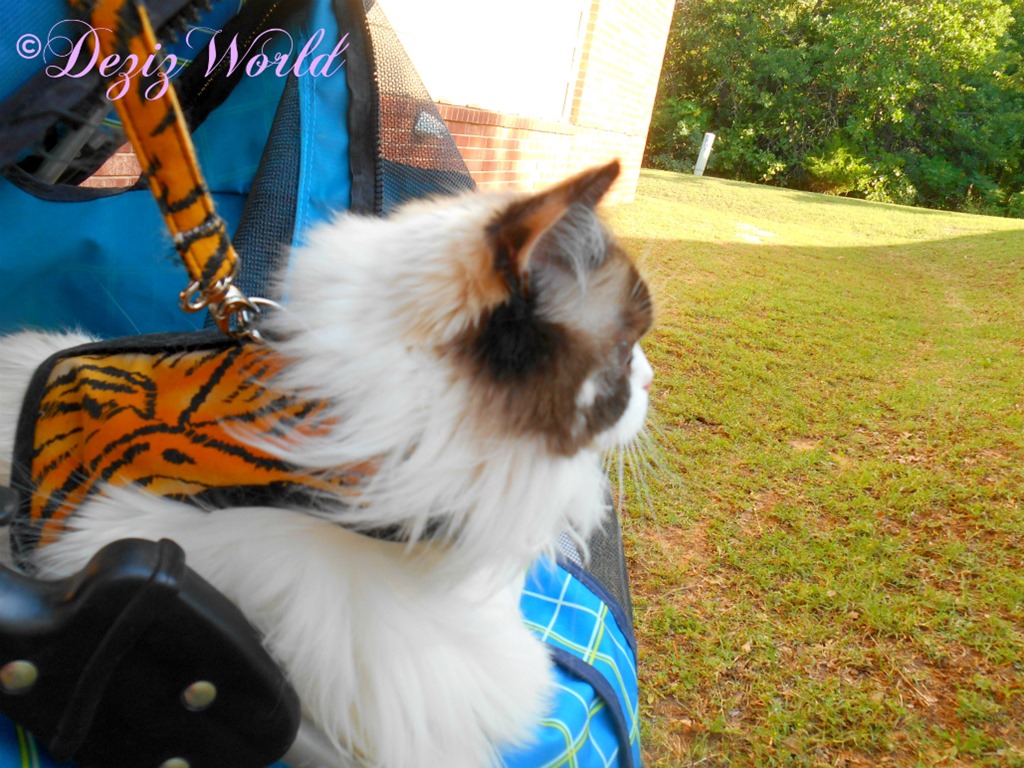
This profile foto shows Raena’s more smooshed face.


Now, We covered a lot about “Aggression” recently in our Calming the Tiger in Your Cat posts (links at bottom). But, our friend Valentine asked, why/how can littermates not get along?. There were no specific issues listed. Naturally, we just assume littermates will be the best of friends for life, right?. Obviously, that would be ideal. But, the reality is that all kitties experience life differently. Two kittens born to the same mother and raised in the same house, will have different personalities and experiences. Even mommy, who is home with us 99% of the time, doesn’t see everything. The possibility exists that something traumatic happened between the cats, or their world that has caused a rift in their relationship. The runt of a litter will often get picked on and/or ignored by his/her littermates and even the mother.


 Raena tried to catch Dezi

Get back here sissy. I’s gonna be da Alpha Cat.


Two dominant cats may have trouble getting along. Outside intruders, or changes in their household can also cause kitties to not get along. The good news is, that no matter what has caused the rift, it can be changed. With a little love, patience, investigation and training, littermates and housemates can become the best of friends. It may take re-introducing the cats and starting fresh, but you can have a happy and peaceful home. The Tips and Techniques we laid out in the Calming the Tiger in Your Cat posts (links below), will help you reach that goal. Val, we wish your friend the best of luck and are happy that despite the issues, they have kept the kitties instead of turning them in to a shelter.


 Dezi and Raena tumble and roll

Oh yeah? We’ll see who da Alpha is!!!


We’re gonna wrap this up fur now. We’ve got a lot to do befur mommy’s dentist ‘pointment on Fursday. We hope to tackle a new question next week regarding Operant and Clicker Training. Be sure to join us fur that. And ‘member, ifin ya’ have any questions, let us know. Purrlease be as specific as pawssible when askin’ ‘bout behavioral issues. The better we unnerstand the purroblem, the better we can help with the correct answers and tips. And, as always, you can ketch up on any Service Cats posty you missed by clickin’ the links below.


 Dezi cares for Raena atop the Liberty cat treeAlpha, schmalpha. (Dezi and Raena meow in unison)


Till the next time………………………………………………Be Blest!!!


Luv and Hugs and Kitty Kisses


Deztinee and RaenaBelle 


Service Cats

What to Look For      Training Foundations      Train Kitty To Massage

Smelling Disease      Do You Need One      Who Bears the Cost

Housing Laws & Exceptions      Accommodations & Common Sense

When the Handler Dies      Proper Training Methods Pt. 1 & Pt. 2

Easiest Task to Train      Getting Kitty Ready for an Outing

Discipline: Stop Countersurfing Kitty      Internal Disputes

Calling Emergency Help      Just What Is Kitty Capable of

Shad: Original Service Cat      Harness, Vest, Leash or Stroller

Dezi, the Wheelchair & Chest      Round and Round We Go

Tumble & Fall Response      Raena Calls for Help

The Rest of the Story     Raena & the Wheelchair Pt. 1 Pt. 2 Pt. 3 Pt. 4

When to Train      Explaining Rewards & Kitty’s Feelings

Stop Kitty’s Begging     Calling For Help Options Pt. 1

Medicating Kitty

Training the Pig Headed, Stallion Strong, Submissive Pup & Conniving Cat

Cats Love Training & Social Media Downfalls

Reintegrating the Scared or Bullied Cat      There’s No Bully Cat Breed

Going for a Walk When in a Wheelchair     Calming the Tiger Pt.1 Pt. 2 Pt. 3

Surviving A Remodel      Taming A Feral Cat     Designer Cats & Scent

Service Cats: Designer Cats & The Importance Of Scent

Welcome to another Service Cat Monday. We wanna take a minute to clear up a few things. We received a few comments on our last post that seem to be a little confused. Mommy in no way endorses feral cats as Service Animals. Service Cat Monday started out with us telling about our specific training. However, we quickly learned that lots of peeps had kitty issues they were living with that could be corrected with a little training. So, we opened Service Cat Monday up fur any and all questions. Because of mommy’s experience with animal training, we wanted to help, and will continue too. We believe all kitties can benefit from some basic training, but, that doesn’t make them Service Cats. We hope that clears things up a bit.


Dezi laying in cat tree in new harness


Now, let’s get to today’s posty. And ‘member, ifin you’ve missed any of the posts in this series, you can ketch up by clickin’ the links at the bottom of this post. The followin’ will be written in human English fur translator and reader ease. We’re runnin’ low on questions, so ifin you have any questions you’d like an answer to, purrlease leave ‘em in the comments or send us an email. Our Trainin’ posts aren’t meant to be a step by step Trainin’ manual, but rather Tips, Tricks and Techniques mommy has used/developed throughout her many years of animal trainin’, cats in purrticular. And ‘member, ifin you have a behavioral question, purrlease be as specific as pawssible.


Savannah Cat
Photo Courtesy of Wikipedia.org


We have a couple of questions today that won’t take a whole post each, so we thought we’d address them together. First up, our sweet Weimareiner friend Phenny asked, “What do you think about all these Designer Breeds/Cats, like the Savannahs, Chausie, etc.?” Well, Da Phenny, we can sum it up by saying, We Hate Human Manipulation in the natural process of Any animal breeding!!! “Designer Breeds” as they’re called, often come with a host of health problems, and aren’t actually suited to life as a pet. You mentioned the Savannah specifically, so we’d like to address that particular breed. The Serval, which is the wild cat that makes up one half of this breed doesn’t actually desire to breed with the Domestic Cat. And the gestation period for the Serval and Domestic Cat differ which means that pairings can result in natural abortions, premature births and even absorption of the pregnancy. The resulting kittens are indeed attractive, but not actually suited to every household. They are extremely smart, large and highly energetic. They are completely driven by their wilder/baser instincts. For a complete look at these instincts, please see our post, There’s No Bully Cat Breed. Just because humans can do something, doesn’t mean they should. Science has proven that Natural bred cats are healthier, live longer, and are more suited to living with humans. We hope that answers your question. You can also see Wikipedia, TICA and the CFA websites for more information on these and all cat breeds. 


 Dezi and Raena lay together on the floor


Our next question comes from our dear Persian friend Valentine. Val asks, “I live with a D-O-G that I’m always sniffing. Am I marking my doggy or checking to make sure it’s still the same D-O-G?” Well Valentine, as we discussed in a previous post, us kitties use smell over eyesight to determine what’s in our world. Almost all of our communication with other animals can be summed up with scents. When you live inside, where most all kitties should live, the scents don’t change that often. Sure, the occasional visitor, or your human’s return from work, shopping or errands, can bring new scents to explore, but most of the time, there’s little to no animal communications. However, when the D-O-G goes outside to take care of their business or exercise, they return with lots of great information from the big outdoors.


Raena in stroller


The dog may have stepped in or brushed up against a spot where another kitty walked, rubbed, or otherwise marked. Yes, this can even happen if the doggy only goes out in your yard. Stray and feral cats know no boundaries. MOL  When the dog returns inside, us kitties must sniff and take in all the information from the great outdoors. This will usually be followed by some form of marking the dog. You know, we’ve got to reclaim our family members as often as possible. A cat in the wild will mark their territory several times a week in order to keep the scent fresh and let others know the territory is taken, by whom, and breeding status. Those of us inside, do the same thing with our humans, other animals, furniture, etc.. The same post as above, There’s No Bully Cat Breed, explains what drives a cat to do the things we do. So, to answer your question Valentine, you are smelling the D-O-G to make sure it’s still your doggy, but also to get information about your extended world; the great outdoors. This behavior would remain the same, even if you were allowed outside. Remember, us kitties use scent above all other senses to make determinations about our world.


 Send me mail animated kitty emoji


Well, that’s gonna do it fur today. No actual Training tips today, but we said we’d take any and all questions. And, we think these were some great questions, so fank ya’ll fur askin’. Ifin you have any questions, purrlease let us know. We actually enjoy these postys and hope you do too. ‘Member, ifin you’ve missed any of the posts in this series you can ketch up by clickin’ the links below.


Till the next time……………………………………..Be Blest!!!


Luv and Hugs and Kitty Kisses


Deztinee and RaenaBelle
 

Service Cats

What to Look For      Training Foundations      Train Kitty To Massage

Smelling Disease      Do You Need One      Who Bears the Cost

Housing Laws & Exceptions      Accommodations & Common Sense

When the Handler Dies      Proper Training Methods Pt. 1 & Pt. 2

Easiest Task to Train      Getting Kitty Ready for an Outing

Discipline: Stop Countersurfing Kitty      Internal Disputes

Calling Emergency Help      Just What Is Kitty Capable of

Shad: Original Service Cat      Harness, Vest, Leash or Stroller

Dezi, the Wheelchair & Chest      Round and Round We Go

Tumble & Fall Response      Raena Calls for Help

The Rest of the Story     Raena & the Wheelchair Pt. 1 Pt. 2 Pt. 3 Pt. 4

When to Train      Explaining Rewards & Kitty’s Feelings

Stop Kitty’s Begging     Calling For Help Options Pt. 1

Medicating Kitty

Training the Pig Headed, Stallion Strong, Submissive Pup & Conniving Cat

Cats Love Training & Social Media Downfalls

Reintegrating the Scared or Bullied Cat      There’s No Bully Cat Breed

Going for a Walk When in a Wheelchair     Calming the Tiger Pt.1 Pt. 2 Pt. 3

Surviving A Remodel     Taming A Feral Cat

Service Cats: Taming A Feral: Can It Be Done

Welcome to a brand new Service Cat Monday. We do hope you all are enjoyin’ these posts and that they are helpin’ ya’ with your own kitties, doggies, etc.. ‘Member, we’re takin’ any and all questions ya’ have, whether they be ‘bout Trainin’, Health, or anythin’ else kitty. We’ll also try to help with other animals ifin ya’ have a specific question. Purrlease be as specific as pawssible when askin’ ‘bout behavioral issues. You can leave your questions, comments and post suggestions in the comments below, or send us an email via our totally purrivate Contact us page. As with all our Service Cat posts, the followin’ will be written in human English fur reader and translator ease. These posts aren’t meant to be a step by step Trainin’ manual, but rather Tips, Tricks and Techniques used/developed by mommy thru her many years of training animals, cats in purrticular. Ifin you’ve missed any of the posts in this series, you can ketch up by clickin’ the links at the bottom of this or any Service Cat Monday posty. Now, let’s get to today’s topic.


 Dezi laying in cat tree in new harness


Our sweet Weimaraner furiend Phenny asked a couple questions a little while back, and we wanna address one of those questions today. Phenny said, “My aunt adopted a feral kitty. Is there any hope of taming him?” First up Phenny, thank your aunty for us. We’re really happy that she took in a totally unadoptable kitty. We say totally unadoptable, because the shelters say that. But the truth is, even a feral kitty can be trained and tamed. Anyone who has ever cared for a feral colony knows this, whether they realize it or not. What do you think is happening when you show up with food and they come running? The feral colony has been trained to show up at a specific time and place, and they will be rewarded with food and usually some sweet talk. Over time, they’re rewarded with love and vet care too. We’ve had ferals show up at our apartment many times through the years. They quickly learn when mommy is able to get around and give them something to eat and some fresh water. We know this to be true, because if mommy happens to get around earlier, there’s been no feral in sight. But, just like magic, around the same time each day, the feral kitty(s) suddenly appear.


 Feral tabby cat and black cat


Anyways, let’s talk about Training a Formerly Feral kitty to live inside. Last week we talked about a “Decompression Room”. A Decompression room can be used in many situations. Remember, us kitties don’t like change, and a feral is generally terrified of humans. You must understand, a feral is not acting out of meanness or spite, but rather, FEAR. Whether the feral is the result of abandonment by a past human or born from generations of ferals, their biggest motivator is survival. Part of that survival has conditioned (Trained) them to fear humans. So, when you adopt a feral kitty, you can expect to see many inappropriate behaviors as the kitty learns to adjust and Survive in their new territory. Once you’ve decided to take in a feral, make sure they can’t get outside again. Training is all about Repetition and Rewards and it’s hard to be repetitious with a kitty you can’t find.


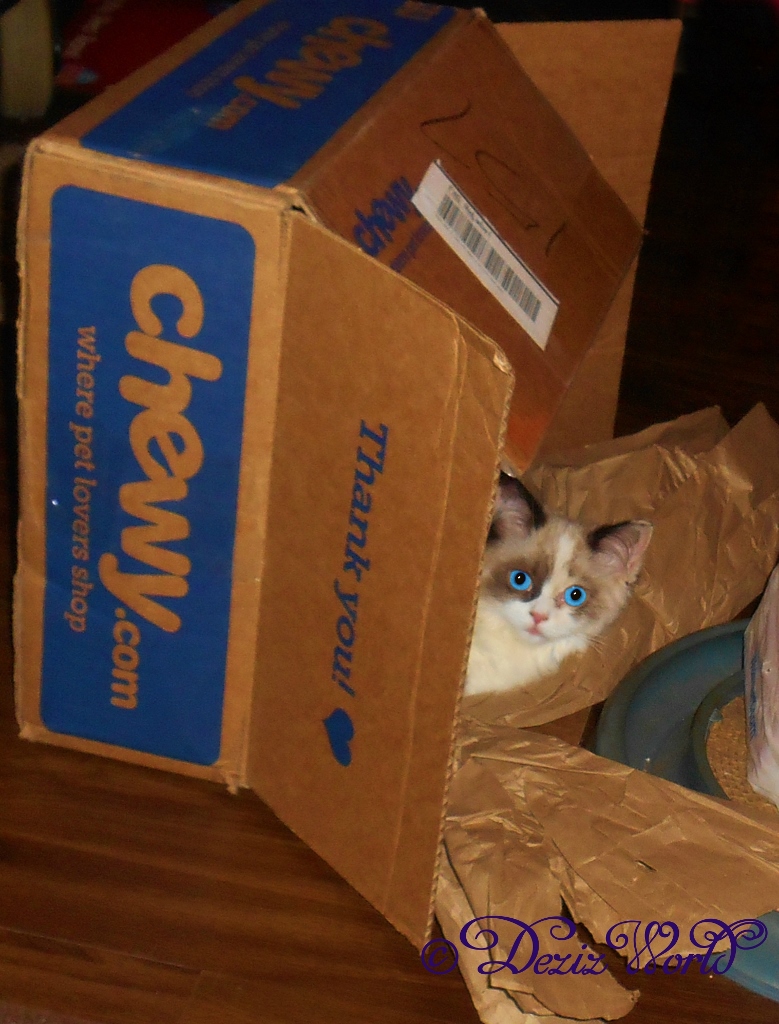
Raena peaking out of a chewy box

I’s hidin’ out. You can’t really see me. MOL


Making Kitty Comfortable

Kitty should be placed in a “Decompression Room” after seeing a VET to rule out any possible illnesses or diseases, and a spay/neuter. Remember the ‘Decompression Room” should contain a litter box, food, fresh water, scratcher, a couple of covered boxes/carriers (good for hiding), a few toys and/or cat furniture of some kind. If there’s a window in your “Decompression Room”, kitty should be able to look out. A couple of scent soakers should also be placed within the “Decompression Room”. We were asked last week what piece of clothing made the best scent soaker. Mommy says for women, the best scent soaker is a bra; and for men, it’s an undershirt or cotton t-shirt. Remember the scent soakers should contain the scents of all residents of the house. Don’t rush kitty to be affectionate or you may lose any progress you’ve made. And, be sure to place the litter box away from the food and water bowls. Altho’ a hungry kitty will eat close to the litterbox, ideally, kitties don’t want to eat beside their toilet, do you? 


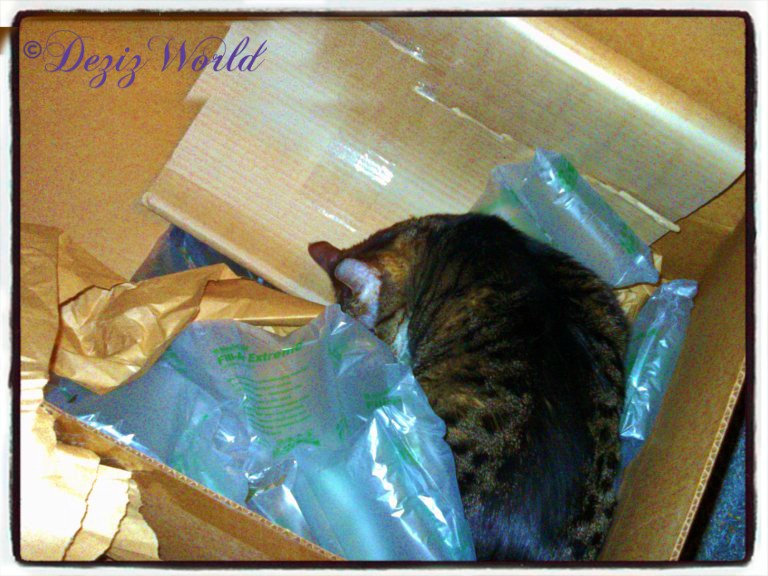
Lexi plays in a box

Almost all cats like boxes.


Socializing the Feral Kitty 

The next step is socializing kitty. While kitty is sequestered in their “Decompression Room”, you should go in at least a few times a day to spend time with kitty. This excludes the times you come in to clean the litterbox or feed kitty. Anytime you enter kitty’s space, you should talk to kitty and use their name. This doesn’t mean to get into a stare down with kitty or try to pet kitty. Just act like you’re talking to another person in the room and continue on with your business. You can read to kitty, watch t.v. with kitty, sing to kitty or whatever you’d like. Just make sure you’re spending time in the room with kitty. At first, kitty may hide and not show themselves to you at all. Don’t worry, kitty is getting used to your presence and good things happening when you appear. Once kitty starts showing themselves and coming out of hiding in your presence, offer them some treats and/or play time. This may be awkward at first, because the feral kitty is unfamiliar with cat toys and interactive play. Don’t give up on kitty. A little time and patience will reward you greatly.


Scared Cat emoji


Signs of Affection

When, kitty finally shows the first signs of affection, Do Not Rush him/her. The first signs will most likely be rubbing against your legs. This is a positive sign. Kitty is accepting you and marking you as part of their family. As kitty continues to offer affection, offer your hand, palm open and facing upwards, below kitty’s head. Allow kitty to sniff your hand and/or rub against it. Do Not try to pet kitty at first. After a few days when kitty rubs against your hand, gently scratch kitty’s chin. At this point, kitty’s motor boat (purr) will probably be on overload. Kitty has now learned to trust you. Do Not Overdo it though. You want to stop petting kitty before kitty gets agitated and retreats. you know the old saying, “Leave them wanting more”.


No Longer Feral

At this point, when you leave the room, leave the door open so kitty may follow you and/or examine the rest of their new territory (your house, their furever home). Go about your normal day and let kitty adjust on his/her own time. Anytime kitty shows themselves and gives you any sign of affection, reward them with treats, praises and/or a quick chin scritch. Altho’ don’t be surprised if kitty returns to the “Decompression Room” when strangers or company appear. Trusting you, took time, and so will trusting the rest of the world. Altho’, kitty may never truly be comfortable with strangers. this can happen with any kitty, not just ferals. If you’re wanting kitty to be a lap cat, place a few treats on the floor and the area beside your lap. Kind of like a trail leading kitty to the desired place, your lap. When kitty crawls into your lap the first few times, ignore them. Yes, kitty can feel your excitement and your heart beating a hundred miles a minute, but don’t give in to the temptation of the pat/scratch. After a few times, you may reward kitty with a nice chin scritch/treat and plenty of praises. Remember to always speak calmly and quietly. Before you know it, you won’t even remember a time when kitty was so afraid they wouldn’t let you see them.


 Raena lays in mommy's lap


Summary

The rule of thumb is always remember, Repetition, Repetition, Repetition and Rewards. And, Always leave them wanting more. Mommy says that’s a good rule of thumb to follow for even the most sociable kitty. You never want to over-stimulate any kitty to the point where they want to get away from you, bite or scratch.


Well, we’re gonna wrap this up fur now. We do hope this helps. All kitties can be Trained and desire normalcy. Even a Feral can live a happy and contented life as an indoor cat if you take the time to let them learn they can trust humans once again. Don’t furget to leave any questions, comments or blog suggestions below. And, have a pawsum week.


Till the next time…………………………………………….Be Blest!!!


Luv and Hugs and Kitty Kisses


Deztinee and RaenaBelle
Service Cats

What to Look For      Training Foundations      Train Kitty To Massage

Smelling Disease      Do You Need One      Who Bears the Cost

Housing Laws & Exceptions      Accommodations & Common Sense

When the Handler Dies      Proper Training Methods Pt. 1 & Pt. 2

Easiest Task to Train      Getting Kitty Ready for an Outing

Discipline: Stop Countersurfing Kitty      Internal Disputes

Calling Emergency Help      Just What Is Kitty Capable of

Shad: Original Service Cat      Harness, Vest, Leash or Stroller

Dezi, the Wheelchair & Chest      Round and Round We Go

Tumble & Fall Response      Raena Calls for Help

The Rest of the Story     Raena & the Wheelchair Pt. 1 Pt. 2 Pt. 3 Pt. 4

When to Train      Explaining Rewards & Kitty’s Feelings

Stop Kitty’s Begging     Calling For Help Options Pt. 1

Medicating Kitty

Training the Pig Headed, Stallion Strong, Submissive Pup & Conniving Cat

Cats Love Training & Social Media Downfalls

Reintegrating the Scared or Bullied Cat      There’s No Bully Cat Breed

Going for a Walk When in a Wheelchair     Calming the Tiger Pt.1 Pt. 2 Pt. 3

Surviving A Remodel