Service Cats: What Happens To Your Pets When You Die

MeOW  Welcome to Service Cats and Everything Feline on Furidays. Are ya’ll ready fur the long weekend? We’ll be celebratin’ mommy’s birthday here, which means lots of huggin’, cuddlin’ and luvvin’. We purray that any of you travelin’ have a safe and uneventful trip and return home rejuvinated. Alright, we got that outta the way so let’s get back to the reason you pawed by today. We’ve got a great topic fur ya’, so stay tuned. You can always ketch up on any post in the series by clickin’ the links on our Training Tips and Everything Feline page from the menu. And ‘member to leave your questions or post suggestions in the comments below or send us an e-mail via our Contact page. There’s no stupid question, so ask away. Just ‘member, mommy’s specialty is felines; but, we’ll try to find the answer to any questions posed. And, purrlease be as specific as pawssible when askin’ behavioral questions and include any purrtinent examples.


Dezi laying in cat tree in new harness


The followin’ post will be written in human English fur reader and translator ease. Our Service Cat posts aren’t intended to be an all inclusive Trainin’ Manual but rather Tips, Tricks and Techniques used/developed by mommy A thru her many years of animal trainin’, cats in purrticular. And to offur insight into your questions about Everything Feline. Always remember, Training is all ‘bout Repetition and Rewards.


Raena posing in her harness on the small cat perch


   As me said, we have a very important topic to discuss today. Unfortunately, it’s a topic that often gets overlooked until it’s too late. Nobody wants to think about death, much less talk about it. We often hear things like, “That’s so morbid”, “Why do you want to talk about that?” “You’re/I’m still young, there’ll be plenty of time for that stuff later.” But, the truth is, no one is guaranteed tomorrow, no matter who you are or how old you are. And, as long as animals are classified as Property under the law, we all need to talk about it and make plans for it and for our beloved furry family members. So, Let’s talk about what happens to your pets when you die. 
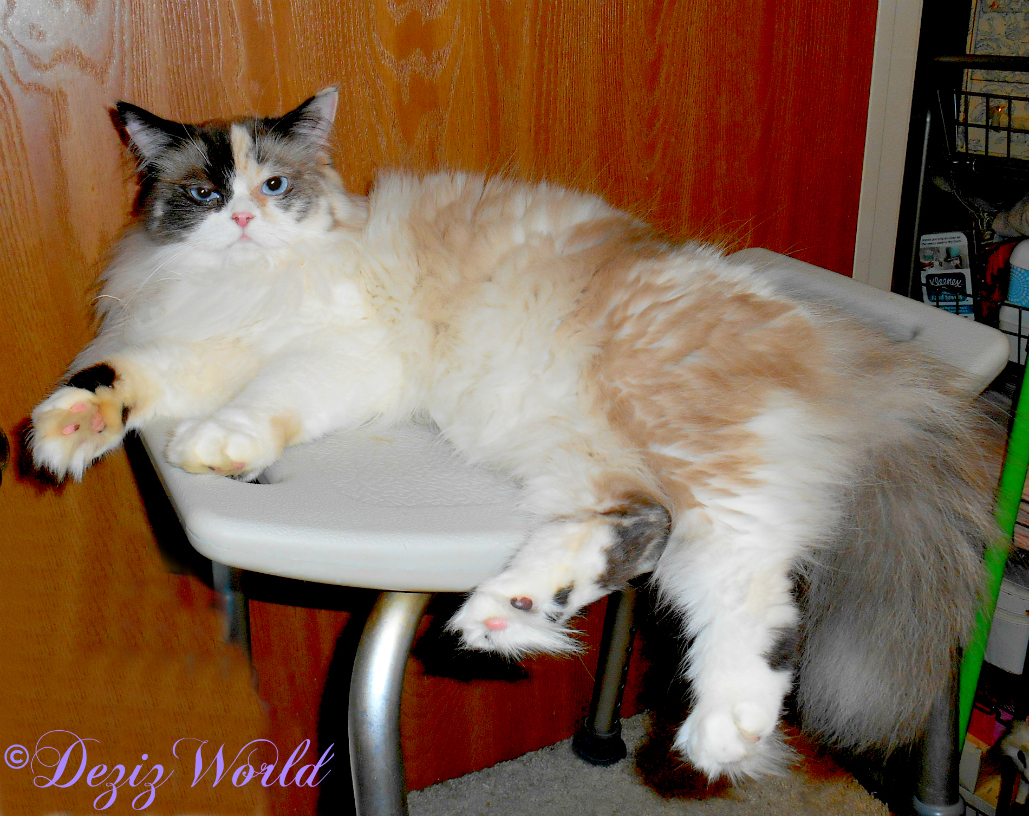
 

Raena lays on shower bench

Property? Do I’s look like property to you? Hmmmpht


   That’s right, Fluffy/Fido, your beloved fur baby is nothing more than Property according to the law. We’re just another car, china plate or piece of furniture that needs to be managed. The only difference is that we require constant care in the form of food and water and potty breaks. And of course anyone who has ever been owned by a four legged furry knows, we’re not property. We have feelings and are no doubt confused and grieving when we lose our family members. For those people who live alone, it becomes extremely important to have a plan in place for your furry children in the event of your death, otherwise, we’ll most definitely end up in some shelter somewhere, alone and afraid. Please, don’t assume that someone in your family will take care of your fur baby after you’re gone. It would be great if that were the case, but more often than not, things don’t happen that way.


Put It In Writing:


  So, you’re ready to make preparations, where do you even start? The first thing you need to do is be prepared to Put It In Writing. We can’t stress that enough. No matter what plans you make, you need to have them written down and a copies given to all involved and one placed in your “important papers” drawer/file. If you live in an apartment or rental house, give your landlord a copy as well as a written notarized statement/notice that this person is allowed to enter your residence and remove the animals after your death. Include any phone numbers of this person and be sure to keep the notice up to date. As we stated earlier, no one is guaranteed tomorrow. It’s also a good idea to have a back up plan/person (trustee) in the event that things change with the named person/trustee (ie: death, disability, marriage, divorce, illness, etc.).
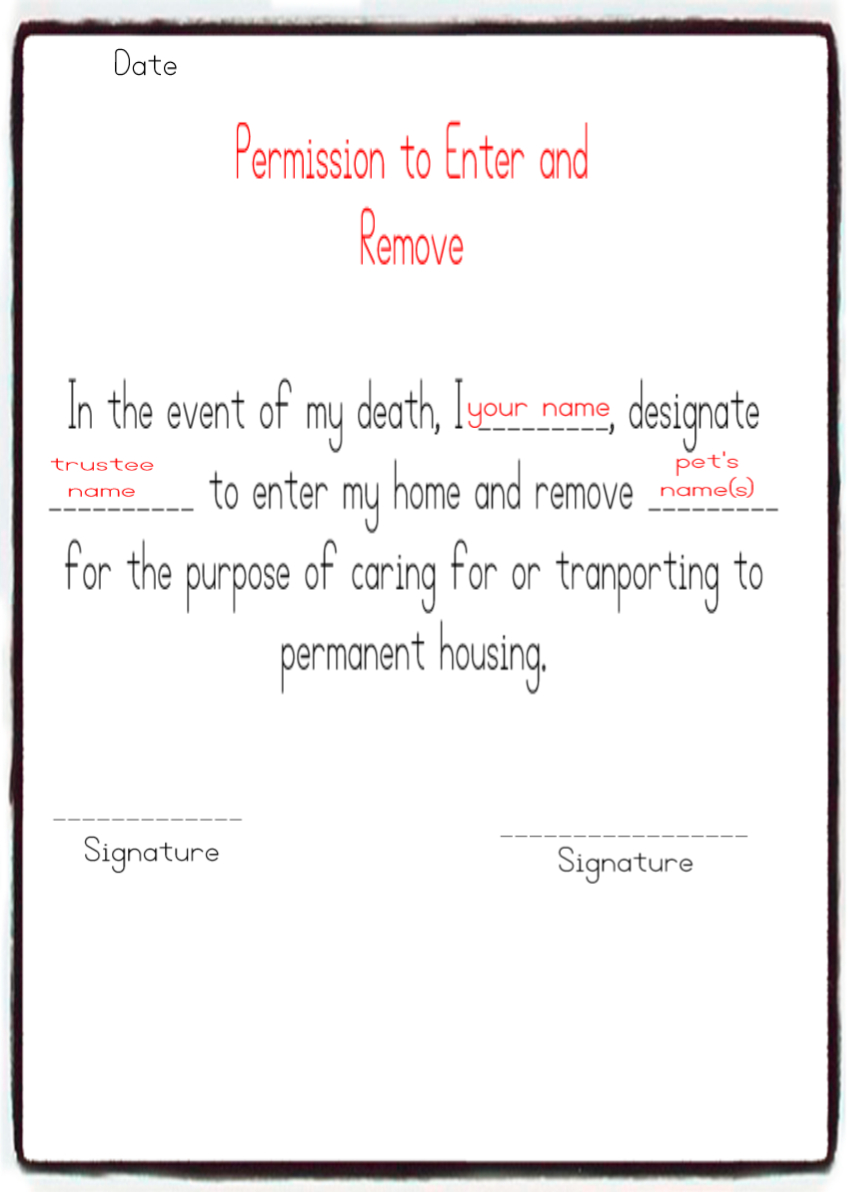
 

Example permission notice
Example of simple permission notice


If you have a will or other legal notices, speak with your attorney about putting in a clause with your wishes for your beloved furry(s). However, because of the very nature of wills (subject to probate or contesting) it’s a good idea to make preparations for Fluffy/Fido as a separate document, such as a Trust or Power of Attorney. You might want to check your States’ laws and guidelines with regards to pets. This notice should include all pertinent information such as whether the named person/trustee will be adopting Fluffy/Fido or merely providing temporary accommodations until Fluffy/Fido can be placed in their new permanent dwelling. You should also include things like what food, treats, litter and favorite toys Fluffy/Fido need. How many times and what time(s) of day is Fluffy used to eating, or when does Fido go for walks. Include up to date medical records, and list any health issues as well as any medications and directions for giving them. List the Vet’s name, address and telephone number as well as the last time Fluffy/Fido was seen and for what. List any quirky behavior or behavioral issues Fluffy might have. Now’s not the time to hide bad behavior. You want these arrangements to work out, so be honest. This will be a stressful time for everybody and Fluffy’s new caretaker should know what to expect so they can make the transition go as smoothly as possible. 
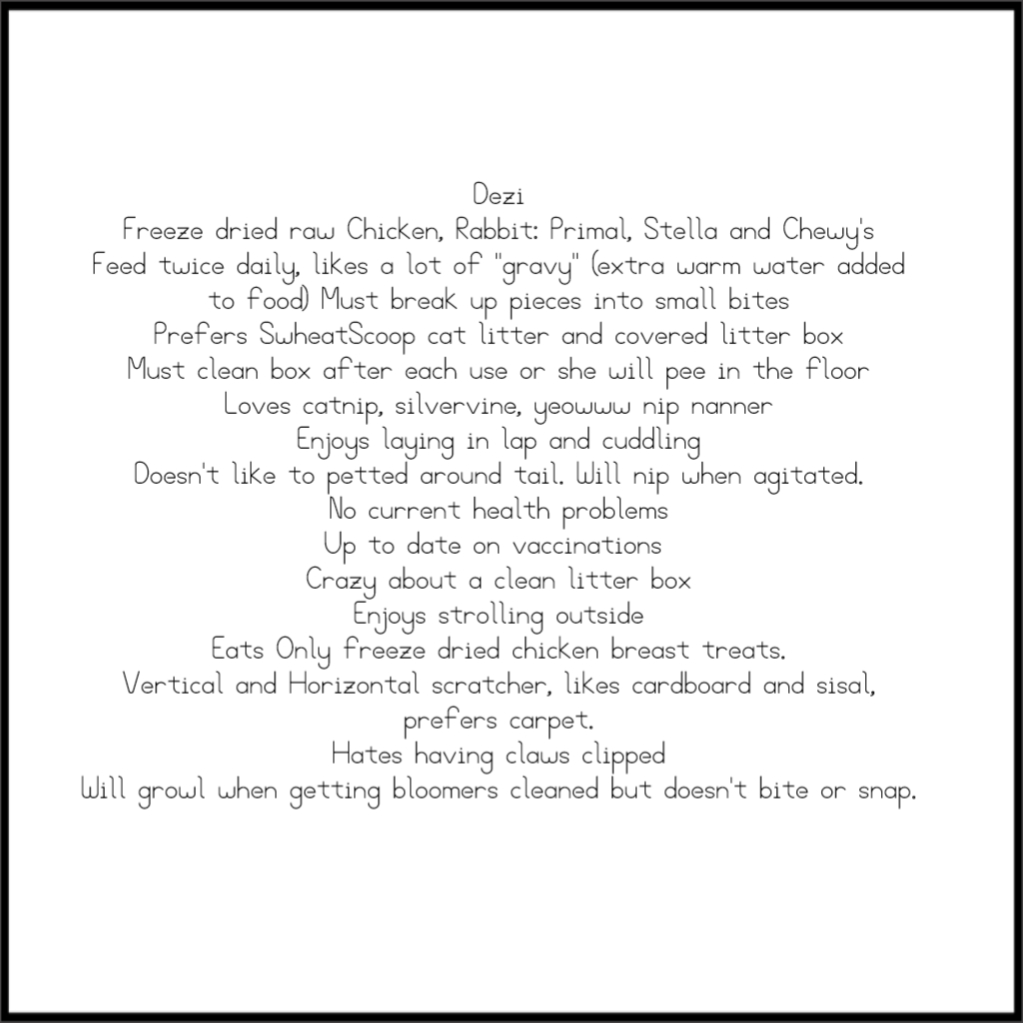
 

Example of Instruction sheet
Example of an instruction sheet


   You’ve checked the laws, spoken with an attorney, and are ready to make your plans…what’s next?. It’s always a good idea to check with family and friends. Fluffy/Fido might already be used to them and the transition might be easier with familiar people. This is going to be a stressful time for everyone including Fluffy/Fido, so anything that can make it less stressful is always best.  Just remember, Put your wishes In Writing, even if the person taking custody of your beloved furry is your husband, wife, adult child or some other friend or family member. This document can be something as simple as a notarized written and signed statement to a legal trust or power of attorney. If you are able, it’s also nice to allocate “Care Funds” to be used by Fluffy/Fido’s new caretaker. This should also be written down with any instructions needed to access those funds.


Care Funds:


   “Care Funds” can be allocated in a will, but remember, those funds may not be available immediately, so you may want to check out other options, such as a Trust or Savings account. You can list a POD (pay on death) on the account when you open it with your bank. That means the person you name cannot access those funds until after your death. But, unlike a will, those funds can be accessed immediately. Fluffy’s going to need to eat before the probate court finishes with your will, so a trust or savings account may be the better option for you. Mommy says anyone willing to take on Fluffy/Fido should be willing to take on their expenses as well, but we also understand some animals have a little more ‘baggage’ (chronic illnesses, old age, etc.) than others and therefore require more financial care. So, Yes, anytime a Care Fund can accompany Fluffy/Fido it will make things easier in the long run. 

Example adoption contract
Example Adoption Contract, courtesy of petrescue.com/library


Adopted with a Return Contract:


   Another thing to consider when planning for Fluffy’s life without you is where Fluffy came from. Did you adopt from a shelter or rescue? Or, did you purchase from a breeder? Some rescues and breeders have clauses in their adoption/sale contracts that state that Fluffy/Fido must be returned to them if you can no longer care for them. If this is the case, you will need to have someone responsible for contacting the rescue/breeder so that Fluffy/Fido can be returned. This person should should be listed on any notices required to access your home or apartment to remove Fluffy and return him/her to said rescue. The notice should also list the rescues’ name, address, phone number and contact person. When returning Fluffy/Fido to the rescue/breeder be sure your trustee knows to send the information about Fluffy’s likes, medical records and any favorite toys to make the transition go easier. 


What happens when friends and family can’t take Fluffy:


   You’ve asked friends and family, and no one can take Fluffy after you die, what do you do now? You might want to check with your Vet, they may know of an organization that can help. There are a few organizations in both the U.S. and U.K. that will take on Fluffy/Fido after your death and let them live out their lives with the rescue. However, most of these places require a substantial “donation” accompany said pets. Unfortunately, this is not a viable option for many pet owners. However, mommy says it never hurts to ask, all they can do is say no. If they do agree to take Fluffy after your death without that substantial donation, GET IT IN WRITING!!! Make a copy for your records and theirs and let the person/trustee you chose to transport your beloved furry to their future home know. Your trustee will need to know who to contact and what kind of arrangements have been made for getting Fluffy to the organization/their final destination. The trustee should also include the information about Fluffy’s likes, medical records and any favorite food and toys to make the transition go as smoothly as possible.


Euthanization as a Last Option:


   Another thing one needs to consider when making arrangements for Fluffy’s future without you, is Fluffy’s overall health and age. Rehoming or returning to a shelter or rescue may be too hard on Fluffy in the first place. You may have to consider Euthanasia as the best option. However, this is probably the most controversial option. But, at the end of the day, nobody knows their pets as well as the person who spends every day with them. In other words, you and only you know what’s best for your beloved furry. And, as long as the law sees animals as Property, it’s up to you to make the right decision for them. If this is the option you choose, make certain the person you have chosen to to see this through is willing to uphold your wishes…PUT IT IN WRITING and make sure they sign it and know this is the best option. If this is your choice you should put enough money aside to pay for this and let your “trustee” know where to find it. You may be able to carry a credit with your Vet to cover this expense when the time comes, you’ll just need to check with their office. Be sure to keep up to date on your Vet’s policies and prices with regards to euthanization.

 

Dezi lays in wheelchair looking at camera


Miscellaneous Money Options:


   There are a few options one might consider to provide funds for Fluffy’s future without you. You might want to take out a life insurance policy on yourself and list your trustee or rescue organization as the beneficiary. If you do this, you need to make sure all family members are aware of this so they don’t try to contest it’s validity when the time comes. Money can make people mad, and we don’t mean angry. You might want to take a CD or Bond at your bank. Again, you can list your trustee/organization as the POD (pay on death). Whether you can provide money for Fluffy’s continued care after you’re gone or not, shouldn’t be the deciding factor in who will take care of Fluffy. We suggest making a list of the things you think are most important to the daily care of your beloved furry and then evaluating the people you know based on that list. Once you’ve narrowed your list to those that you think would make the best care giver for Fluffy after you’re gone, open the subject with them. Try to be patient, they may need some time to consider your request before agreeing to take on your beloved. And you might be surprised at who says no. But, don’t give up.


Raena stands on scratcher with paw lifted

Don’t leave our future to chance. We luvs you too much.


Final Thoughts:


   This is a very important and serious matter. Any responsible pet owner should have a plan of some kind in place. No one is going to live forever and none are guaranteed a tomorrow. So, planning for your beloved furry’s future without you is the responsible thing to do. None of us really want to think about it, but we must. Again we are going to stress the importance of Putting Everything in Writing. We also suggest that you place notices on any outer doors so that emergency personnel know there are animals inside, and how many and what species. Mommy keeps a photo of us on our door along with a notice. You can get the “Animals Inside” decals that alert emergency personnel from the ASPCA for free  by filling out the form at the aspca.org/take-action/order-your-pet-safety-pack website. We also recommend carrying an emergency alert type card in your wallet or purse that has a list of emergency contacts and who to contact first or in the event of which emergency. We also recommend that your emergency contact have the number to the trustee you’ve chosen to take care of beloved furry family member(s) if they’re not one and the same. Another thing you can do is put a list of those contacts as well as emergency care instructions or who to call for Fluffy on the refrigerator. Most emergency workers are trained to look for those kinds of instructions on the fridge or a bathroom mirror. Just be sure this information is easily found and up to date.


Dezi lays atop the liberty cat tree looking down at Raena jumping off, blurry blooper

Yep, this is our blooper foto entry.


Well, this sure is a long posty. But, we do hope we’ve helped some of you or at least reminded you to have these conversations if you haven’t already. Another thing mommy suggests is to review and update all the information in your ‘purrtant papers’ file yearly. Numbers change, people move in and out of your life and let’s face it, ain’t none of us gettin’ any younger; so our health and eating habits may change over the years. Mommy says the most ‘purrtant thing to ‘member is to keep everything updated and keep it in Writing. Never assume somepawdy is gonna take care of your beluvved pets after you’re gone. ‘Stead, make a plan and KNOW that they’re future is secured according to your wishes. We were asked this meownin’ ifin we would be includin’ templates fur the forms we suggested today. Unfurtunately, mommy didn’t have time to get them ready fur this post, so we will be postin’ those at a later date for you to copy and use. Don’t furget you can ketch up on any post in this series by clickin’ the links on our Training Tips and Everything Feline page from our menu. And leave your questions and post suggestions in the comments below or send us an email via our Contact page. We’re linkin’ up with Comedy Plus fur Feline Furiday and we’re also joinin’ our new furiends the Cuddlywumps fur Pet Photo Fails Bloopers


Till the next time……………………………………………..Be Blest!!!


Luv and Hugs and Kitty Kisses 
 

Deztinee and RaenaBelle       

Service Cats: How to Keep Kitty’s Name off the Bite List at the VET

MeOW  Welcome to Service Cats and Everything Feline on Furidays. We’ve got a great topic today so stay tuned. And ‘member you can leave your questions or topic suggestions in the comments below or send us a purrivate email via our Contact page. And as always, you can get caught up on any post you may have missed by clickin’ the links on our Training Tips and Everything Feline page from our menu. Remember, we’re no longer listing names per reader request. There is no dumb question. Mommy says no one purrson knows everything about everything. We all have to start somewhere. By the way, you’ll notice a little different structure today. Let us know ifin ya’ like it.


Dezi laying in cat tree in new harness


The followin’ post will be written in human English fur reader and translator ease. Our Service Cat posts aren’t intended to be an all inclusive Trainin’ Manual but rather Tips, Tricks and Techniques used/developed by mommy A thru her many years of animal trainin’, cats in purrticular. And to offur insight into your questions about Everything Feline. Always remember, Training is all ‘bout Repetition and Rewards.

     One of the questions we get asked most is about taking kitty out in public and making sure kitty’s comfortable and calm. Whether it be to the VET or on an adventure, people want to know that kitty isn’t stressed out. We discussed preparations for taking kitty to the VET last week. If you missed it, you can read it here. Today, we’re going to follow up a bit on that topic. The question is, “Kitty appears/is calm during the initial VET visit and suddenly ‘goes nuts’ and bites when the VET/tech with metal mesh gloves takes his/her temperature. What caused this and can we stop it from happening in the future? ” Another question that goes along with this is: “How can I keep kitty calm during the exam itself? The VET and techs are concerned about bites and scratches and want to sedate kitty or wear gloves or other protective gear when handling kitty.” 


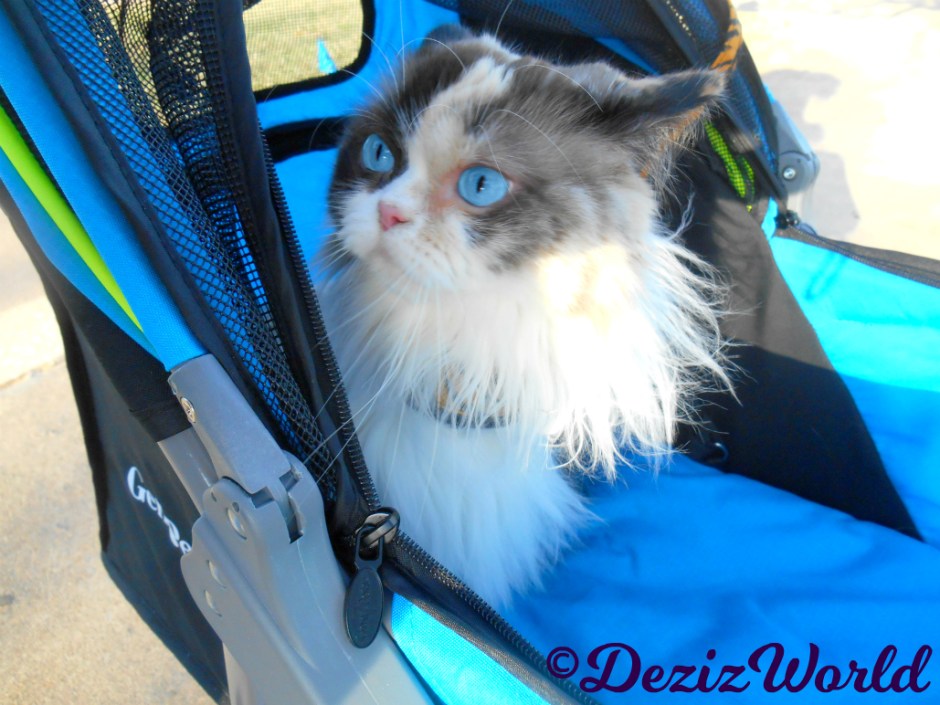
 Dezi sits in stroller


Feeding off the Energy:


     Let’s take a look at the first question. You’ve done everything right and kitty is nice and calm. Even the waiting room didn’t stress kitty out. So why then is kitty suddenly going “nuts” and biting? Remember, we always stress that kitty will feed off the emotions of those around him/her, so it’s really important that you remain calm and thinking positive thoughts. But, it’s also important for the VET’s staff to not only be professional but calm. If a kitty has never shown any signs of biting, then no one should be wearing metal mesh gloves during any part of the exam. Quite frankly we were appalled when we read the question. Mommy wouldn’t let anyone near us wearing such armor gloves. We suspect this kitty reacted to the tentative touch of the tech who most likely was also feeling a bit apprehensive. There was no initial signs that the gloves would be needed and should never have been worn. VET appointments are rarely fun, but mommy likes to keep them as stress free as possible, so that we remain calm each time we have to be in the office. All it takes is one bad experience to cause kitty to react poorly and stress at all future appointments. And YES, it is possible to change the behavior of a kitty who does have a history of biting, scratching or fighting with a VET/tech. It just takes a little time and patience and the cooperation of your VET and their staff.


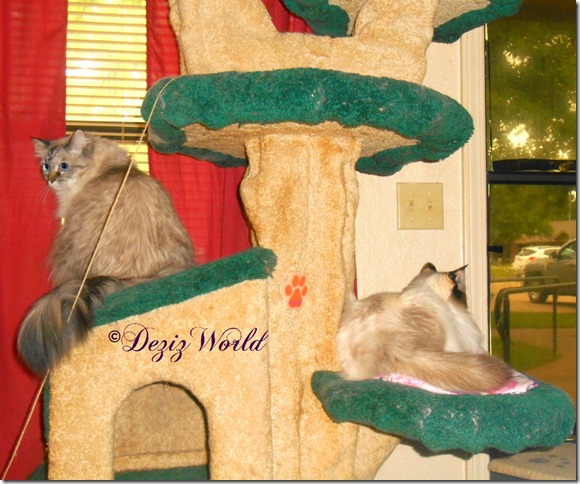
 Dezi and Raena stare intently out the door from the liberty cat tree

You can see the purple calming collar  in the foto.


Calming Options:


      We don’t have Feline only VETs in our parts, but, you might look into them in your area. Obviously, an office that caters to cats should be better equipped in knowing how to deal with them. Another option, is an office that has separate waiting rooms to help keep kitty calm. A lot of people have great success with calming sprays and plug ins. It might help every kitty/doggy if your VET had them in the rooms and waiting area. You might suggest them to your VET or gift them to your favorite VET’s office. Don’t forget, you can also spray kitty’s carrier and the towel or clothing inside kitty’s carrier as well. You might also want to look into a calming collar. They’re fairly inexpensive and can be used only when needed. While in the waiting room, you should speak calmly to kitty and remember to praise them and let them know how proud you are of their great attitude and calm demeanor. And yes, do this even if kitty is hissing or cowering in their carrier. Remember, the idea is to calm or keep kitty calm so the appointment goes off without any problems. And don’t leave kitty unattended at any time. We even go to the bathroom with mommy when all the time necessary.


Dezi sits on exam table at vet office


The Exam:


     During the appointment mommy makes sure to remain in our line of sight at all times. She stays calm and blows us kisses and slow blinks. When she has to hold us down for tests, injections, etc., she makes sure to calmly and quietly praise us for our good behavior. Yes, it’s usually the techs’ job to hold kitty, but mommy knows that we stay calmer when she does it. We know mommy’s touch and can feel the love radiating down thru her hands instead of apprehension from someone who doesn’t really know what to expect from us or how we’ll behave/react to certain touches, pokes and prods. At no time does mommy let us out of her sight. The office policy may be, no owners in the back, but if you’re a calming effect on kitty, exceptions will be made. If not, you may want to look for another VET. Mommy’s policy is: If they can’t do “it” in front of her, then they probably shouldn’t be doing it all. She’s seen perfectly calm kitties suddenly get written up in their file as ferocious/biter after a trip to the back for a blood draw or weigh in. And, she’s seen some pretty incompetent techs trying to find veins or restrain kitty. So she completely understands how a kitty can become stressed and lash out. That being said, if you can’t remain calm, you need to work on it and pray for a great office.


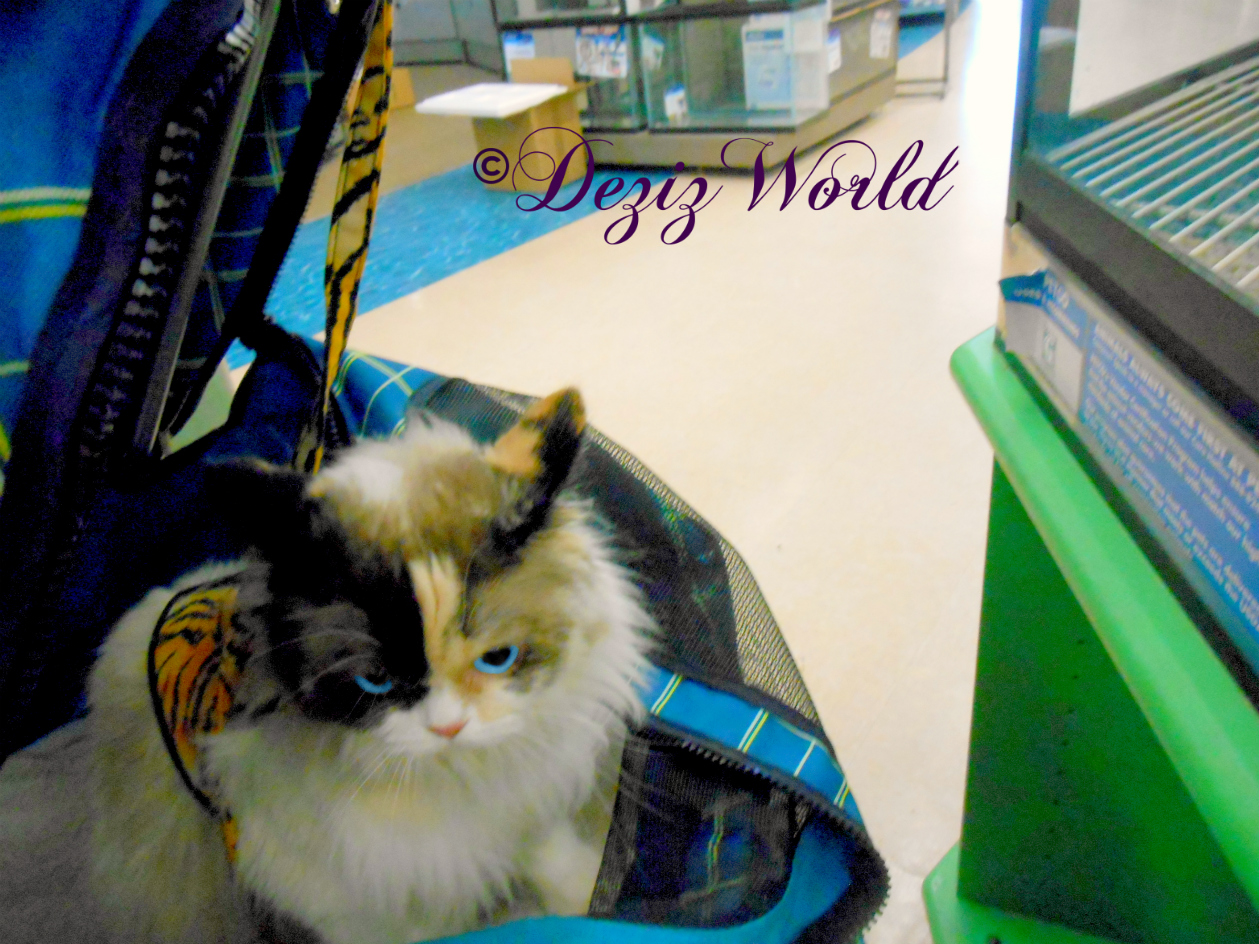
Raena in stroller at Petco looking at birds


Working Together:


     Mommy says more often than not, kitty will react the way people are expecting. Tech wears bite glove, kitty bites. Guess they got what they were expecting. So, if the VET/tech comes in the room clad in armor, kitty’s probably going to act out. Kitty is feeling everyone’s stress and reacting in kind. Our VET and his staff have a lot of shortcoming’s, but, they usually enter the room calmly and completely ignore kitty. We either start sniffing him or mommy presents us to him/her and then the exam begins. Unfortunately you can’t change a VETs personality or actions, but you can suggest ways they can deal with your kitty that will make kitty more comfortable. After all, you know your kitty better than anyone else. Remember, this is a relationship. Kitty can’t speak, so the VET is looking to you for cues on what is and is not normal with kitty. A good VET is going to want to make the visit as stress free as possible. Nobody wants to get bit or scratched.  


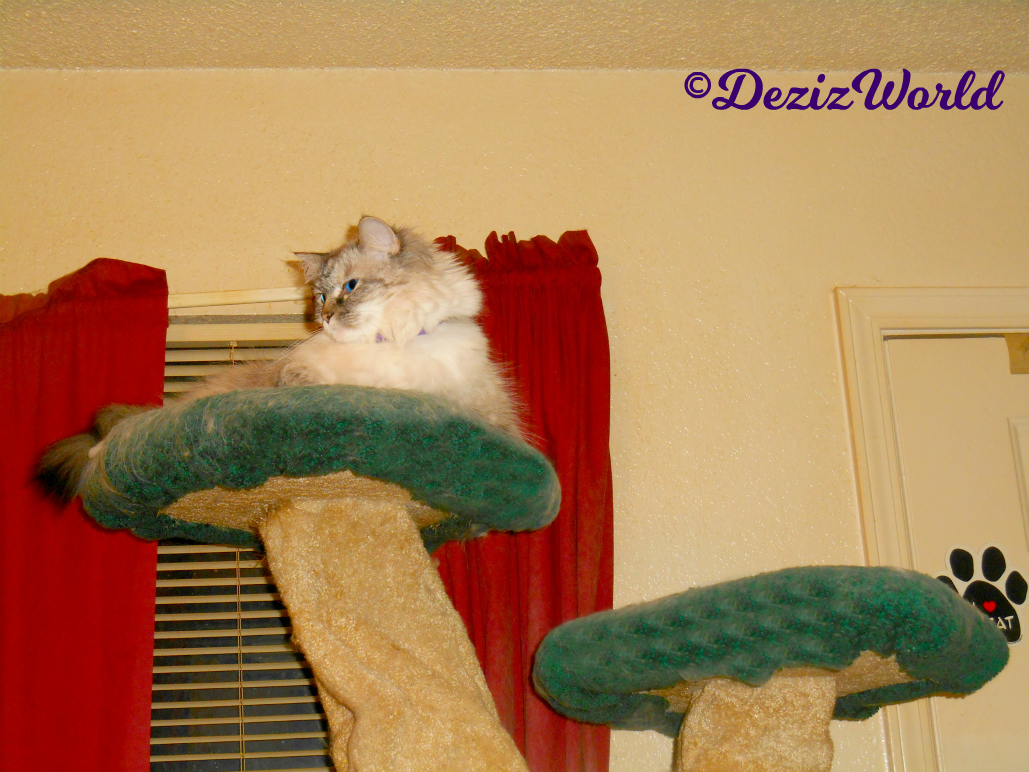
 Dezi lays atop the liberty cat tree in calming collar


Well, we’re gonna wrap it up fur today. We’ve covered a lot of infurmation, and we do hope it helps. Sometimes Training is as much about Training the human on how to behave as it is kitty. Always remember, calm is good and Training is best achieved with Repetition and Rewards. Teaching kitty to remain calm at the VET is just as important as Training kitty to use a litter box or where to scratch. Don’t furget to leave your questions or topic suggestions in the comments or send us an email via our Contact page. And, you can ketch up on any post in this series by clickin’ the links on our Training Tips and Everything Feline page. Join us here each Furiday to learn more about the mysterious feline in your life and what makes us tic. MOL We’re also joinin’ Comedy Plus fur Feline Furiday.


Don’t furget to let us know ifin ya’ like the new outline with sections??.


Till the next time………………………………………………….Be Blest!!!


Luv and Hugs and Kitty Kisses 


Deztinee and RaenaBelle


Service Cats: Does Your Garden Contain These Natural Flea Preventatives

MeOW  Welcome to Service Cats and Everything Feline on Furidays. Don’t furget you can always ketch up on any post you may have missed in this series by clickin’ the links on our Training Tips and Everything Feline page. You can also submit your questions and/or topic suggestions in the comments below or by email using the contact form on our Contact page. Just remember, when asking behavioral questions, purrlease be as specific as pawssible includin’ any appropriate examples. We’ve got some great topics comin’ up. Last week, we meowed ‘bout Flea and Tick Prevention and we received a couple of follow up questions that we’re goin’ to address today. Remember, there’s no stupid/dumb question. And ifin you’re wonderin’ ‘bout somethin’, chances are others are wonderin’ the same thing. So, let’s get the business outta the way and get to it.


 Dezi laying in cat tree in new harness


The followin’ post will be written in human English fur reader and translator ease. Our Service Cat posts aren’t intended to be an all inclusive Trainin’ Manual but rather Tips, Tricks and Techniques used/developed by mommy A thru her many years of animal trainin’, cats in purrticular. And to offur insight into your questions about Everything Feline. Always remember, Training is all ‘bout Repetition and Rewards.


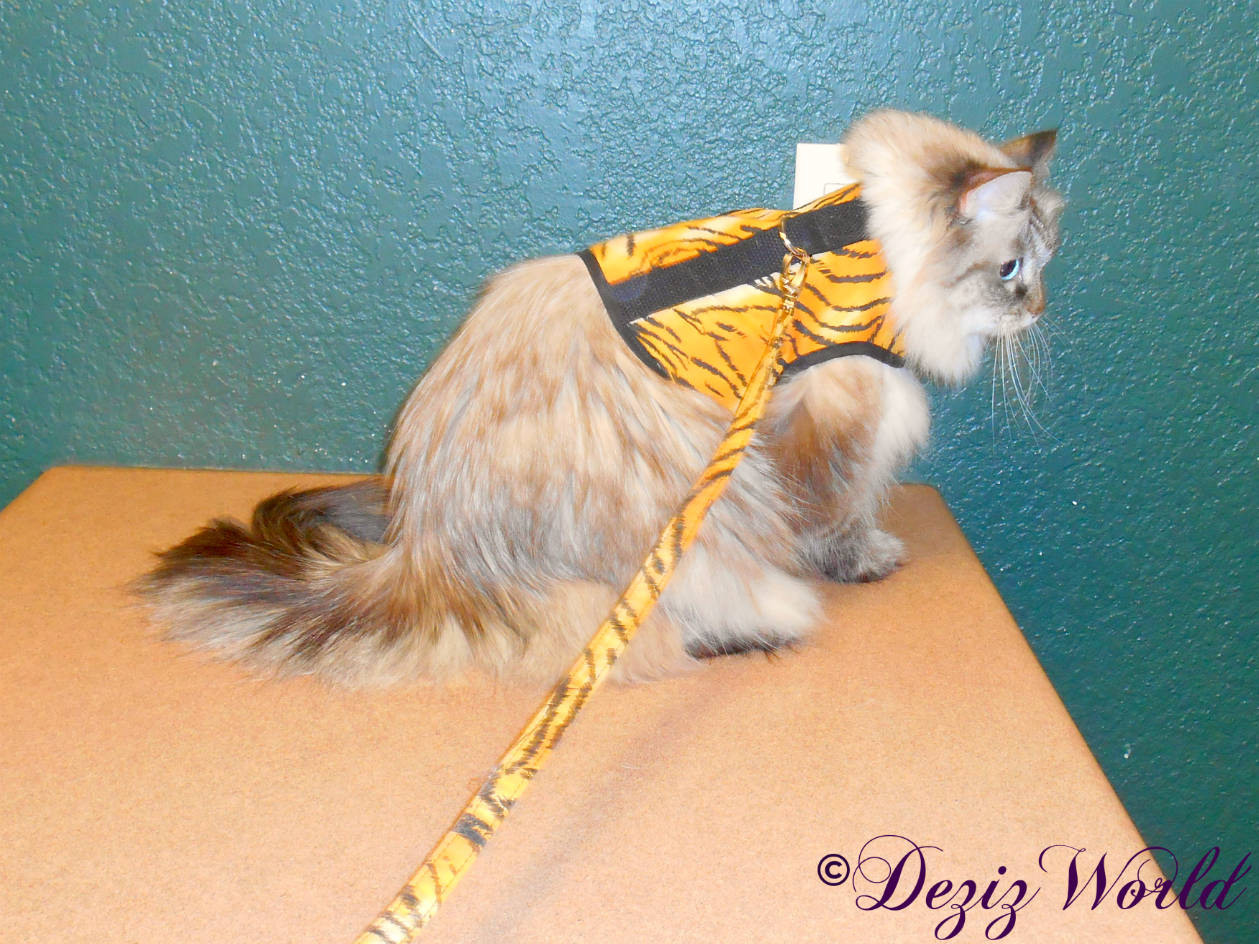
Raena sits posing in her tiger harness


     As we mentioned last week, Flea and Tick Prevention is very important. Whether kitty ever puts a paw outside or not, we are at risk of being infected by some nasty parasites, including Fleas and Ticks. Did you know the Flea can jump up to 7 inches vertically and 13 inches horizontaly? That’s right, this little blood sucker, a 1/16 inch big can leap about 50 times their body length. (wikipedia-fleas) What that means, is that nobody/kitty/doggy/anipal is truly safe. Even if kitty only goes out on the porch and never touches the grass, he/she is still susceptible to Parasites. We mentioned last week that fleas can hitch a ride on just about anything including you in their attempt to find their next blood meal. So, Prevention is very important. It’s much easier to Prevent a problem than it is to wait and Treat the problem. We recommend speaking with your VET regarding Prevention Options.


Dezi and Raena on the Liberty cat tree looking outside


     Now, we were asked, “Are there any natural Flea and Tick/Parasitic Preventatives you would recommend?” And, “What steps does mommy A take to keep us Protected?” One of the best Preventions is a Healthy Pet. That’s right, a healthy pet apparently isn’t nearly as tasty as an unhealthy one. Garlic and Brewer’s Yeast was once thought to be a repellant for Fleas, Ticks and Mosquitos. However, we have since learned that Garlic is actually toxic to cats and Brewer’s Yeast has no effect in the Treatment or Prevention of Fleas. Garlic can cause liver and kidney damage, so please don’t feed kitty/doggy any Garlic. Mommy says a good rule of thumb regarding the use of plant/oil/herb natural remedies is to stay away from items that may be toxic to anipals like bulb plants. A bulbous plant is one that grows a bulb underground instead of a tap root like Garlic, Onions, Lilies, etc.. If you choose to use essential oils or liquid herbs, please talk with your VET, do your own research to determine if it can be safely used on kitty.


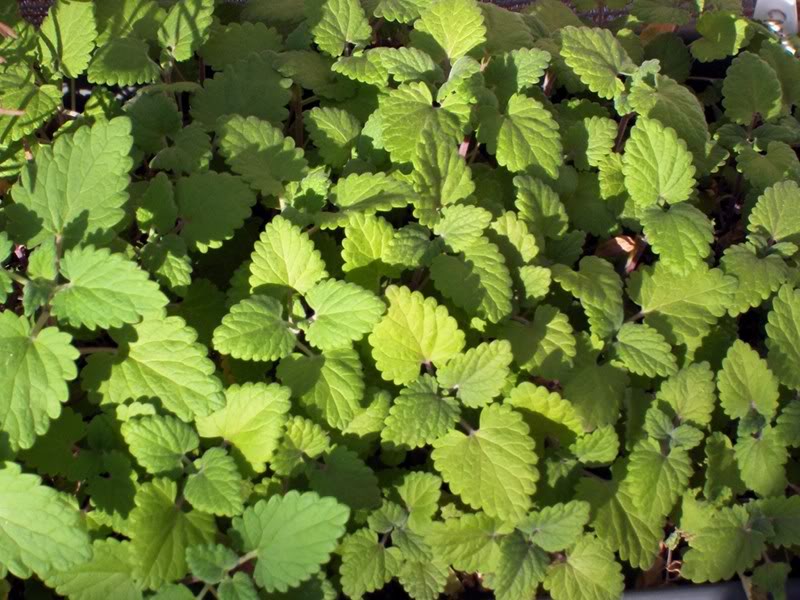
 Catnip plant

Catnip’s a great Natural Flea Purrventative.


     Now, let’s look at some plants you can grow yourself to help Prevent Fleas, Ticks and Mosquitos. Everybody knows the majority of kitties love their catnip. There are exceptions, but that shouldn’t deter you from growing a little nip to use for Flea Prevention. Along with catnip, most of the mint family safely repels Fleas and Mosquitos. Mommy makes certain to grow a few Nip plants, Sage, Rosemary, Basil, Thyme and Marigolds (annual that will seed like a perennial) in our garden each year. The best part is that these plants are perennials, so you really only have to plant them once and allow them to seed at the end of the season. They’ll come back year after year at just the right time to start repelling those nasty parasites. And, if kitty happens to roll around in them, he/she will get coated in a natural preventative. Don’t worry, these plants are pretty sturdy. Kitty won’t cause too much damage to their ability to grow and come back each year. There are essential oils for each of these plants, however, essential oils can be highly toxic to cats, so we recommend only using fresh leaves. It’s much cheaper anyways.


 herb garden clip art


     Other than growing Nip in the garden to help repel parasites outside, how does one use it on kitty/doggy or even the humans you ask? Just harvest a few fresh leaves, crush them and rub directly onto kitty’s skin and fur. You can also make a natural Flea spray. Harvest a few leaves, and boil them in a half cup of water and half cup of vinegar/apple cider vinegar to make a “tea”. Boil for about 20 minutes, strain and let cool. Once your tea has cooled, it can be sprayed directly onto kitty. You could even use it to bathe kitty/doggy.


 Marigold Flower clip art


     Another natural remedy some swear by is Diatomaceous Earth (DE). This can be applied to carpets. The sharp edges of DE will pierce the flea and larvae and dry them out. Before purchasing DE make sure it doesn’t contain any other ingredients. Companies often combine it with poisons such as Pyrethrums to make it more effective. While DE isn’t toxic on it’s own, it can be an irritant if inhaled. Be sure to thoroughly vacuum it up. Speaking of vacuums, one should vacuum regularly and empty the canister or bag immediately. Fleas can live off a host body for some time. Keep kitty’s/doggy’s bedding, blankeys, etc. clean by washing them regularly. Old school farmers used to apply Seven Dust to their animals as a Flea powder. We can’t speak to it’s effectiveness, but it smells like chemicals and toxins, so we don’t recommend it personally. However, it can be used safely outside around plants and windows. 


 Dezi outside in walking harness

C’mon mommy, just let me roll ’round 1 time.


     As we mentioned, we were asked what mommy does to Prevent Fleas. As we said last week, mommy hates using poison on us. However, she typically “fogs” our yard and around the windows with the Bengal outdoor fogger in late April, early May. We are generally not allowed to walk on the ground for at least a month afterwards. We’re never allowed to roll around on the ground. Mommy’s a bit of a germophobe. MOL  As we stated earlier, she has a small herb garden with plenty of Catnip, Sage and Marigolds. Believe it or not, she doesn’t really like the Marigold flowers, but she likes mosquitos even less. And lastly, we’re allowed to “waller”(wallow, roll) around in nip all year long…so long as it’s in the house. During the height of Flea/Tick/Mosquito season, we do use a spot on Flea Treatment. We live in the South where it never gets cold enough to kill off any of those nasty parasites and mommy isn’t taking any chances. Last week, we did say not to let cost of Prevention dictate the Treatments/Preventatives you use. While most commercial Flea Treatments/Preventatives contain a small percentage of poison, those made by Hartz Flea and Tick spot ons have been linked to many pet deaths. We highly suggest you stay away from their brand for this issue. 


Raena goes for a walk outside


We do hope we have provided you with the information you need to make an informed decision about Treating and Preventing Parasites fur your furry family member. We will be introducing a new topic/question next time. Don’t furget to leave your questions and/or topic suggestions in the comments below or send us an email via our contact page. And check out the other posts in this series by clicking on Training Tips and Everything Feline from our menu bar. We’re always happy to expound on a topic; so ifin you don’t find the answers you need in a previous post, just let us know. We’re here to help. We’re also linkin’ up with Comedy Plus fur Feline Furiday


Till the next time………………………………………Be Blest!!!


Luv and Hugs and Kitty Kisses


Deztinee and RaenaBelle         

Service Cats: Should I Use Flea Prevention On My Pet

MeOW Welcome to Service Cats and Everything Feline on Furidays. Every Furiday we focus on answering questions ‘bout the furry purrers in your house. We’re here to offur Trainin’ Tips fur the frisky feline and answers to any question you may have ‘bout behavior, nutrition, health, and anythin’ else you can think of. Just leave your questions in the comments or send us a purrivate email via our Contact Page. We do ask that you be as specific as pawssible, includin’ any relevant examples, when askin’ behavioral questions. Purr request, we’re no longer statin’ the names of those who ask the questions. Your anonymity is safe. Just remember, there’s no stupid question. And, ifin you’ve missed any of the posts in this series, you can check them out on our Training Tips and Everything Feline Page in our menu bar. We got some great questions last week and we’ll be addressing them shortly. Now, let’s get the business outta the way and get to today’s topic. 


Dezi laying in cat tree in new harness


The followin’ post will be written in human English fur reader and translator ease. Our Service Cat posts aren’t intended to be an all inclusive Trainin’ Manual but rather Tips, Tricks and Techniques used/developed by mommy A thru her many years of animal trainin’, cats in purrticular. And to offur insight into your questions about Everything Feline. Always remember, Training is all ‘bout Repetition and Rewards.


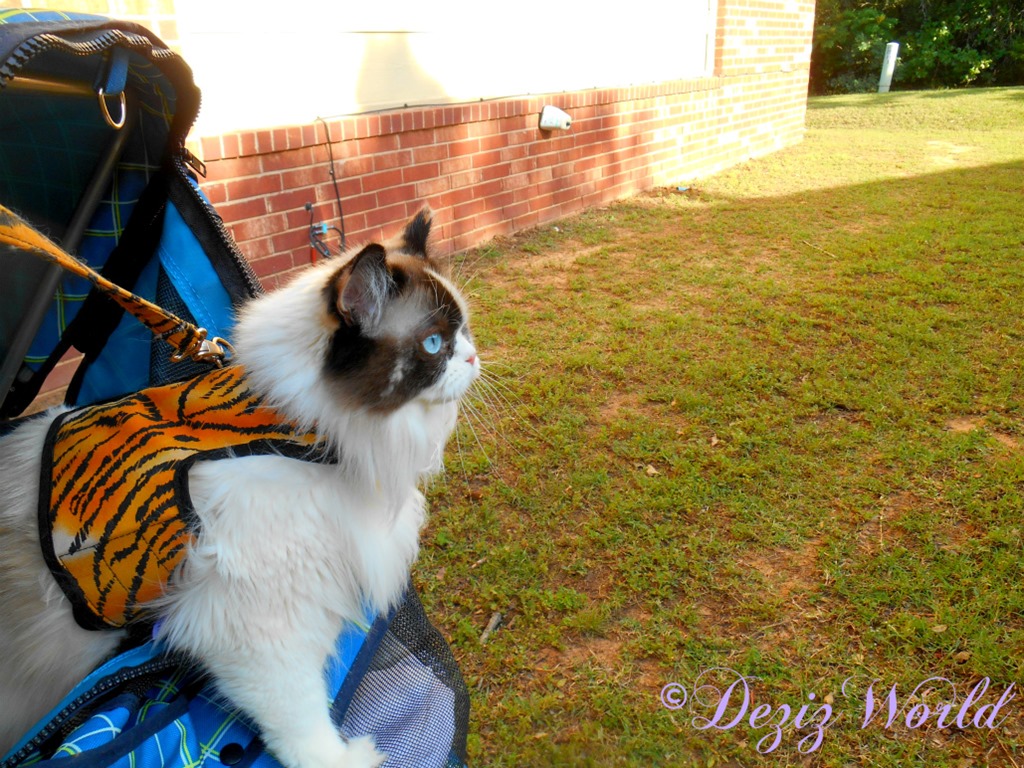
Raena sits in tiger kitty holster cat harness


Last week we meowed a little about kitty going outside of the home. Whether on a leash, in a stroller, going to the VET or a fun trip to the pet store, park or drive thru, kitty should be protected at all times. That includes protecting kitty from any and all parasites that kitty might encounter. We were asked, “How do you feel about flea and tick protection?” Fleas and Ticks are those bloodsucking parasites that can cause all kinds of problems for us anipals and even our humans. For those of us in the South, they can be problematic most of the year. As much as we complain about the weather, it never truly gets cold enough, long enough to kill off many of the insects and pests that carry diseases or want to make a meal of you and your furry friend.


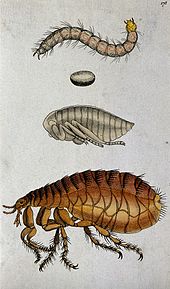
Flea life cycle
Flea Life Cycle Photo courtesy of Wikipedia


First, let’s take a look at the flea life cycle: Egg, Larva, Pupa and Adult. The whole life cycle can last anywhere from a couple of weeks to a couple of months. However, the adult flea can lay up to 40 eggs a day. So, if you see one flea, no doubt, there’s more. Fleas are crafty little jumpers and will hitch a ride on pretty much anything to find their next tasty blood meal. So, for those of you who say, “My kitty never goes outside”, first we’d say, Why? We’ve given you lots of Tips for safely allowing kitty to check  out all their surroundings, including the big outdoors. But, more importantly, fleas can hitch a ride on you, your clothing, or any other pets you may have that do go outside. They’re also the teeniest of creatures and can enter your home thru minute cracks in windows, under doors, etc.. Once the flea has found it’s preferred host, your kitty, the life cycle begins anew.


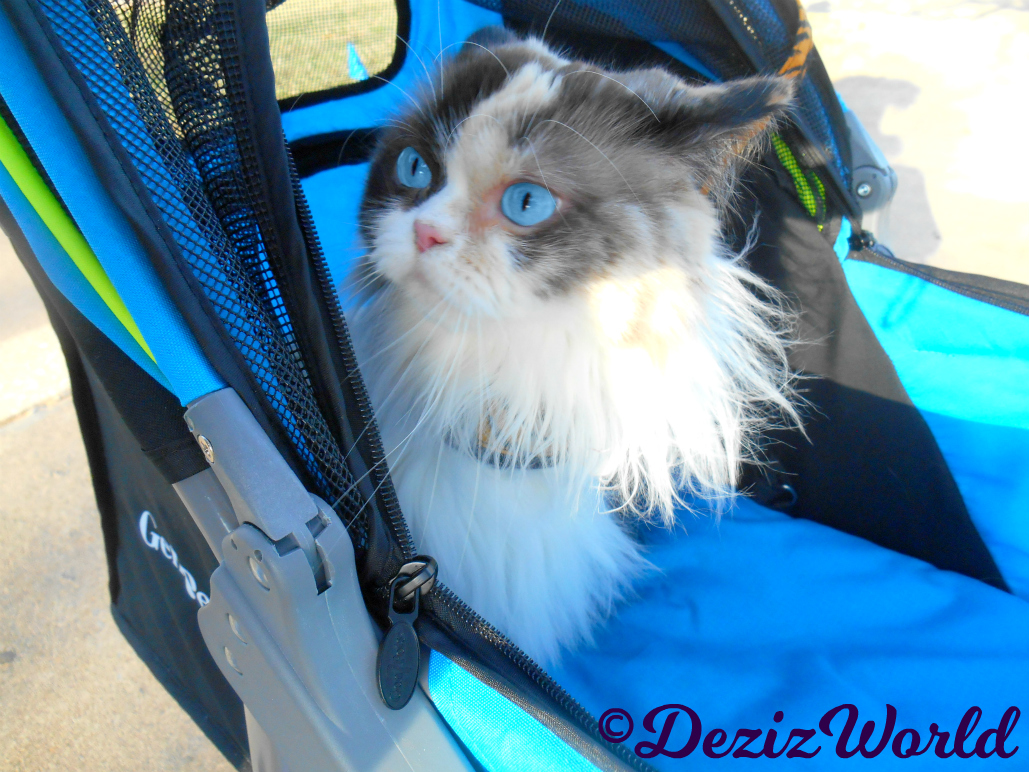
 Raena's adorable face close up while sitting in stroller


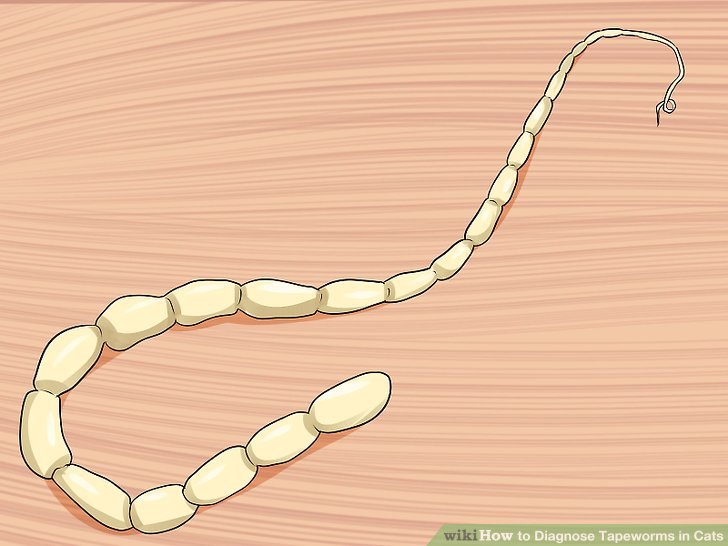
The most common problem caused by fleas, is Flea Allergy Dermatitis ( no photos, they’re very graphic). Symptoms can include, lots of scratching, head shaking and biting at areas of the body where the fleas are, fur loss and hot spots. Another common health issue fleas can cause is Tapeworms. Trust me, you don’t want these nasty critters. Symptoms can be seen by examining your furry pals poopy. if Tapeworms are present, you’ll see lots of little white rice sized worm segments in the poop and possibly around kitty/doggy’s anus. And yes, humans can get Tapeworms from animals. If you see signs of Tapeworm in your pet, Treat them ASAP!!! These things won’t go away on their own. Because the Flea consumes blood, your pet may also become Anemic. Symptoms include, really pale gums, lethargy and possibly low body temps. Anemia is nothing to play around with. If you suspect your anipal is Anemic, see the VET immediately. Anemia left untreated can cause many health issues, including death.


Segmented Tape worm
Segmented Tapeworm Photo courtesy of wikihow


Bartonella, also known as Cat Scratch Fever is the last health issue we’ll cover that can be caused by Flea bites. This is something cats, dogs and humans can get. Symptoms include, fever, vomiting, diarrhea, seizures and swelling of the lymph nodes. Bartonella is very serious and if you suspect your anipal has been infected, see the VET immediately. As if fleas aren’t scary enough, we anipals also have to worry about Ticks, Mosquitos and other parasites like chewing lice, hookworms, round worms and more, including heartworms (caused by infected mosquito bite).


Raena stands on edge of stroller and looks out


So, the question was, how do we feel about Flea and Tick protection? First we’ll say that mommy A hates the idea of putting poison on or in us for any reason. That being said, she also hates the thought of us contracting any of the illnesses these parasites can cause. When mommy saved me, me had a horrible case of Fleas and Tapeworm. Of course me got a bath almost immediately with nothing more than a mild cleanser. Mommy used a Flea Comb to remove the fleas not washed down the drain and then gave me a great blow dry. She then treated me’s Tapeworms with an all natural cure because me was too young to take the actual medication usually prescribed. When using natural remedies, one must remember that they generally take longer to work, so in the case of Taeworms, mommy had to be vigilant about cleaning the litterbox and me’s bloomers.


 Dezi outside in walking harness


Most animal parents are familiar with at least a few of the treatment options available. Treatments include, shampoos, sprays, powders, collars, edible pills and spot ons. We recommend that animals only be treated during the actual Flea and Tick season for the area they live in. Most people tend to “Treat” year round. It’s our opinion that’s not necessary, however, we do recommend checking with your VET. The most effective poisons for treating Fleas and Ticks are Fopronil, (S)- methoprene, Imidacloprid, Pyriproxyfen and many swear by Brewer’s Yeast.


 Close up of Dezi sitting pretty in the stroller outside


As much as mommy may hate putting poison on us, we use a spot on during the spring and summer months. We have a new one we’re trying out right now and will be telling you more about it soon. As most of you know, we are on a very fixed income, but please, don’t take chances with your pets life by using products just because of price. And NEVER, we mean NEVER EVER use a product intended for another species. Using a dog product on a cat could lead to death, and using a cat product on a dog could mean not enough protection. If your anipal is ill, please talk with your VET before using any treatments. Remember, the poison, whether ingested or applied to the anipals skin, will get into their system. You don’t want to over tax a sick animal’s liver/kidneys/heart, etc.. And, if mosquitos are a problem in your area, please consider treating your anipal for heartworms. Prevention just might save their life. If you are using collars or powders, take extra precautions to wash your hands before touching your face, eyes or mouth and keep an eye on small children. Remember, these are Poisons and could be toxic to the young or infirmed. 


 Raena walks towards the woods on her harness


Well, we hope we’ve helped you to better understand the Flea and protection. Altho’ mommy hates it, she believes some evils are necessary in small doses. Optimal temps fur fleas is 70-85° F and 70% humidity. That doesn’t mean they can’t thrive in other temps, but when your temps reach 70°, start thinking about Flea Treatments. Don’t furget you can check out the other posts in this series by clickin’ Training Tips and Everything Feline from our menu above. And, what questions do you want answers too? Leave questions and topic suggestions in the comments below or send us an email. Join us here each Furiday to learn more ‘bout your favorite furry purrer. We’re also joining Comedy Plus fur Feline Furiday.


So, tell us, do you use any parasite preventions and if so, which ones? 


Till the next time………………………………………….Be Blest!!!


Luv and Hugs and Kitty Kisses
 

Deztinee and RaenaBelle