
Category: Human Speak
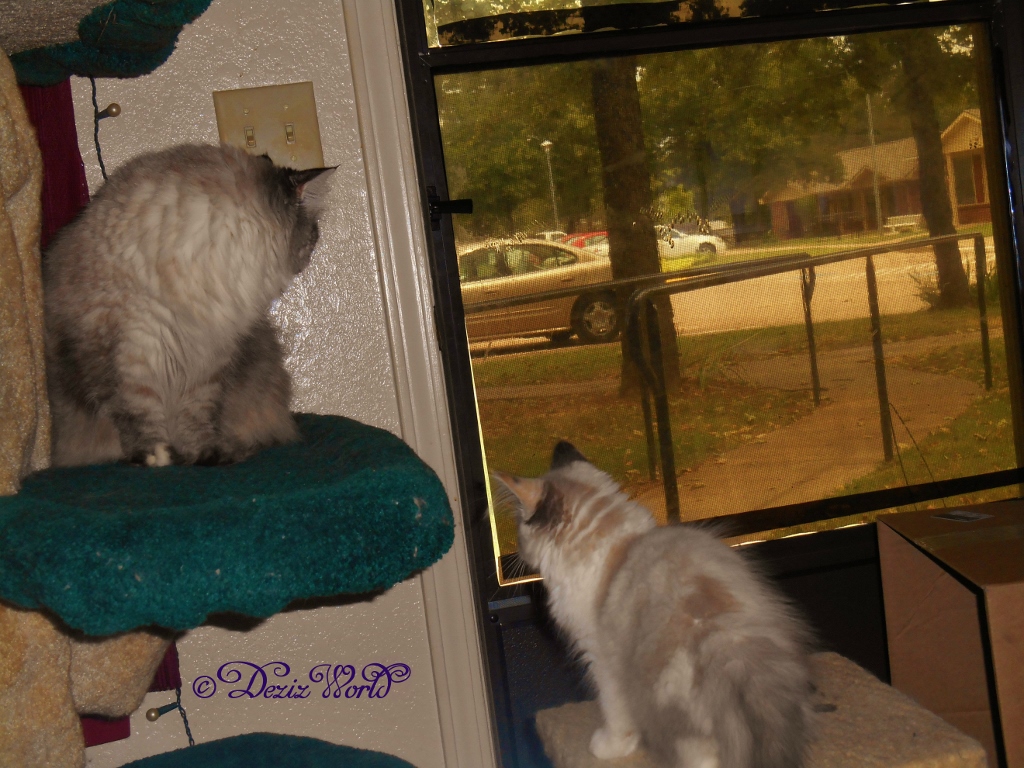
Service Cats: How To Train Kitty To Massage Without Claws
Well meowllo and welcome to another installment of our Service Cat Picking and Training Series. As with all our educational postys this will be written in da human English. Altho’ we will give you tips fur training and will post about RaenaBelle’s training, our posts are not intended to be an all encompassing training manual. Training is tedious and repetitious and doesn’t happen overnight, so keep that in mind befur you decide to take on the training of a Service cat. Ifin you missed any part of this series you can ketch up by clicking on the links below.
Picking a Service Cat Part 1
Foundations of Training Part 2

Now we got a few questions we would like to answer. And we also want to say thank you for your questions. The first question we want to address is the age of the kitten we started with. Several of you mentioned that particular breeders don’t let kittens go to their furever homes till they’re around 16 weeks old. That’s fine. The age doesn’t matter so long as training begins the moment the kitten is in your home. Mommy starts the scent me up game as soon as she picks the kitty up. We chose a younger age because that’s what we’re working with and when adopting from shelters one often finds kittens under the age of 12 weeks old. We will say the younger the kitten is, the quicker the kitten will adjust to your schedule and lifestyle. But don’t let the age of the kitten or cat dictate everything. The most important factor is the bond you develop or already have with the kitten/cat.
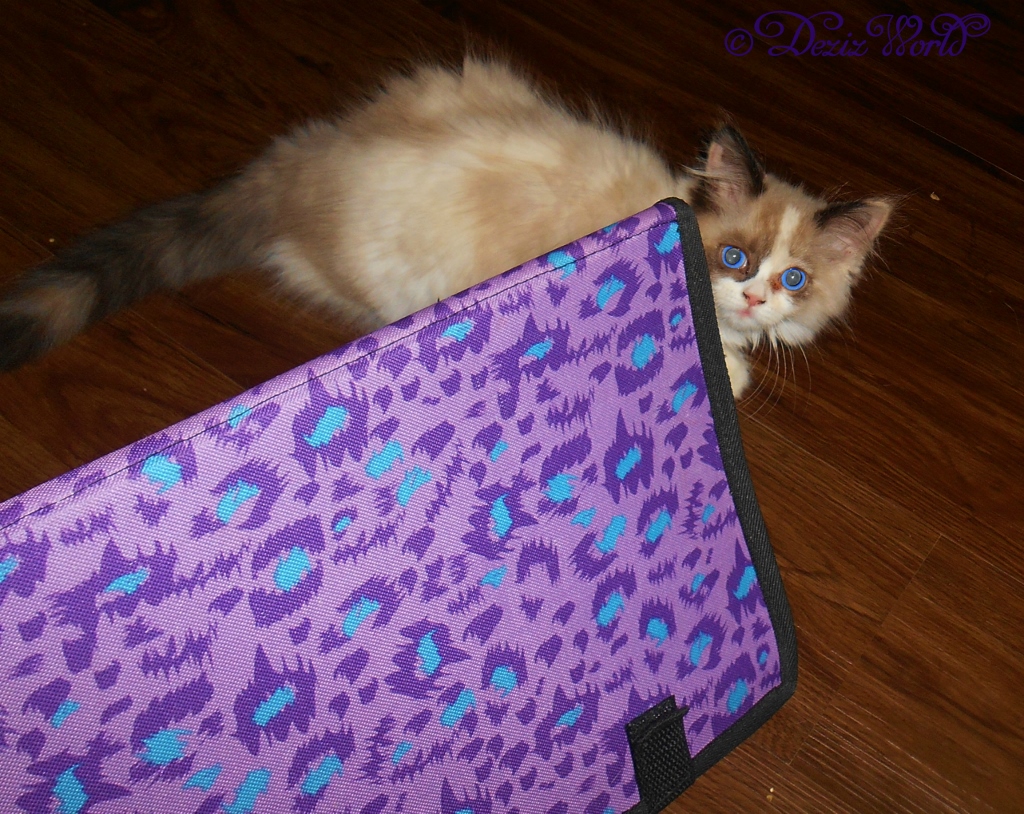
Now, the next question we want to answer is: How much will the new kitten pick up from the resident Service Cat (ie: me, Dezi. cuz it was asked specifically about us) If like us, you already have one Service cat, they will be a huge help in the training of the new Service cat. Like children, kittens want to emulate the older cat.
An example of this: Raena can smell the chemical changes in mommy’s body before a syncope incident, and by watching me alert mommy to sit down, causes her to want to do the same. So the next time she smells that change, she knows she should take action. It’s like clicker training if you will; it’s like the clicker going off telling her to respond. We also need to clear up some confusion about Syncope. Syncope is a fancy medical term for passing out/losing consciousness. Mommy Does Not have seizures of any kind. There are several reasons that mommy passes out, and she tries to avoid those that are caused by actions, but she does have to continue to live. Those times that are not caused by actions are just unavoidable, so having an alert is very helpful. Mommy says it’s so nice not to find herself on the floor and all bruised up or with a crowd of people all around blocking her air.

The last thing we want to talk about today is Kitty Massage. DO NOT DECLAW KITTY!!! Please know we are Not passing judgement as mommy had done it in the past when she was young and ignorant. BUT, it’s not necessary. A lot of you talk about how your cats like to “make biscuits”. Kneading is as natural to a cat as purring, and can be focused and trained for massage. Altho’ Ragdolls are known to be soft pawed, we can still get excited and the claws will come out. So mommy needs to train us to keep those claws in. We massage her head and body everyday. And yes, Raena is already learning to focus her kneading to specific areas. Altho’ she’s smart and tried to massage mommy’s head her first day here. As training progresses with Raena, we will try to get better photos. Altho’ some photos will never be taken because of the circumstances surrounding the trained behavior. We will of course inform you of those times.
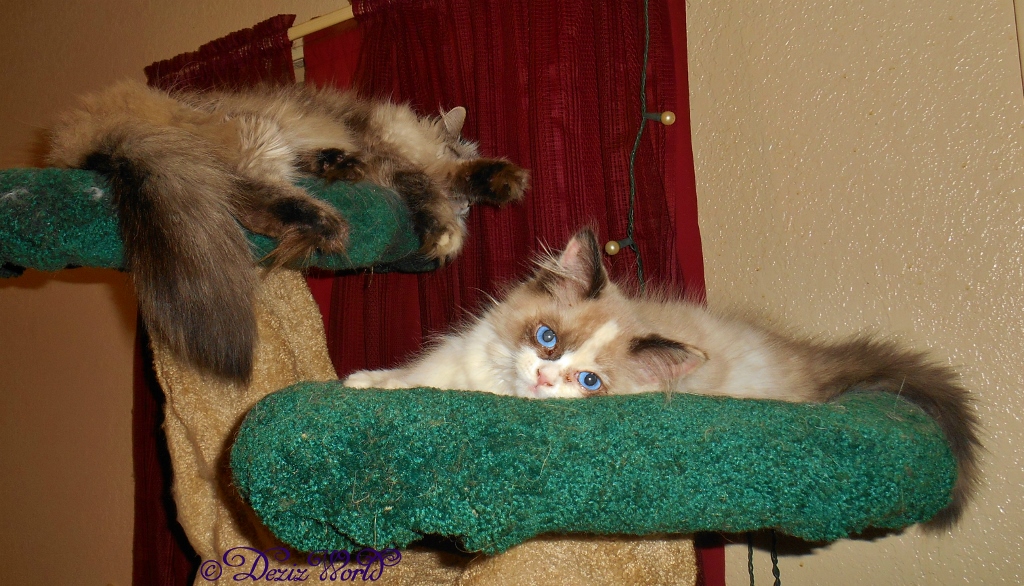
Anyways, with kitty on your lap or laying next to you, initiate the kneading process. You know what gets your kitty to knead. Mommy generally uses cooing and petting. It’s that sweet talk to kitty telling them how much she loves us and how pretty we are, etc. That gets us going everytime. At first kitty generally keeps their claws in. It’s once they get a little excited that the claws start coming out. Mommy quietly says “ouch” and gently taps kitty’s paw with one finger only and says “No Claws”. This is repeated until the claws are retracted. It’s important that you not scream, jump, hit or get frustrated. When kitty retracts, mommy says how much she loves us and how blest she is to have us and what a great job we do. Eventually, kitty will learn to keep the claws in and the kneading becomes more of a pushing instead of the traditional push and pull. Once this behavior is learned you can start to focus it on specific areas. We’ll talk more about that in a future post.
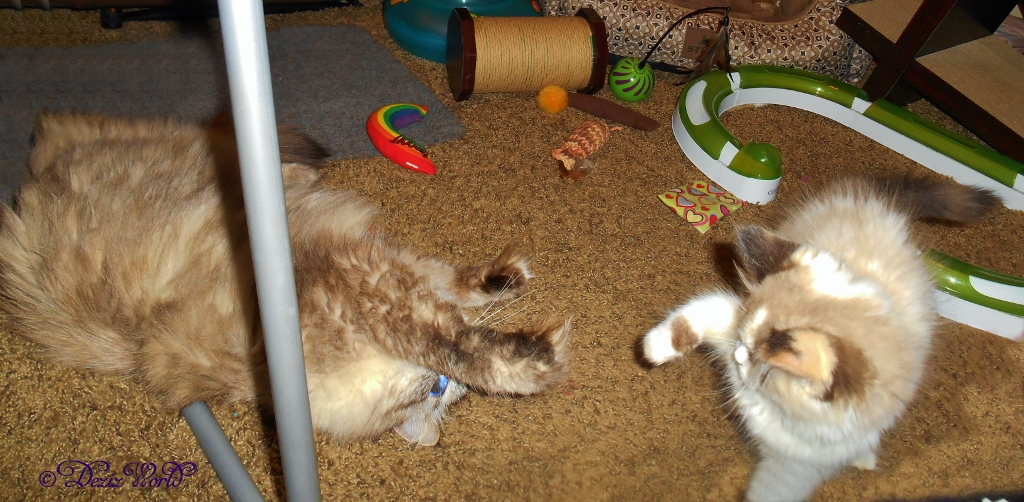
You’ve all been waiting to see our patty cake game photos. Sorry it’s not great, but here it is.
Me’s gonna wrap it up now. We hope we’ve answered your questions. Purrlease leave any additional questions in da comments; or ifin we didn’t answer your question clearly let us know. We don’t know what or how much you all want to read here, so we’re just kind of playing it by ear. Altho’ mommy has started Raena’s training, she’s still to small for a lot of things. She can learn massage at her current size and learn to obey (come when called, stay, lay, be quiet, etc.) and to alert, but not much else. So let us know if there are specifics you’re interested in hearing about. Now, mommy’s case manager is comin’ by today. And da girl mommy was gonna hire to help her ‘round da house fell thru so we’s gotta run some more ads; so we’ll be by to visit as soon as we can.
Are you (humans: have you) trained to do anything particular?
What incentive do you want (do you give)?
Till da next time…………………………………..Be Blest!!!
Luv and Hugs and Kitty Kisses
Deztinee and RaenaBelle

Service Cat Training Foundation
MeeeOW everypawdy, hope you all had a great weekend. It’s another miserable Monday and we ain’t da least bit miserable. Okay maybe a little, da lawn crew’s here and da hots have arrived. We’re all tryin’ to stay cool and me’s tryin’ to hide. Raena? She’s right at mommy’s side bein’ a great Service kitty in training. Anyways, are ya ready fur another educational posty ‘bout pickin’ and trainin’ Service Cats? As with all me’s educational postys this will be written in da human English fur translation purr-pusses. Ifin you missed me’s furst posty in this series, you can check it out here. We got some great questions and comments so we’ll try to answer them today. Ifin we didn’t answer your questions or you have more, purrlease leave them in da comments or use our contact us page to send us an email. Now let’s get on with it, shall we?
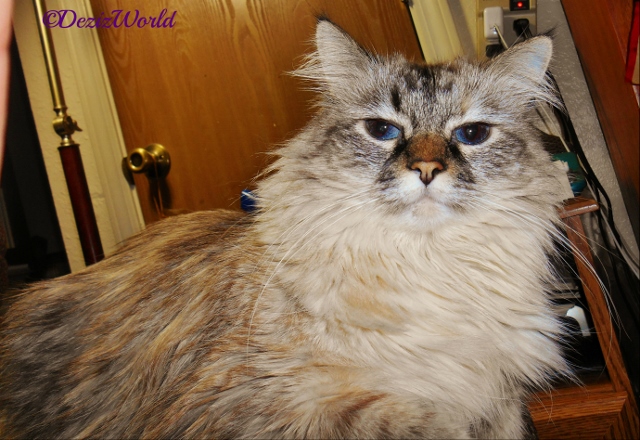
Last week we discussed how to pick a cat to train. We said that neither breed or sex matters. The most important thing to look for is a kitty that wants to be with you and is both outgoing and calm. Yes, that kitten/cat does exist. We also stated that you must be realistic in your expectations of the things a cat can do. While us kittys may be able to do things you might not expect, it shouldn’t be forced. In other words, don’t expect kitty to carry anything that weighs half their weight, much less more than them. The average weight of a healthy cat is between 8 to 12 pounds. That can vary from breed to breed, but do keep these numbers in mind when determining tasks for your kitty to perform. Remember, ALL TRAINING is based on kitty’s natural instincts. And, for the purpose of these posts we are focusing on a kitten of 6 to 8 weeks.

We were asked again, if Ragdoll cats are better suited to being Service cats. Our answer is still NO. Mommy has had and trained several Service cats and till me joined her, she had never had a Ragdoll. For mommy’s particular needs, Ragdolls are a good choice. This goes back to our first post and knowing what tasks you need performed and if a particular breed would be better suited to those tasks and your lifestyle.
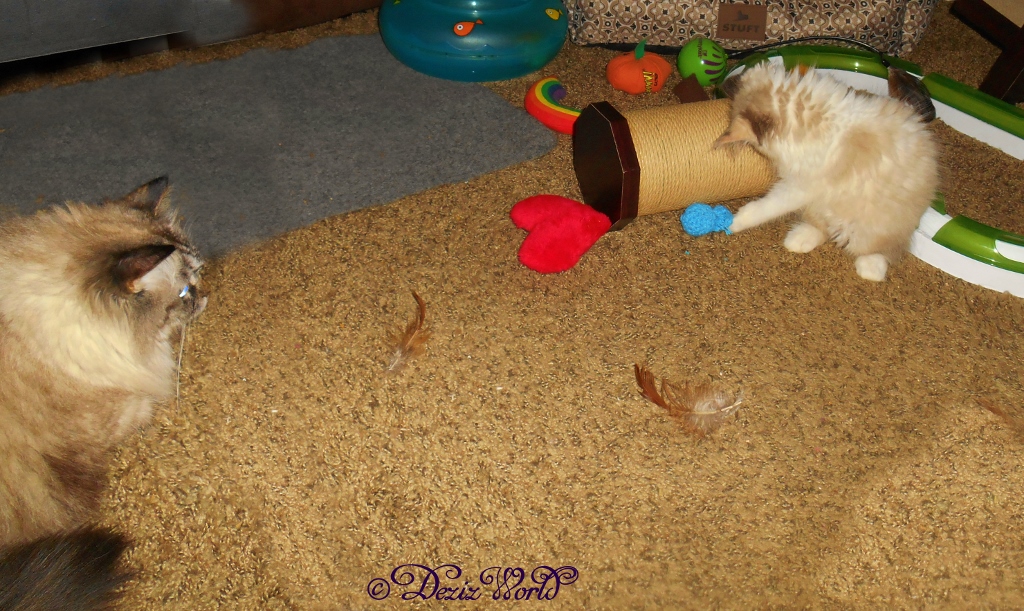
The next big question we got was:
At what age can training begin?
Mommy says training begins the minute kitty comes home. You want kitty to perform tasks without fail. You need to develop a close bond with kitty. You’re going to want kitty to feel rewarded when they receive extra love and pats as opposed to treats. Mommy has a game she calls “Scent Me Up”. She rubs her cheeks and chin on kitty’s cheeks and chin. She often speaks softly while doing this. Mommy will say things like I love ____________(insert name), or ____________(insert name) is such a good kitty, this will also help kitty learn it’s name. Scenting is a natural behavior for kitties where they deposit their scent on whatever they’re rubbing; thereby owning/claiming that person or object as theirs. This is also one of the ways cats greet each other and treat their family members. Doing this brings you closer to kitty. Typically this behavior will cause kitty to respond in kind, purr and occasionally start kneading. The kneading behavior will be focused and become massaging as training progresses. You may or may not need kitty to perform massages for you, but this is a task that we perform for mommy several times a day.

If you need kitty to perform massages, PLEASE, DO NOT DECLAW KITTY!!! We will tell you how to get kitty to retract their claws in a later post.
The “Scent Me Up” game should be repeated several times a day for about 1 to 3 minutes each time. Remember, kitty has a short attention span and doesn’t want to be held still for long periods of time. And the last thing you want to do is cause kitty to run from you when it’s time for training. At some point, kitty will start initiating “Scent Me up” themselves. At this point, kitty is well on their way to a very strong bond with you. Kittens respond at different times and mature differently so there’s no set age or time limit for when this happens. Mommy continues “Scent Me Up” throughout our entire life. Sis Lexi had a “Scent Me Up Session” her last day here with us; and me gets them everyday too. Training continues even after the goal is reached. Remember, Repetition is the name if the game.
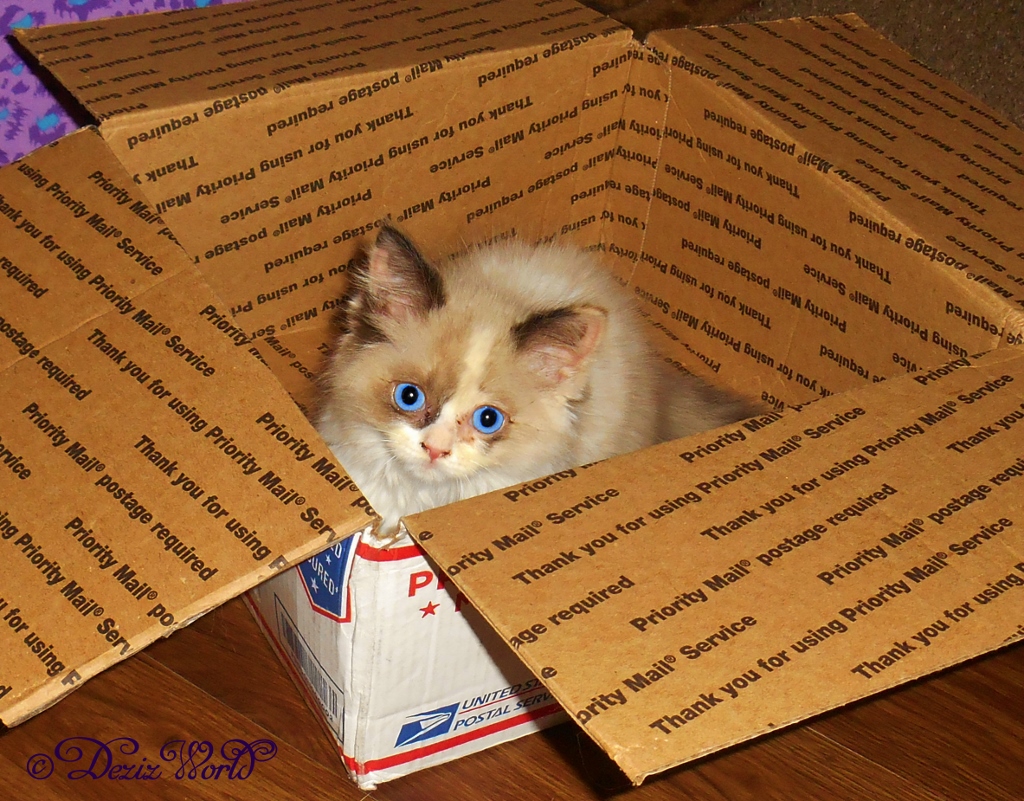
Some of the tasks we perform for mommy are dialing 911, carrying the phone to her, massages, Driving the wheelchair, and alerting to a syncope incident. So our size and weight come into play to determine when training starts. Raena weighs less than 2 pounds, so asking her to carry a phone or even press the buttons is expecting too much. But mommy can start to focus her kneading, and she can watch me alert mommy to a Syncope incident and learn to do it herself. All animals can smell the changes in body chemistry that occur before Syncope, Seizures, Heart Attacks and many other medical conditions; but not all animals will alert to those changes. Because mommy passes out several times a day, Raena gets lots of exposure to the smell and actions me takes. She’s doing pretty good. She alerts 75% of the time. She’s still young and hasn’t been with us very long so we do expect that she will eventually be at a 100% alert rate before long. Once she alerts 100% of the time, we can officially say that she has been specifically trained for that particular task.
Mommy says to watch kitty closely. How do they play? Do they have a particular quirk? Even if you think it’s annoying, how can it be focused and turned into a usable task. Again, training is most effective when kitty’s nature is taken into consideration. If you’re going to need kitty to be around water often, then kitty needs to get baths early and often and/or be a water loving breed. That doesn’t mean you have to scrub kitty down all the time, but they must be comfortable getting wet and being dried off. If you need kitty to be in a noisy office or area, then you must expose kitty to that type of atmosphere often and at a young age. But remember, it’s always good to provide kitty with a quiet escape. Mommy can throw a towel over our stroller to give us that escape. We still have access to mommy but we can safely take a break from all the hubbub.
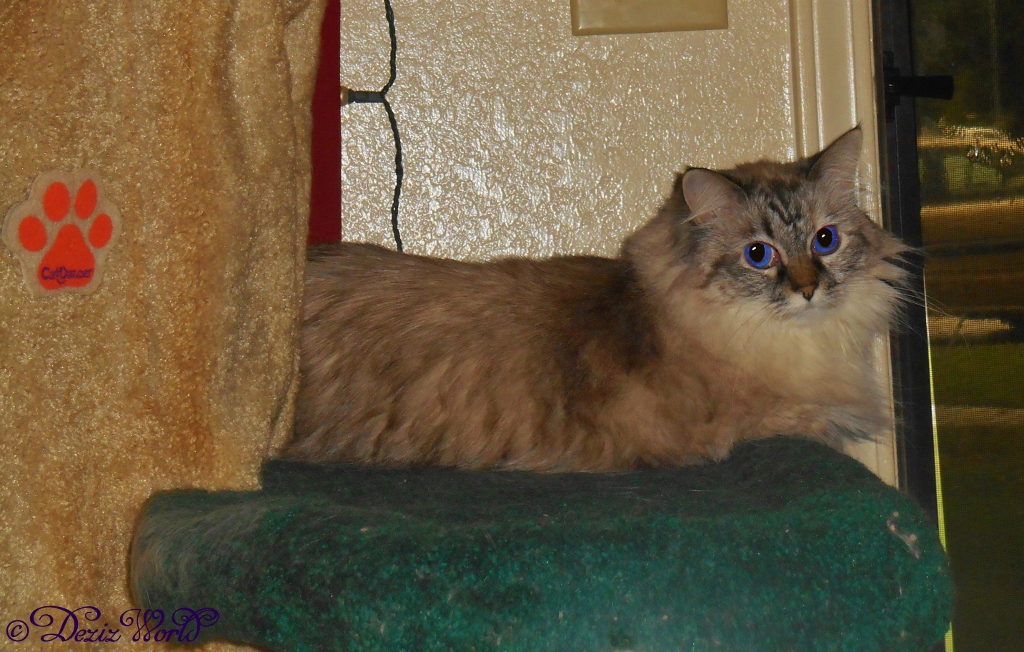
Me’s gonna wrap it up for now, this is a lot of infurmation to digest. The first step in training is the foundation and most important one. Without that bond, kitty will never be 100% accurate 100% of the time.
Are there any particular tasks you’re interested in?
Is there a task that you would like to know if kitty could perform?
Do you have any questions we haven’t addressed?
Till da next time……………………………Be Blest!!!
Luv and Hugs and Kitty Kisses
Dezi and Raena
Service Cat: What To Look For
Meowllo everypawdy, welcome to miserable Monday. It’s not miserable, we just like callin’ it that cuz it’s da end of da weekend. Anyways, you ask and we’re gonna tell. Today’s posty will be in the human English flavor so it can be translated and/or easily read by anybody as it’s one of me’s educational postys. We were asked many times while searchin’ for a new kitty just what qualities or traits would make a good Service kitty? Is there a particular breed that is predisposed to being good Service kitties? And we’ve been asked many times, “I already have a cat at home, can she be trained as a Service Cat for me/my child/etc.”. And we even had an application turned down by a rescue who didn’t want their kitties to be working cats. We don’t blame the rescue, we blame ignorance. But me will save that for part 2.
Now remember Service Animals are different than Therapy Animals, Companion Animals and Pets. For a complete description please see our Service Animal page in the menu tab or click here. And Please, DO NOT pass off your Therapy animal, Companion animal or Pet as a Service Animal. And remember, there are always exceptions to every rule. You are dealing with living, breathing, thinking sentient beings. The amount of time you spend with an animal will also play a role in their personality. Alright, let’s jump into this.
Let’s answer the last question first. Mommy believes any cat can be trained. So, if you already have a cat that you are bonded too, then YES, he/she can be trained as a Service Cat. The operative word is “Bonded”. A cat will be most closely bonded with it’s primary caregiver. If you don’t have a cat or aren’t bonded with the cat in your home then we do recommend getting a kitten. Kittens have very short attention spans, and see training as an adventure. We recommend adopting a kitten under the age of 8 months. For the purpose of this article we are going to focus on a young kitten between the ages of 6 to 8 weeks.

So, you’ve decided you need a Service animal and you want it to be a cat. Keep in mind cats are fairly small animals so there are limits to what they can do. Don’t expect your Service Cat to perform tasks contrary to their nature or size. Also keep in mind that the ADA doesn’t recognize them as Service Animals. For the full definition please see our Service Animal page. Okay, you’ve thought it over, looked into the laws (state/country and federal) and you’ve determined a cat is the right animal for your needs; where do you find one? Most likely you will have to train the kitten yourself, so decide what training method you want to use and Be Faithful with it. Training is repetition, day in and day out. You can find your Service Kitty in Training anywhere. Rescues, shelters, breeders and neighborhood strays are where you start. We do not recommend ferals or semi-ferals as too much training time is lost just getting kitty to trust humans.
Things to keep in mind when searching for your Service Cat:
How big will kitty be when he/she grows up?
Is kitty chatty or quiet?
Does kitty appear to be outgoing and confident or shy and withdrawn?
Will you need kitty to travel outside your home to perform his/her duties?
Does kitty have long fur or short?
If long, can you provide daily grooming?
Does kitty appear healthy? Get kitty checked by a VET ASAP after adopting!
Knowing a little about the breed of kitty will help answer some of these questions. Remember, breed profiles can tell you a lot, but kitty’s environment will also play a role in kitty’s personality. For instance, Oriental breeds like Siamese are known to be very vocal and slender. Persians, while beautiful, have very long fur that requires a lot of maintenance. The generic Tabby cat is known to be hardy with few health issues. So it’s best to check breed profiles before you start your physical search. Knowing what tasks you need kitty to perform will help determine which kitty would be right for you and fit into your home and lifestyle. A mixed kitty will exhibit some of the traits of it’s purebred ancestors, so use some common sense and choose the best fit for your needs. Or better yet, let kitty choose you.

We were asked if Ragdolls made better Service kitties than other breeds. The general answer is No. Sis Lexi was one of mommy’s best Service Cats and she wasn’t a Ragdoll at all. And mommy didn’t start her search looking for a Ragdoll, that’s just where we ended up. God had a plan and Raena is it. For the tasks mommy needs performed, Ragdolls do make an excellent choice because of our size and we are considered “soft pawed”. That means we don’t use our claws. Since one of the tasks mommy needs is massage, she says it’s nice to not have claws digging into her head and body. For those of you who are new to our blog, mommy has had several Service kitty’s thru’ the years. The first was Shad, a Persian, and then Devon the Himalayan, sis Lexi a Mau, Lucky, a Siamese mix, and Ransom, a Ragamuffin. Mommy says the best Service kitty is the kitty who wants to be with you.

So, you need kitty to accompany you outside the home. Look for a confident and outgoing kitty. By confident and outgoing we don’t mean the one that’s bouncing off the walls, but rather a kitty that seems to be interested in new things and curious but also enjoys quiet time with you. Altho’ you can train shy kitty to be outgoing and confident, it’s easier for most people to just start with one. A Service animal must be under the control of their handler at all times and may not disturb others while performing their tasks. So while kitty is in public there must be no excessive meowing, hissing, scratching, trying to escape, etc.. Kitty must also be leash trained and comfortable in their harness. We highly recommend a pet stroller if kitty needs to accompany you. Kitty stays safe but still has access to you. We are very capable of alerting mommy to a Syncope incident from inside the stroller.
Mommy is home with us 24 hours a day so she doesn’t really look for specifics cuz she knows that kitty will act a bit differently in our home than it does in a rescue, shelter or breeders house. And she has been training animals, specifically cats for many years. We Do Not recommend the hybrid breeds like Savannahs, Bengals, etc. for Service Cats. Altho’ they are very smart and easily trainable, generally people with disabilities don’t have the ability or space to properly take care of them. Sex isn’t important as your Service kitty should be spayed or neutered at the appropriate age. Kitty will also be required to be up to date on their vaccinations if they accompany you outside the home. And please inform the rescue, shelter or breeder that you intend to train kitty to be a Service cat.
 Service Cats U.S.