Service Cats: What Happens When the Handler Dies

Here we are, another Miserable Monday. Dat means it’s time fur one of our educational Service Cat postys. As always, da followin’ will be written in human English so everypawdy includin’ google translate can read it. Our doggy brofur furiend Easy, really is on top of his game. He asked another great question last week dat we’re gonna try to answer this week. As always, ifin ya’ have any questions, or somethin’ specific you’d like us to cover, purrlease leave it in da comments, or send us an email. Ifin you’ve missed any of da posty’s in this series, you can ketch up by clickin’ da linkys below.


Dezi in her work harness on cat ledge

Service Cats: What to Look For 

Service Cats: Training Foundations 

Service Cats: How to Train Kitty to Massage without Claws

Service Cats: Smelling Disease 

Service Cats: Do You Need One

Service Cats: Who Bears the Cost 

Service Cats: Housing Laws and Exceptions 

Service Cats: Accommodations and Common Sense 

     Now that you’re all caught up, let’s get to today’s topics. So what did Easy ask, right? Well here it is, “What happens to a Service Animal when their disabled handler no longer needs them?” 

       We need to remind you that our answers are only as it applies in the U.S., if you live in another Country, the laws/rules may be different. So please check your local regulations.  
Raena reaching out from the perch to alert mommy
Raena Alerting to Syncope incident

So, your first question is probably why would they no longer need the Service Animal? In the event of death or admittance to a nursing home a person would no longer require the assistance of a Service Animal. You must remember as well, that these animals are purchased and under current laws, animals are considered property. For the purpose of this part of the explanation, we will discuss the Service Dogs that the ADA does recognize. Most of these animals are trained by individuals living across the States, belonging to one of a few different groups. Depending on the age of the animal and it’s specific training (ie: guide dog only) and the amount of time spent with the handler, they may opt to take the animal back and re-sell it to another disabled person. They will not refund your payment or pay you any fees for the animal. The family of the disabled handler may choose to keep the animal and let it live out it’s days as the family pet. Some breeds do better at this than others. Remember, these animals are working animals and not pets. They don’t understand retirement.

Before we get to the second part of Easy’s queston, let’s discuss the other Service Animals not yet recognized by the ADA, like cats. We have met a few people who have learned that their cats are alerting them to seizures, etc. that haven’t been trained. Altho’ the Cat/animal is performing a task, it doesn’t meet the current requirements of the ADA since it wasn’t specifically trained. For the purposes of this article, these cats/animals are not included in this topic as they are essentially still pets. So let’s get to those non traditional Service Animals (Cats)


Firstly, there are very few trainers for cats and other animals because they’re not recognized by the ADA , so there’s no money in it. And until recently, cats weren’t necessarily seen as trainable. So like us, the disabled handler often trains the animal themselves. Cats are a different species with different needs and bonding abilities. Unlike dogs, cats don’t feel the need to love everybody or make friends with every human they meet. Because of this, re-homing a Service Cat to work for another disabled person is nearly impossible. Altho’ mommy’s never seen or heard of it, we won’t say completely impossible, as it may be done in the future. We will say, we don’t recommend it, as the cat may not perform. Because of the bond that must be formed between a disabled handler and the cat, the services provided will only be for that one specific person for the lifetime of that cat.

 Dezi in stroller

Remember, these cats are working animals and not pets. It is possible for them to continue to live with any family they currently lived with. They will mourn and be confused but with the proper love and attention, it is possible for them to live out their lives peacefully. If there is no family however, what then? Depending on the age and training of the cat, they may or may not be able to rehome as pets. A young kitten, only starting training for example, may be rehomed as a pet or to another who needs similar tasks. Typically by the first year, a Service cat is so bonded with their handler they cannot be separated and thus cannot be rehomed. Keep in mind, these cats and their handlers are together 24/7/365. We don’t want to offend anyone, but no matter how bonded you think you are with your pet, it doesn’t match the bond between a Service Animal and it’s handler. The handler literally relies on the Service Animal for life and vice versa. In this instance humane euthanasia when the handler dies is the best outcome for the animal.

The last part of Easy’s question, was, “Do Service Animals end up in shelters like other animals?”  The idea of a shelter makes us sad for any animal, but the hard truth is, Yes Easy, it is possible for a Service Animal to end up in the shelter. These animals are often put to sleep because they have traits seen as undesireable by adopters, because adopters don’t understand what the animal is doing. A family of the deceased handler who doesn’t know, care or want to take on the animal may take it to the shelter. A working animal will always be a working animal. This speaks to the reason people need to understand a little about breeds before adopting a pet. A herding dog will herd, whether it’s children, sheep or cows. the Service animal will continue to try to perform tasks, and may be considered problematic.

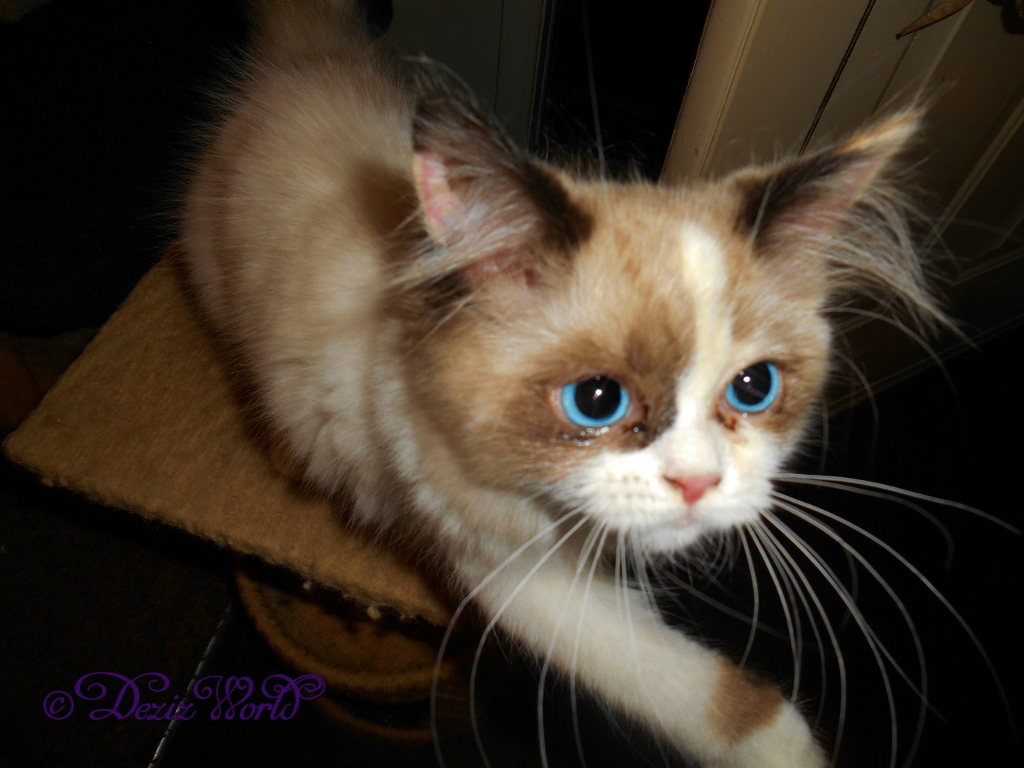
 Raena sits pose

There aren’t currently any rescues specifically for Service Animals to go to live out their lives. However most of those types of places do want a donation or money left in a trust or will. There’s nothing wrong with that, but again, Service Animals are generally owned by people who are on fixed incomes. And again, Service Animals are working animals. They are not pets. Adjusting to life after the loss of their handler is easier for some species and breeds.

This is definitely something to take into consideration when deciding if you need a Service Animal and what kind. Altho’ most people with fixed incomes and considered poor do not leave wills as there’s nothing to leave; if you have a Service Animal we recommend you have a will or directive and someone specified to take care of your Service Animal in the event of your death. Please make sure your Service Animal doesn’t end up in the shelter. For that matter, if you have pets, please make sure you have a plan for them in the event of your death. And the, my ____________ will take care of them isn’t a good enough plan.

 Dezi looking around on the cat tree

Well this has been a really deep post, so we’re gonna wrap it up for now. We do hope we’ve answered your question, and given others something to think about. Again, please leave your questions, thoughts, or topics you’d like us to cover in the comments. 

Do you have a will or designated person to care for your pets in the event of your death? 

Have you discussed alternative solutions with your family and/or Vet? 

Till da next time………………………………….Be Blest!!!

Luv and Hugs and Kitty Kisses

Deztinee and RaenaBelle    

Service Cats: Accommodations and Common Sense

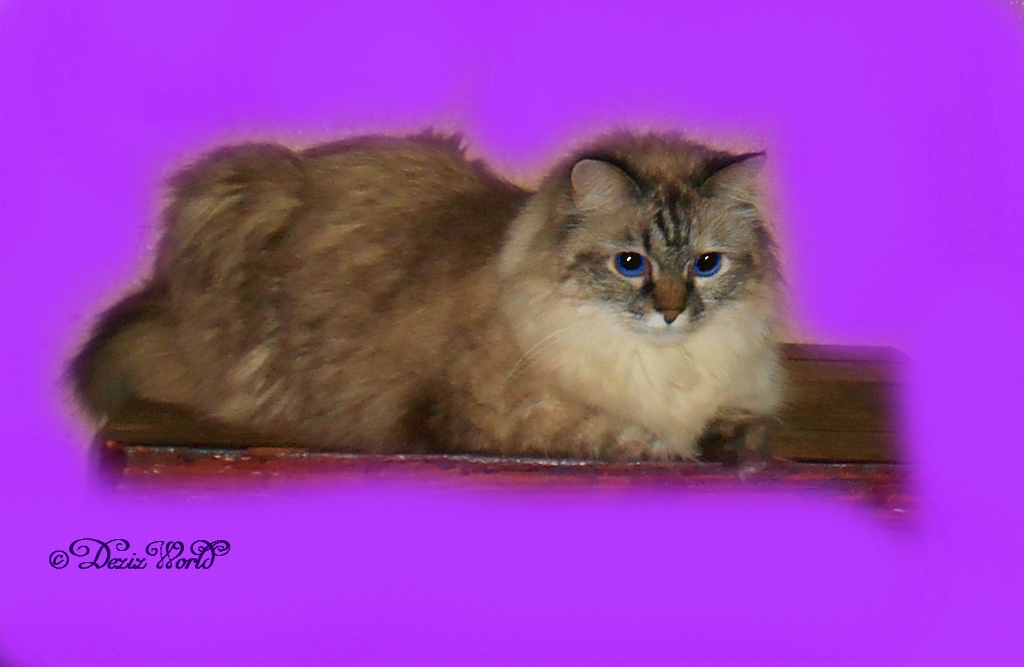
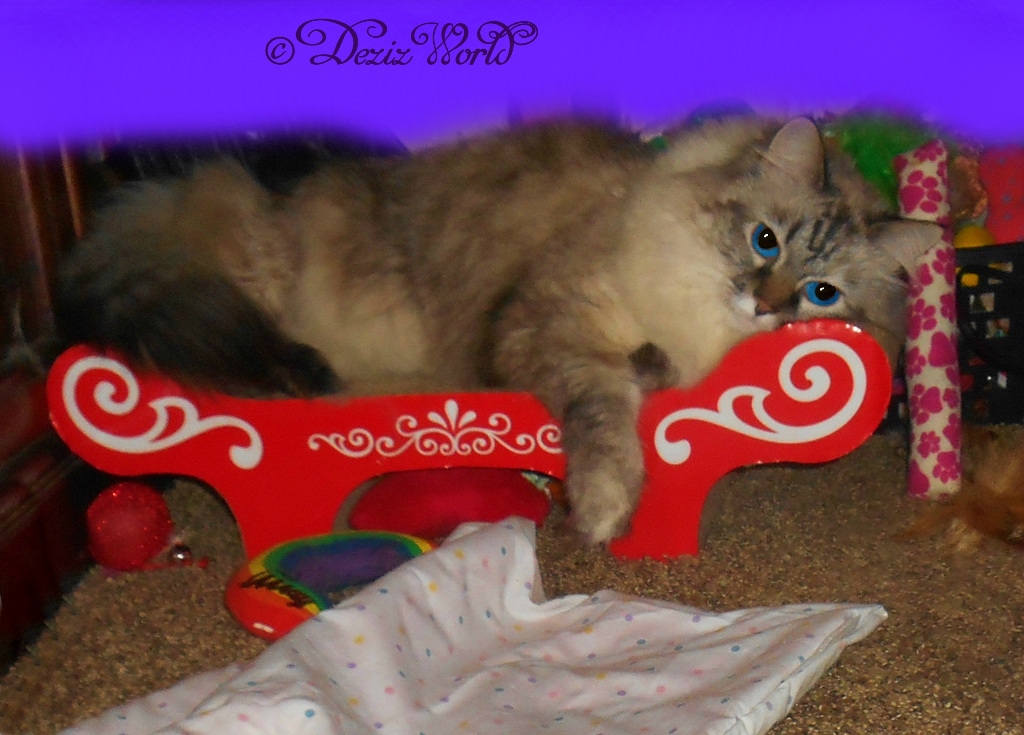
Dezi in a purple haze

Meowllo everypawdy and welcome to another Miserable Monday. No it’s not really miserable, but it is gonna be busy. We’re gonna bring you another installment of our Service Cats posts today. As with all our educational postys da following will be written in human English. While you’re readin’ our posty and goin’ ‘bout your day, me will be havin’ a mommy and Dezi day out. It’s time fur mommy’s monthly doctors ‘pointment and since we have a/c in da car again, mommy’s takin’ me fur da day. WooHoo   Ifin you’ve missed any of da posts in this series you can ketch up by clickin’ da links below.

Service Cats: What to Look For

Service Cats: Training Foundations

Service Cats: How to Train Kitty to Massage without Claws

Service Cats: Smelling Disease

Service Cats: Do You Need One

Service Cats: Who Bears the Cost

Service Cats: Housing Laws and Exceptions 

 Raena reaching out from the perch to alert mommy

Okay, Now that you’re all caught up, let’s get to today’s topic. As we discussed last week, certification isn’t required or regulated for Service Animals. Because of this, a lot of people claim their pet is a Service Animal so they can get around certain laws and rules. Unfortunately you may even know some one like that. Yes, there are some bloggers and others in social media right now that make such claims so that their animal can fly in the cabin with them for free. Others do it to avoid paying pet deposits and/or fees in housing, or to force a landlord to accept a breed or size of animal that they wouldn’t normally accept.

Our pawsum doggy brofur furiend Easy the Weimereiner asked last week, If a landlord doesn’t allow pets, would they have to allow a Service Animal in their property? Unfortunately Easy, YES. That’s right, the answer to that question is yes. Even if a landlord doesn’t want animals in their home or apartments, they have to make an exception for Service Animals. Now remember, they cannot ask for proof that said animal is in fact a Service Animal, they have to take your word for it. And because of the confusion about the definitions of Service Animal, Therapy Animal and Companion/Emotional Support Animals, they are often taken advantage of.

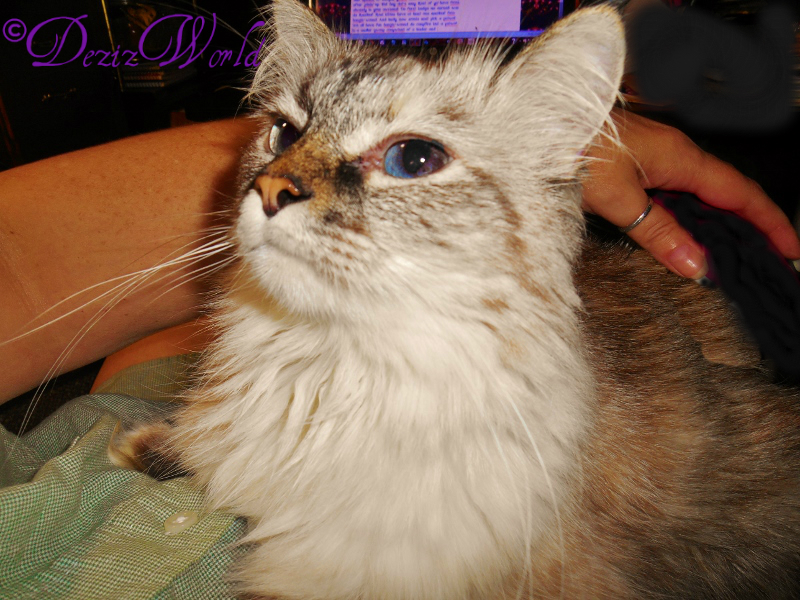
 Dezi laying in mommy's lap

 Just sitting in mommy’s lap with her petting me has a calming effect.

But this requires no training. This is what most Companion/Emotional

Support Animals do for their owners and is not classified as a Service Animal.

Now some of you really got riled last week when we posted that Companion/Emotional Support Animals are not considered Service Animals. For those who have emotional issues such as panic attacks, post traumatic syndrome and other emotional disabilities, know just how important their Companion/Emotional Support Animal is. We are all aware of the old saying, you can be alone/lonely even when you’re surrounded by people. These emotional issues can be very real, and may manifest physical trauma. None the less, Companion/Emotional Support Animals are not trained to perform an actual task. Instead, their very presence has a calming effect. But remember, a Service Animal is specifically trained to perform a task or tasks that enables their disabled handler to function daily.

 Raena's sleepy lap selfie

More than the specific task training, Service Animals are also trained and expected to be calm and almost invisible in any situation, or setting they may be put in. You won’t find a Service Animal barking, growling, hissing or acting out in public. This is not the animal that jumps on, greets, or approaches others or other animals. Regardless of the situation or their surrroundings, a Service Animal will enter a room or setting quietly and stay quietly by their handler. They are not the animal causing a scene or piddling on the floor, etc.   

We asked if you thought requiring certification would help. A lot of you said yes, absolutely. And we learned that at least Canada does require certification, and the program is run by the government. If you don’t live in the U.S., you need to check with your local laws about Service Animals. For obvious reasons, we aren’t familiar with those laws or rules outside of the U.S.. Our posts are based on laws and rules of the U.S. since that’s where we live. Altho’ we agree 100% that certification would help, it’s not as easy as it sounds. Who would run the program? What would it cost and who will pay for it? As we’ve said many times, those who need Service Animals are more often than not, living on a fixed income. What tasks should be tested for, and where would those tests be held? Indeed the laws need to be changed, but we do understand it would be a huge undertaking, and would be very costly.

 Dezi bright eyed looking out of stroller

The current rules were made because the ADA (Americans with Disabilities) realized too many people were taking advantage of the lax laws regarding Service Animals, and the general publics’ ignorance regarding Service Animals. Not everybody finds comfort in the traditional idea of a pet. What about reptiles, farm animals, and other species? We have nothing against reptiles, rodents, etc., but we’ll be honest and tell you that we don’t want to sit next to the person claiming their 8 foot anaconda is a Service Animal. Nor would we want to eat in a restaurant where a pig or horse (miniature or otherwise) is swishing their tails and relieving themselves on the floor. This brings us to our point for today: Common Sense. We think the disabled person should exercise some common sense when taking their Service Animal in public. It also takes us back to mommy and Raena’s day out Friday.

 Raena looks out of the stroller

After leaving the VETs office Friday, they headed to Walmart to get some treats for Raena and me. As soon as they entered the store, a woman came over and commented and asked about Raena who was laying quietly in the stroller. Mommy explained that She was a Service Cat in training, and that she alerts before mommy passes out. The woman thought that was amazing and wonderful. She then went on to ask why Raena was confined to the stroller and not out walking on the leash that was attached to her harness. She remarked that earlier she had run across a  “Service Chihuahua” in the store that tried to bite her as she walked passed. Well now, we’ve finally gotten to the common sense part. We are so grateful for our stroller, but before we had one, mommy used a soft sided carrier when taking us out in public.

You see, a lot of people are allergic to cats. And most people, including mommy doesn’t really want to eat cat hair. But mommy really does need at least one of us when she’s out of the house. So, how does mommy get the benefit of our training while not offending or causing problems for the rest of the store, restaurant, etc.? Our stroller. Yep, we are fully enclosed so that any shedding fur or dander won’t float thru the air, or get on everything around; but we are still able to see and smell everything including mommy. And we have sufficient room to stand, sit, or lay in order to alert mommy. Altho’ this particular lady was not allergic to cats, she proclaimed her appreciation for mommys’ attempt at being considerate of others.

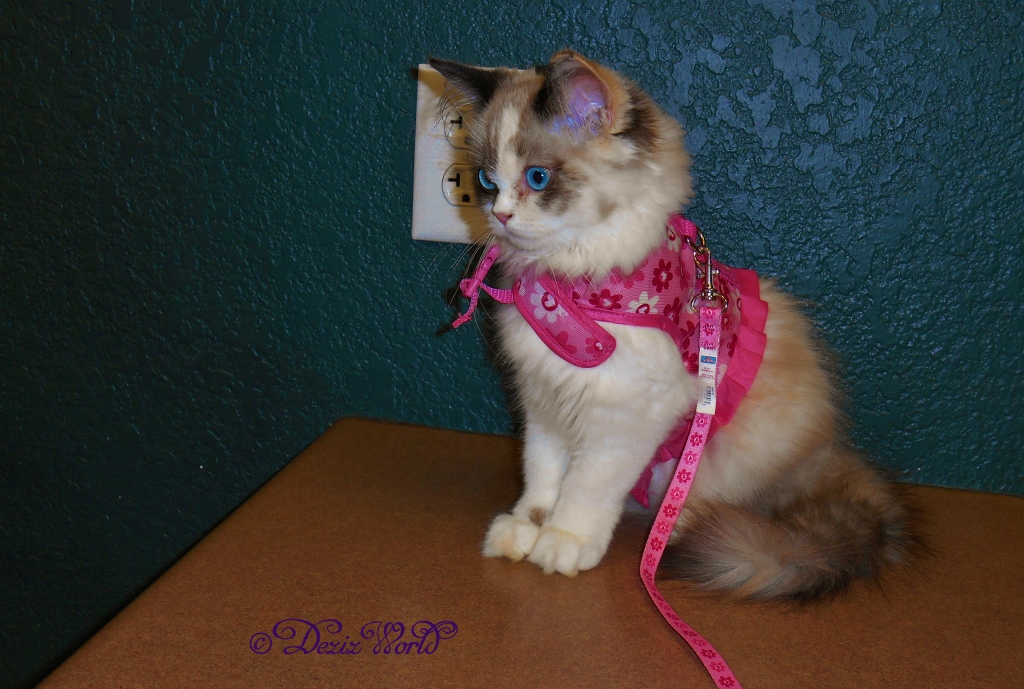
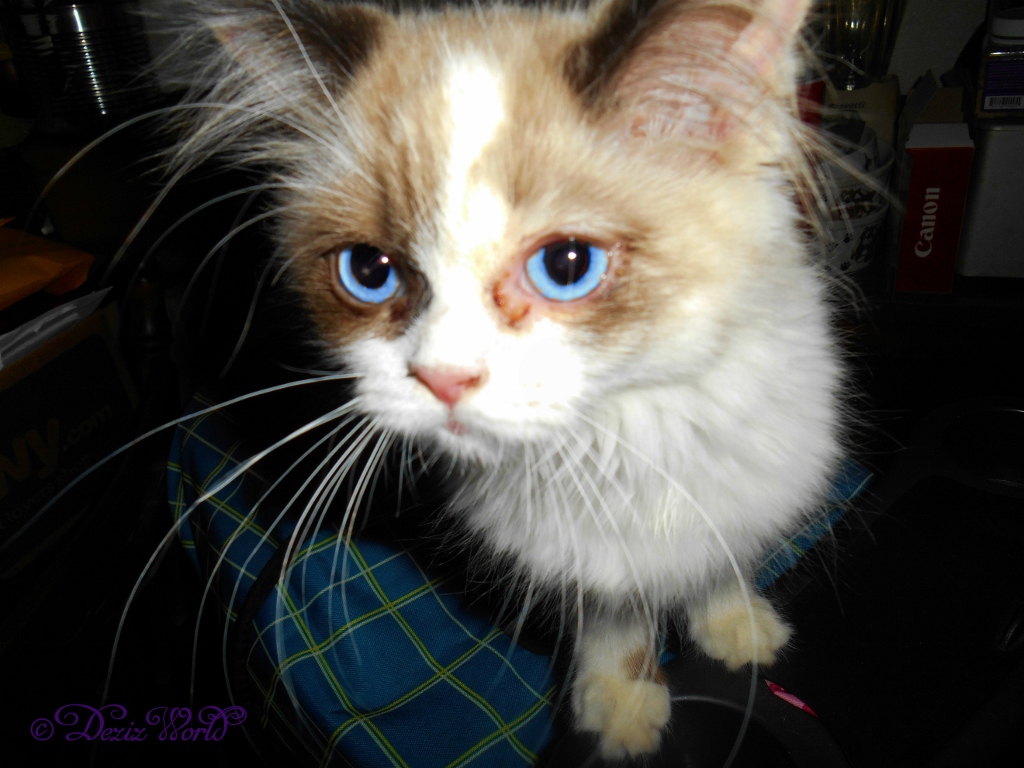
 Raena harness profile pose

As mommy and Raena continued on in the store, they encountered lots of children who were accompanying their parents for back to school shopping. With each encounter, Raena performed perfectly and showed people how a true Service Animal reacts to all that excitement…She did nothing but lay quietly in the stroller. One very uneducated woman asked, “Have you ever encountered a Service Dog that wanted to bark at or eat your Service Cat?” (she must have been thinking about that “Service Chihuahua”) Yeah, mommy’s blood was boiling, thinking about all those unruly dogs at BlogPaws in Nashville. But, she remained calm and took the opportunity to educate this person and all those who were now listening in. Mommy calmly replied. “A true Service dog would never do such a thing. Service Animals are trained to Not React, just as Raena was doing that very moment. Altho’ the stroller had become surrounded by screaming pointing children, Raena remained quiet and non reactive. As a matter of fact, before they left the store, a manager came up and told mommy how much he appreciated Raenas’ behavior and mommys’ consideration of everybody else in the store. Which of course made mommy really happy. The atmosphere is changing.

Now we told you all of that, to tell you that we think disabled handlers should try to be considerate of others. Had that always been the case, Service Cats might still be accepted by the ADA. Unfortunately, people in general are selfish, and everybody thinks everybody else owes them something. Yes, as a disabled person, mommy wants a parking space close to the door, and yes, she needs a few special accommodations when she’s out in public. But, she’s not the whole public, and her needs aren’t any more important than everybody else’s. Just a few considerations, and we are welcome right alongside mommy anywhere she goes. No one has the right to force their lifestyle on another.

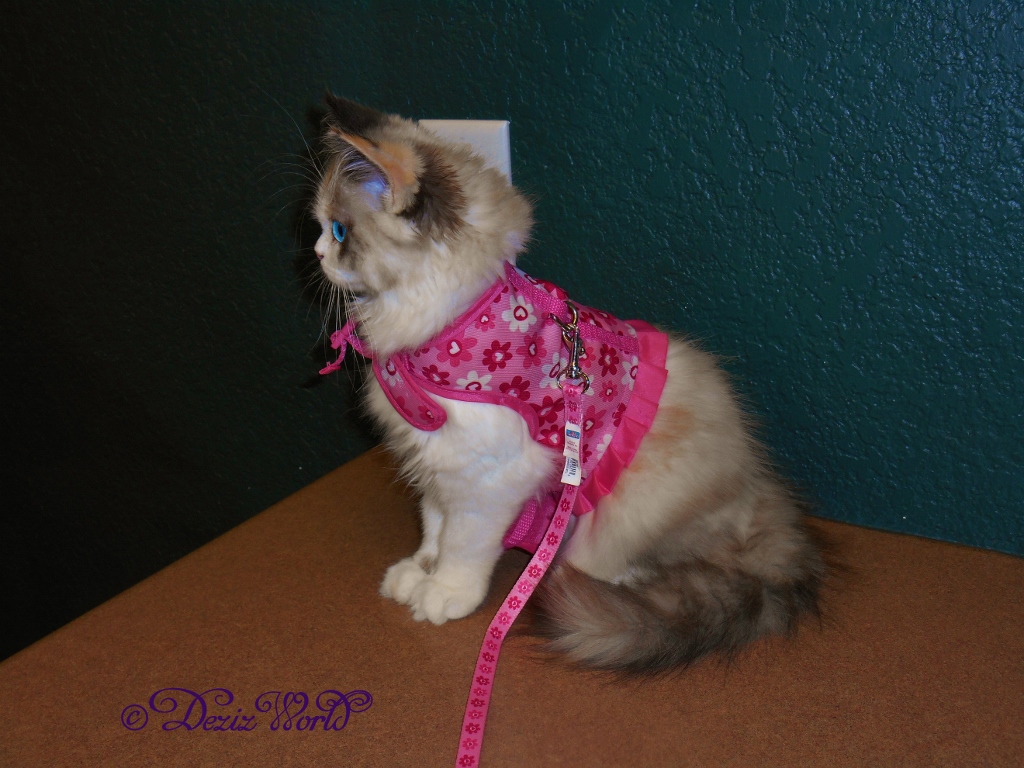
 RaenaBelle in harness

Mommy has never asked a landlord who doesn’t want pets on their property to rent to her. It’s called respect for others. There are plenty of places that do allow animals, that mommy can rent from. We realize that might not be the case everywhere, but we still think you should exhaust all other avenues before forcing someone to do something they don’t want to. If you are going to be with others in public that could assist you in the same or similar manner as your Service Animal, think about letting the animal have a few hours off. Especially if your Service Animal of choice isn’t the accepted norm (ie: dog or cat). Once every few years or so, someone will show up and offer to take mommy out fur a meal or something. While they obviously can’t alert before she passes out, they can assist her and stay with her if it does happen. So mommy almost always leaves us at home on those occasions. Again, it’s all about Common Sense and Respect for yourself and others.

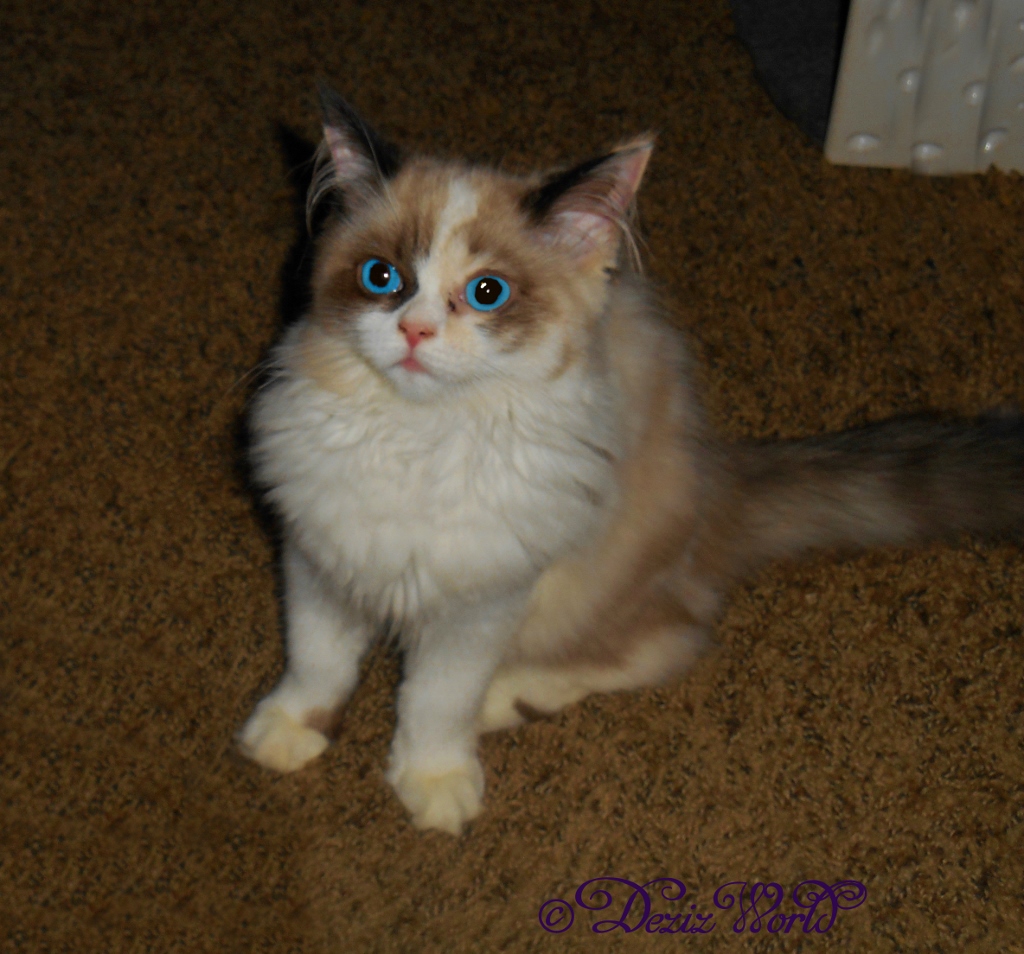
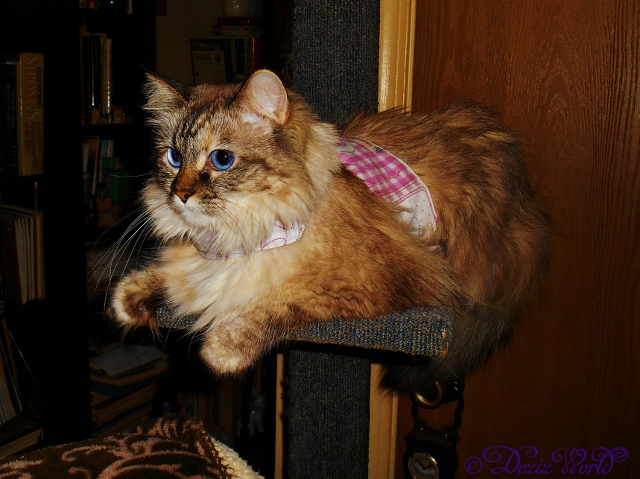
 Dezi in harness

Well me’s gonna wrap it up fur now. We think we’ve given ya’ a lot to mull over. Remember, if you have any questions, or specifics you would like us to cover, please leave your thoughts in the comments, or feel free to email us. Like me said earlier, we’s goin’ to mommy’s doctor today, so we’ll be by to visit with you as soon as we can.


Is there a particular animal you can’t see as a Service Animal?

How many “tasks” do you think should be required to make an animal a Service Animal?


Till da next time……………………………………….Be Blest!!!

Luv and Hugs and Kitty Kisses

Deztinee and RaenaBelle             

Service Cats: Housing Laws and Exceptions


dw-Dezi n Raena look cameraDSCN7190edit (1024x690)

Meowllo and welcome to another miserable Monday. It’s time fur another educational Service Cat posty. As always, it will be written in human English. Our blog is not a training manual. Any training tips or stories are not meant to be complete, but rather a starting point; as propurr training takes time and is repetitive. Me wants to thank you all fur your questions and comments on our postys. We were asked ‘bout claw clippin’ a squirmy kitty last week. But it wasn’t da furst time we’s been asked dat, so we’re workin’ on a video tutorial fur dat. You know at da end of da day, we are still cats and have to have our claws clipped just like da rest of ya’; and we’re not so crazy ‘bout it. Mommy’s never hurt us, but still…So we decided a video would be da bestest way to ‘splain how to do it, so stay tuned fur dat. As ya’ know, there’s only one mommy, so these things take time. Ifin you have missed any of da postys in this series, you can get caught up by clickin’ da links below. Some of you have also asked about previous training posts. You can use the search feature on our sidebar to read previous posts. Keywords such as Dezi, wheelchair, phone, etc. will bring some of these up.  

Service Cats: What To Look For Pt. 1 

Service Cats: Training Foundations Pt. 2

Service Cats: How To Train Kitty Massage W/O Claws Pt. 3

Service Cats: Smelling Disease Pt. 4

Service Cats: Do You Need One Pt. 5

Service Cats: Who Bears The Cost Pt. 6 

Well let’s get started. After last weeks post, we were talking with our friends from Bad Cat Chris about some of the laws that pertain to Service Animals and housing and such. His wife works in the housing/apartment business and is often coming in contact with those “fakers” we’ve talked about. You know, those people who call their pets Service Animals to avoid paying pet deposits/fees or so they can take their pet somewhere pets aren’t normally allowed (ie: stores, restaurants, grocery’s, etc.). You might recall, that every week, we plead with the public to NOT call their pets Service Animals unless they fit the literal description the ADA puts forth; an animal that is individually trained to perform tasks for a disabled person. Fetch, shake, roll over, etc. are not considered Service Animal training.

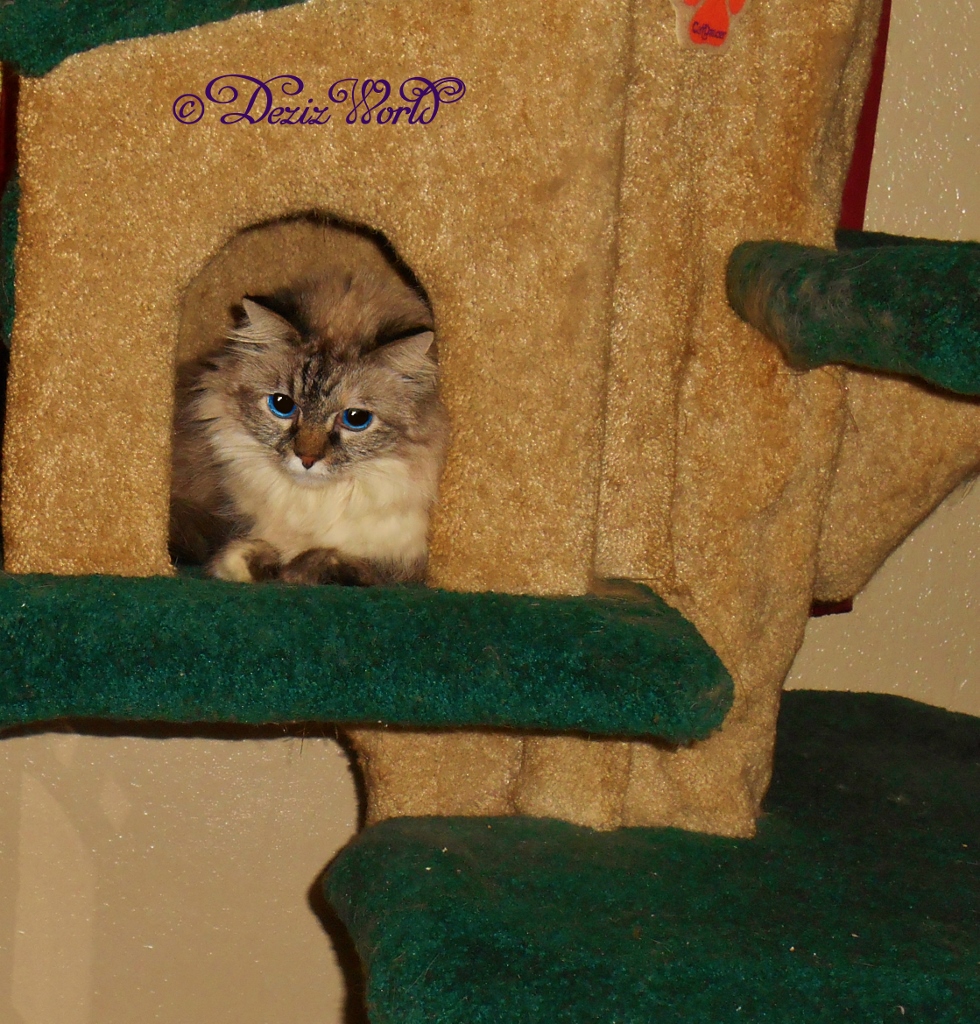
 Dezi looks out from the house on the Liberty cat tree

Your question is probably, “how do these people get away with lying about their pets?” The answer is, Easy. Unfortunately, Certification, is not required by law but rather is voluntary. Because of this there are lots of places that certify animals for a price. Certification really means nothing under the current laws. Per the rules, no one is allowed to ask someone to prove their animal is indeed a Service Animal. The only question that can be posed to a disabled person about their Service Animal is: “What task(s) does this animal perform for you that makes it necessary?” You cannot ask what a person’s disability is or require proof of any kind.

In recent years Companion Animals (CA) have become extremely popular. Remember, a Companion Animal is merely a pet. These animals may also go by the title of Emotional Support Animals (ESA). This means that the very presence of the animal has a positive influence on a person suffering from depression, panic attacks, etc.. A Companion Animal has no specific training and IS NOT a Service Animal. There is no certification or training required for an animal to be considered a Companion/Emotional Support Animal. As a result of studies that prove animals have a positive influence on their owners health, Companion Animals/Emotional Support Animals have gained acceptance and some rights under housing laws. Unfortunately a lot of people take advantage of this, and often try to pass off their CA/ESA as a Service Animal.      

 Raena contorts on the brown cat tree

Landlords may require a note or letter from a medical professional stating that the animal in question is there to provide emotional support for a person. The animal must still meet the requirements a landlord sets forth in their pet policy. A typical apartment pet policy requires animals be 35 pounds or under, current on all vaccines required by law, well behaved and not a nuisance to neighbors. A landlord may ban pets/CA/ESA from certain areas of the property. Companion Animals/ ESA are not allowed in any public place that does not allow pets (ie: grocery stores, restaurants, etc.).

In an attempt to stop abuse of the Service Animal rights, the ADA refined and limited their definitions of said animals. In doing so, they punished those who truly have a need for a Service Animal of another species than dogs. Another way to go about this would be to require certification for Service Animals. However, that’s not as easy as it sounds. Me thinks this is a lot of information, so me’s going to wrap it up fur today. We’ll talk more about Certification and what effect that would have for the disabled in another post. We were also asked to speak a bit on good training techniques as opposed to bad ones (ie: punishment, force, etc.); so we’ll be covering that in a future post as well. As always, if you have any questions, suggestions or ideas you would like answered or addressed, leave them in da comments or send us an email.


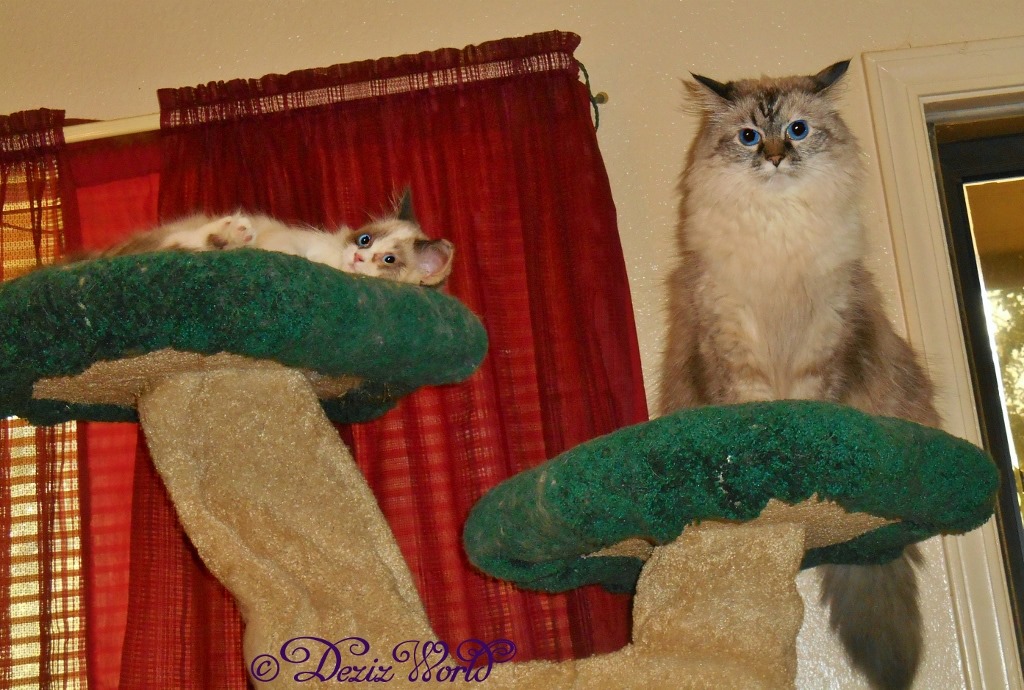
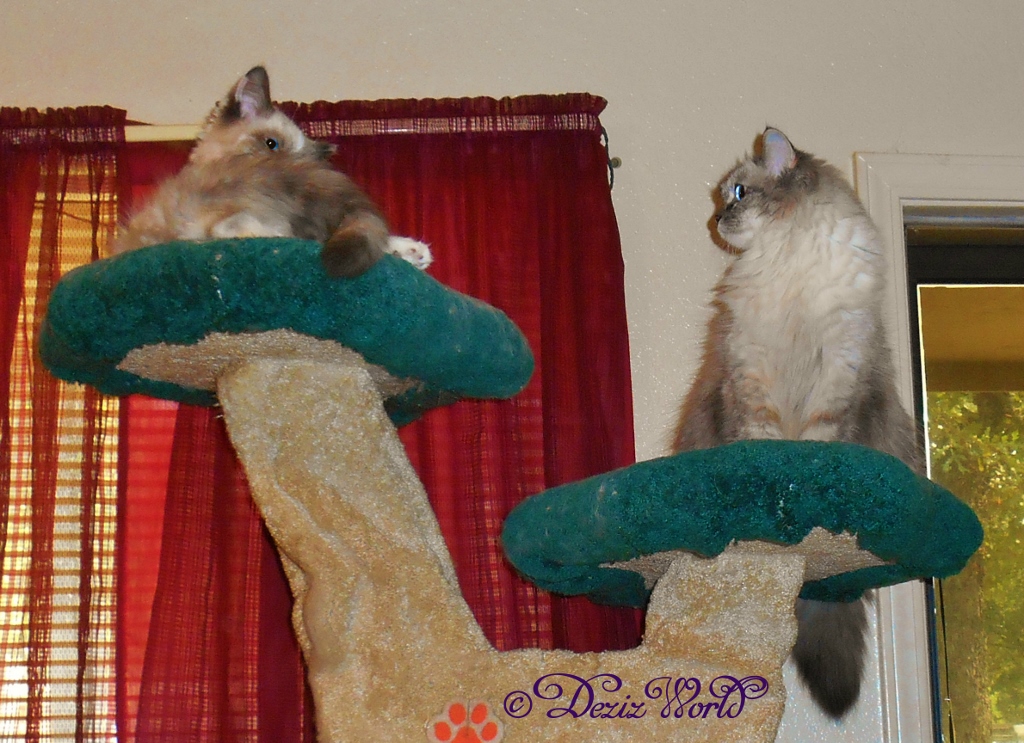
 Dezi and Raena look at each other from the Liberty cat tree

Do you think Certification should be required for all Service Animals?

If you’re for Certification, do you think there should be a charge, and if so, how much?  

Till da next time……………………………..Be Blest!!!

Luv and Hugs and Kitty Kisses

Deztinee and RaenaBelle

Service Cats: Who Bears The Cost

Dezi in her work harness on cat ledge

Meowllo everypawdy, it’s time fur another Service Cat educational posty. As ya’ know da followin’ will be written in human English. It appears there’s still some confusion ‘bout da difference ‘tween Service Animals, Therapy Animals and Companion Animals. Purrlease see our Service Animal page by clicking on da Service Animal tab on our menu bar or click here to read da full definition of each. Me will give a very brief definition of them later in this posty. It’s very purrtant dat everyone understands da differences. Anyways, we got a few good questions to answer today. And we asked a couple questions dat we think you’re gonna be surprised by da answers. Ifin you’ve missed any of da postys in this series you can get caught up by clickin’ da links below.

Service Cats: What To Look For 

Service Cats: Training Foundation 

Service Cat: How To Train Kitty To Massage Without Claws 

Service Cats: Smelling Disease 

Service Cats: Do You Need One 

So let’s get on with it. First up we need to make a few things clear. Mommy talked to one of our friends this past week and learned there’s a lot of confusion about this subject. First and foremost, If you are breeding your non pedigreed cat, that cat is NOT a Service Animal!!! And please STOP!!! Are there not enough unwanted kitties in the world as it is? True Service animals are spayed or neutered for their health and temperament. Now we know a lot of you just said to yourself, “How can you make that judgment and say that?” Well let us explain. If you need a Service Animal, you need said animal all the time. A mother cat will be out of commission for at least 6 weeks, barring complications; her kittens need her more. And most Service animals are not pedigreed animals but rescues. And to breed your non pedigreed indoor kitty is irresponsible at best, but to supply you with barn cats is the very definition of cruel and unusual punishment. And training is not passed on through DNA.

 Dezi looking out of the house on the Liberty cat tree

Secondly, we’ll repeat this again. Any Cat at any age can be trained. The number one requirement is the bond you share. Please see the Training Foundation post. It isn’t necessary to start with a kitten. We did because mommy requires 2 cats to help her and there was just me after sis Lexi went to heaven. Introducing a kitten into our home is easier than an adult cat. If you already have a cat or three, you can train one of those. There’s no need to adopt a new cat or kitten or to breed any of your existing cats. We hope that clears a few things up.

Now awnty Jean, Shoko and Kali of the Canadian Cats asked a couple of questions about training. Mommy got a great laugh at the wording of the question, so we’re going to copy and paste it in here for all of you to read. Me must say that mommy and awnty Jean have had many a conversation so she knows mommy pretty well.      

Question: Do you ever run across times when Raena just wants to play and is not interested in learning? How long can she get away with not wanting to be taught? Did you ever have a cat that was more interested in playing? 

So this question is specifically asked about Raena because that’s who mommy’s training now, but it could apply to any cat or kitten in training. The answer is Yes, of course there are times when Raena just wants to play, she’s a kitten. The trick is to make learning fun so that at least at first she thinks she’s playing. And remember, training is about repetition not a one shot deal. So it’s better to have many short training sessions than one long one. Altho’ mommy makes a game of training for some tasks, it is very serious, and she doesn’t tolerate nonsense. Mommy looks at these times as an opportunity to “train out” unwanted behaviors; such as, hands are not for biting, toes are not for biting, cords are not for biting, etc.. It’s also a time to train kitty to accept being held down, and other things like pilling and bodily exams. These are things that all pet parents could benefit from not just those that are training Service Cats. Unfortunately as kitty ages, there may be a time when medicine needs to be administered, and it’s so much easier if kitty has been trained to accept whatever you do to them as good.

 Raena reaching out from the perch to alert mommy

 Raena had been playing but jumped on the small cat perch to be closer

to mommy to alert her to sit down. Mommy had been conducting

a photo shoot when Raena and Dezi felt a change and knew

mommy was going to pass out.

Now, we mentioned cost. We asked what you all thought the average cost for a Service Animal is. We also asked who you thought paid for it. We got some mixed answers here, and a couple that mentioned Companion Animals for Service men and women. We realized that most people thought Service animals were given to the disabled free or that some charitable organization paid any fees, and that again, there was some confusion about the differences between Service Animals and Companion Animals. So, here’s a really simple definition of the three classes.

Service animal: An animal that has been specifically trained to perform duties to assist it’s disabled handler/owner.

Therapy animal: An animal that has no particular training other than basic obedience that after certification goes into places like nursing homes, hospitals, etc. to cheer up people by just being there or allowing people to pet it.

Companion animal: A Pet.


These aren’t the full definitions, but hopefully they will help to clear up any confusion anyone still has. Now let’s answer those questions we asked. A few years ago, the average cost of a Service Animal was between $20,000.00 and $50,000.00. This was for a rescue dog purchased through one of the certifying organizations. Dogs trained by individuals could cost exponentially more. Insurance does NOT pay for Service animals. There are organizations one can apply to for financial help, but they’re on a first come first served basis and income based and often require the person in need to pay up to $10,000.00 of the fees. So in the end, the cost of a Service animal is solely on the person needing one. That’s one reason you don’t see more. Most people who need Service animals are on fixed incomes and can’t afford the initial cost. Once a disabled person has a Service animal they can apply to several organizations to receive food and vet care for that animal. These are run by the big pet food companies and are part of their “giving back to the community”. Remember, these organizations only provide for those Service Animals the ADA recognizes as Service Animals.

 Raena up close on top of the stroller

Anyways, we feel like we’ve given you information overload today, so we’ll wrap it up for now and let ya’ digest all of this. Remember to leave any questions you may have or want answered in da comments or feel free to email us. We’re trying to answer them all as best we can. Raena’s getting’ bigger so she’ll be starting to learn how to use da fone in da next week or so. Mommy’s gonna try to get some good fotos, but since she ain’t da bestest with da camera, we’ll settle fur any fotos. MOL  Anyways, da lawn crew’s here. Raena may be fearless, but she hasn’t yet convinced me. Oh, we were asked what mommy did with our fotos in da new editing app yesfurday. She turned our fotos into talking videos. 

 Dezi laying on the bench scratcher

What would you like to learn (know how to teach your cat or dog)?


How do you feel about the cost of and that insurance doesn’t cover the cost of Service Animals?


Do you think that Service Animals make a difference in the lives of their disabled handlers as opposed to those that don’t have one?


Till da next time…………………………………..Be Blest!!!


Luv and Hugs and Kitty Kisses

Deztinee and RaenaBelle