Service Cats: Proper Training Methods

Well here we are, another Miserable Monday. Da end of da weekend and da start of peeps goin’ back to work. We had sun fur da furst time in days yesfurday, but woke up to gray skies and dense fog today. Da weather just doesn’t know what it wants to do. Anyways, today is also Service Cat educational posty day. We didn’t get any questions after last weeks posty, so we’re not sure ifin ya’ll are losin’ innerest in these posts or not. So, ifin ya’ could let us know in da comments, we’d ‘purreciate it. As with all our educational postys, da following will be written in human English. Ifin you’ve missed any post, you can ketch up by clickin’ da linkys below.

 Dezi cocks head to the side in thought

Service Cats: What to Look For

Service Cats: Training Foundations 

Service Cats: How to Train Kitty to Massage Without Claws

Service Cats: Smelling Disease 

Service Cats: Do You Need One 

Service Cats: Who Bears the Cost

Service Cats: Housing Laws and Exceptions 

Service Cats: Accommodations and Common Sense 

Service Cats: What Happens When the Handler Dies 

We were asked a few posts back to talk about proper training methods. Training is something we think all animals, not just Service Animals can benefit from. We’ve all seen the totally out of control doggy and the doing as it pleases kitty. Unfortunately behavioral problems account for a large percentage of animals taken to shelters; and some of those behaviors could be changed with just a little training and patience. In our Training Foundations post we covered the beginning process mommy chooses to use.

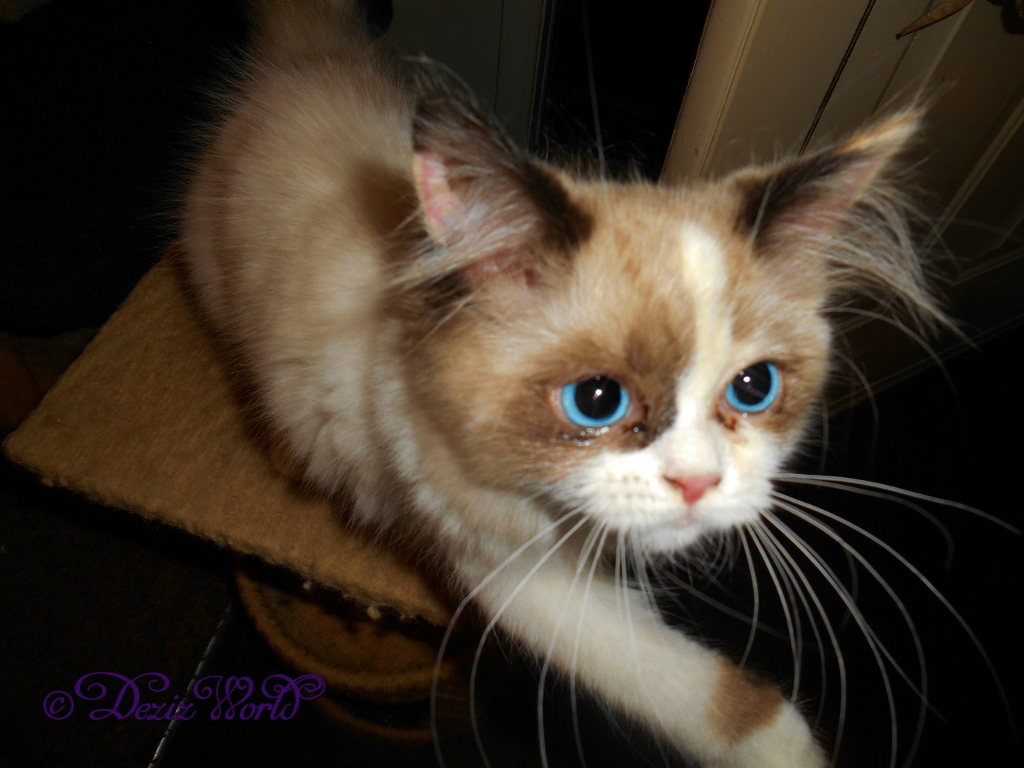
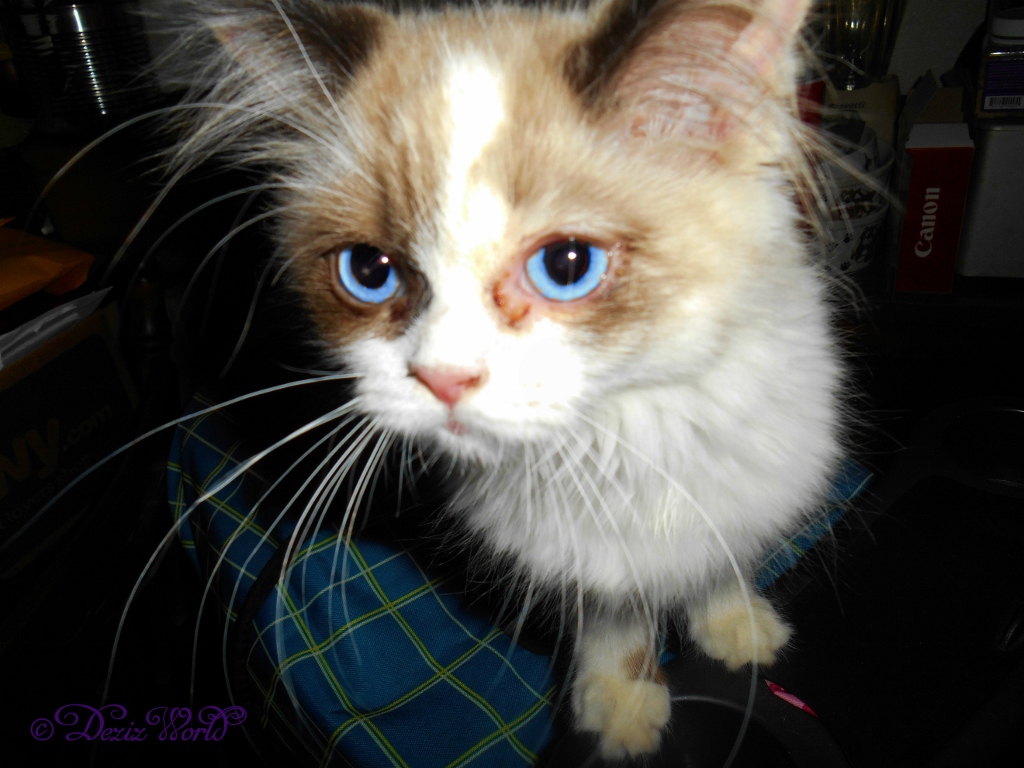
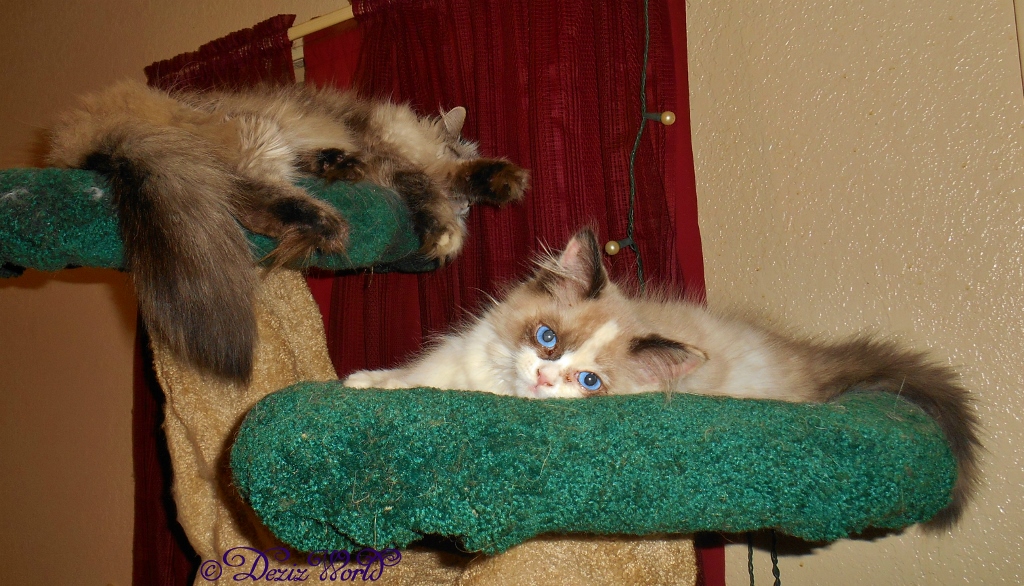
 Raena laying on perch

 You’s have mines full attention mommy.

There are several acceptable methods of training. If your cat doesn’t respond to one, try another. Hitting, yelling and chasing your kitty Does Not work. Neither does drenching them with water from a water bottle or water gun. Clicker training is probably the best known method these days. It involves a small clicker that the trainer holds and clicks as the animal does what is asked for, followed by a treat. This method is very successful in dog training. Dogs are generally ruled by their tummy and will perform for a treat.

Clicker training can be successful with some cats. Mommy has never used this method per se’, but she does sometimes use a form of it. Long ago when mommy decided to start training Service Kitties she looked in to a clicker. We don’t know the cost these days, but back then it was pretty pricey, and mommy couldn’t afford it. She was already training kitties successfully so she couldn’t justify the cost. However, you can use a finger snap to mimic a clicker. Mommy usually snaps her fingers to get us to pay attention. She doesn’t however follow it up with a treat.  
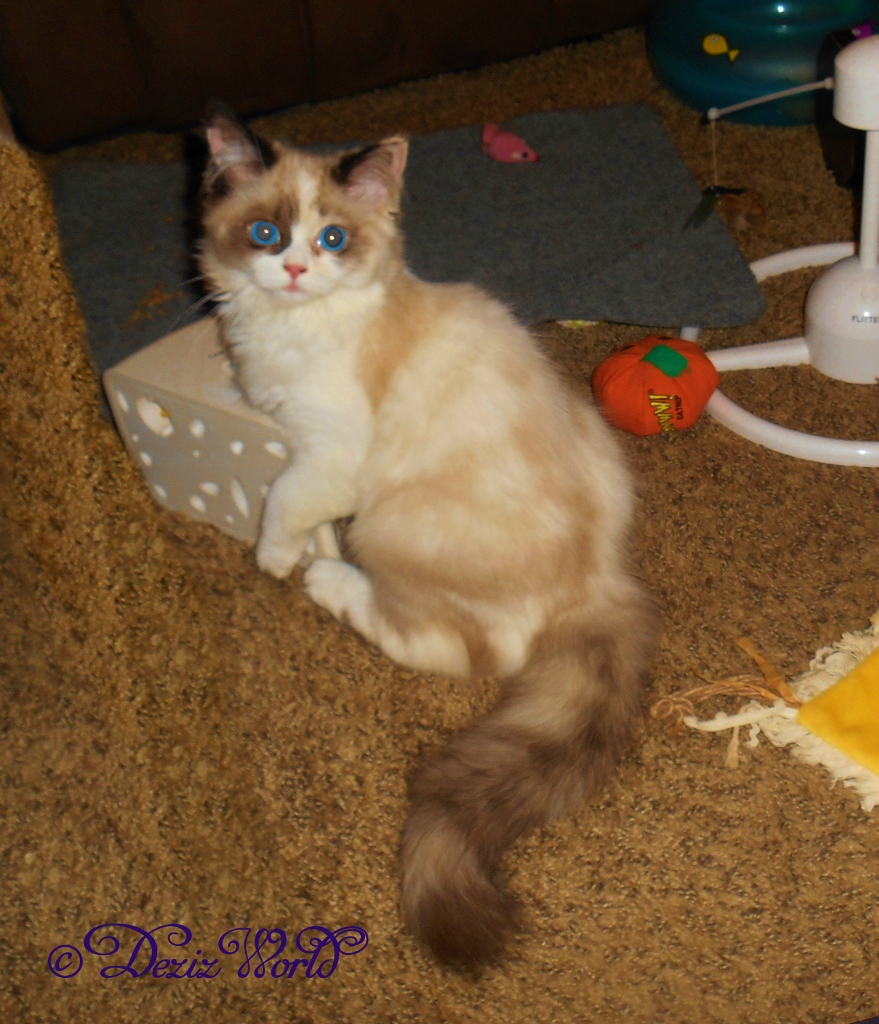
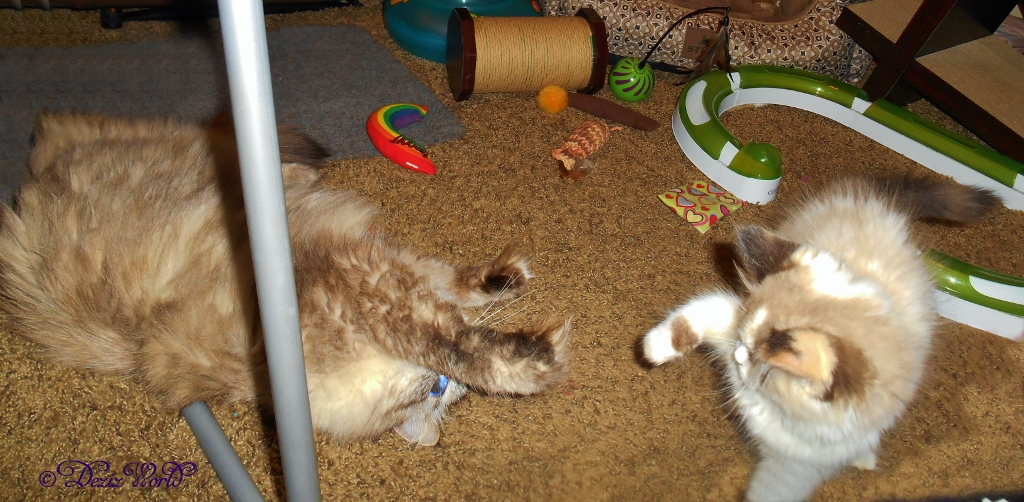
 Raena playing with Petafe cheese and mouse toy

 What’s dat mommy? Did you need somethin’?

Treat rewards are the biggest problem mommy has with clicker training. Cats aren’t generally ruled by their tummies and a lot of cats don’t like treats. And too many treats means kitty won’t eat their meal, or they will, and then gain weight and become obese. Positive reinforcement is crucial to train any animal to perform a specific task. Mommy uses praise and love as our reward. It’s not fattening, and it means we will repeat the task even when we don’t get a treat, which would be impossible for her first thing in the morning. Something you may not know, is that most of the handlers of those Service dogs have to carry treats with them to reward the dog off and on throughout the day.

But what about training kitty NOT to do something, such as climb your curtains, stay off the kitchen counters or scratch your brand new leather sofa? Remember, hitting, screaming, chasing or drenching them with water Does Not work. Mommy says the water bottle has it’s place, but if you’re soaking kitty and he/she is still doing the inappropriate behavior, then it obviously isn’t working. And truly, you don’t want kitty to develop a fear of water. Let’s say you’ve ruled out any health issues for kittys’ behavior. Your next step is to offer an appropriate alternative.
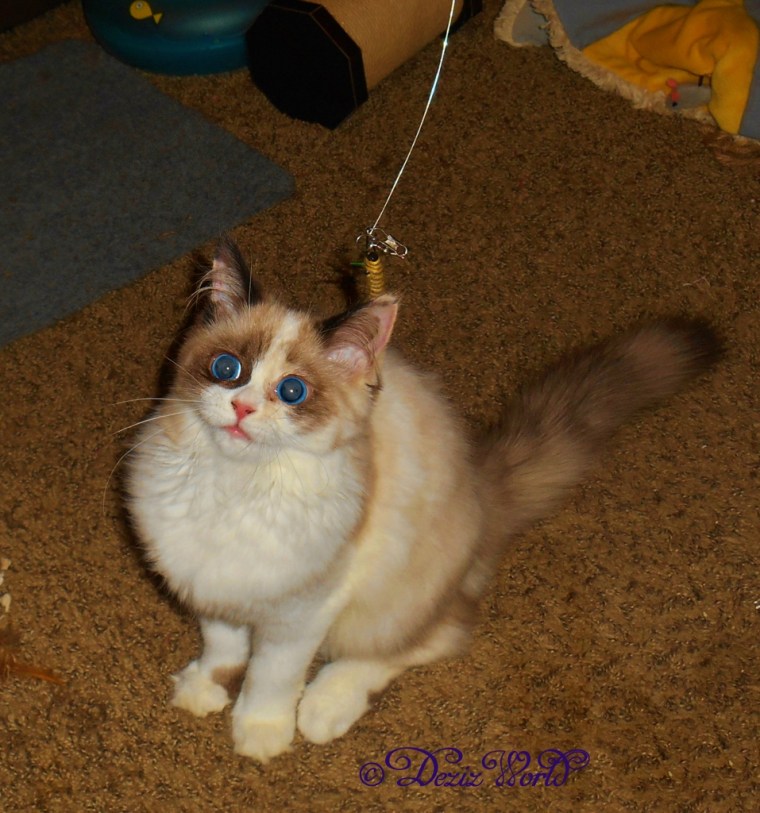
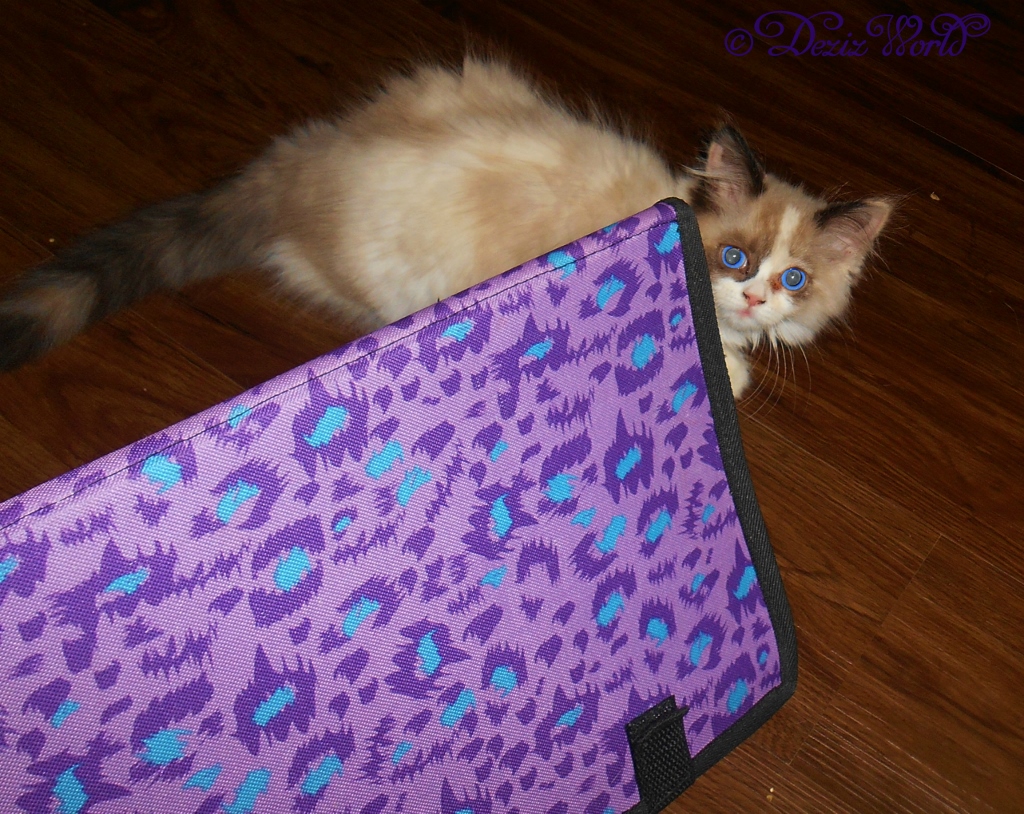
Raena sits pose while playing Who me? I’s would never climb da curtains or
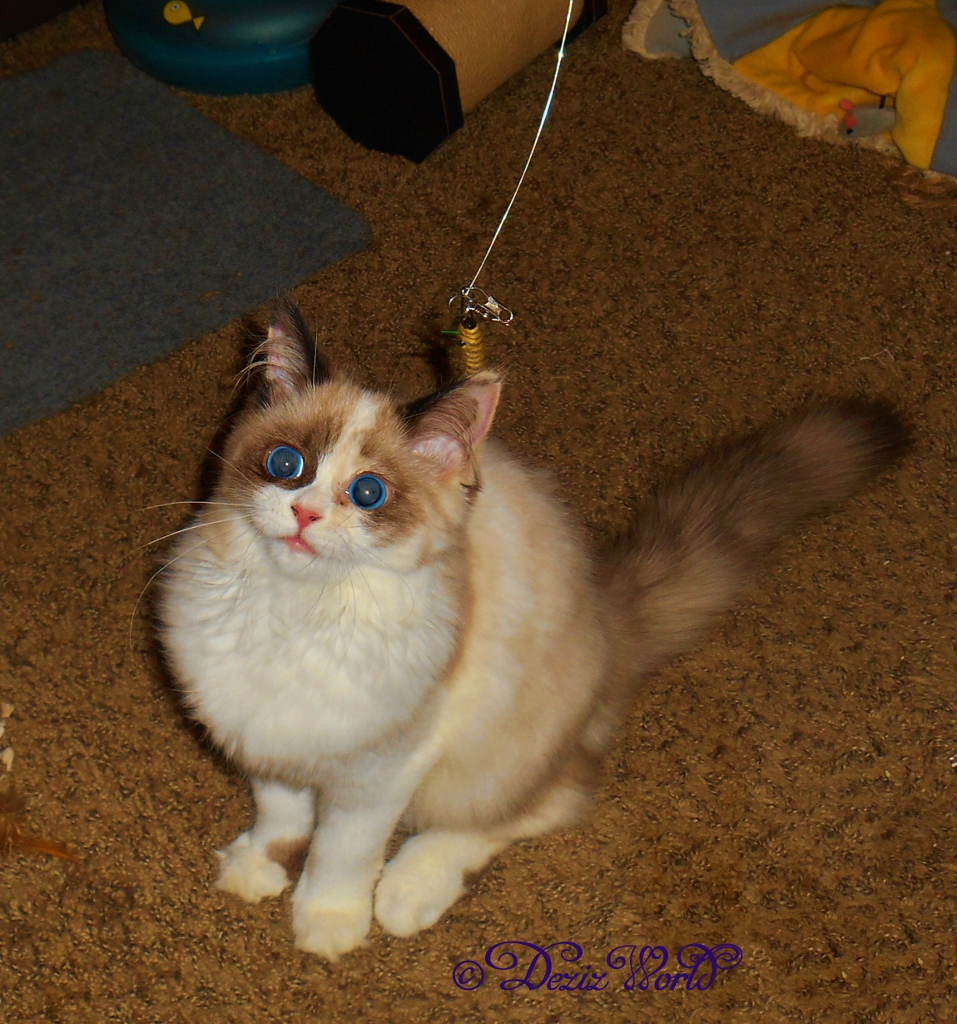
jump on da counters.

Let’s talk about inappropriate scratching. All scratchers are not created equal, and not every cat likes the same surface. There are vertical, horizontal and hanging scratchers. Watch kitty to see if he/she has a preference. There are many different textures as well, corrugated cardboard, carpet, sisal and wood. Again, your cat probably has a preference for one of these textures. It may take some time to figure out which, but once you do, you can successfully offer kitty an appropriate scratching surface. The best option would be to have several scratchers of different textures available, as well as vertical and horizontal. Always make sure the scratcher is the right size for your kitty and that it is stable. You can also make a scratcher for your kitty by covering a surface with their favorite material, especially if it’s leather. Place said scratcher next to the area kitty’s scratching and the next time kitty scratches, move him/her over to the new scratching surface and place their paws on it. Initially it might be helpful to take kittys’ paws and mimic scratching on the new surface, as this encourages kitty. And a little catnip on the new scratcher never hurt any kitty either. You must be repetitive in order to stop the offensive behavior completely.
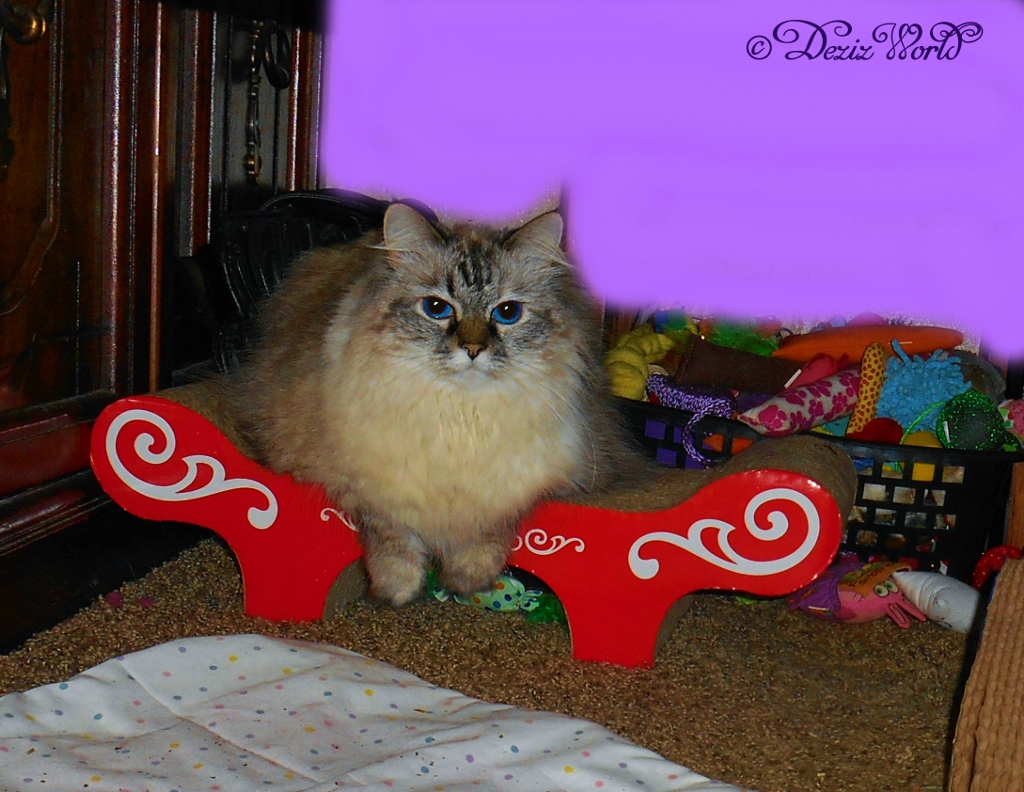
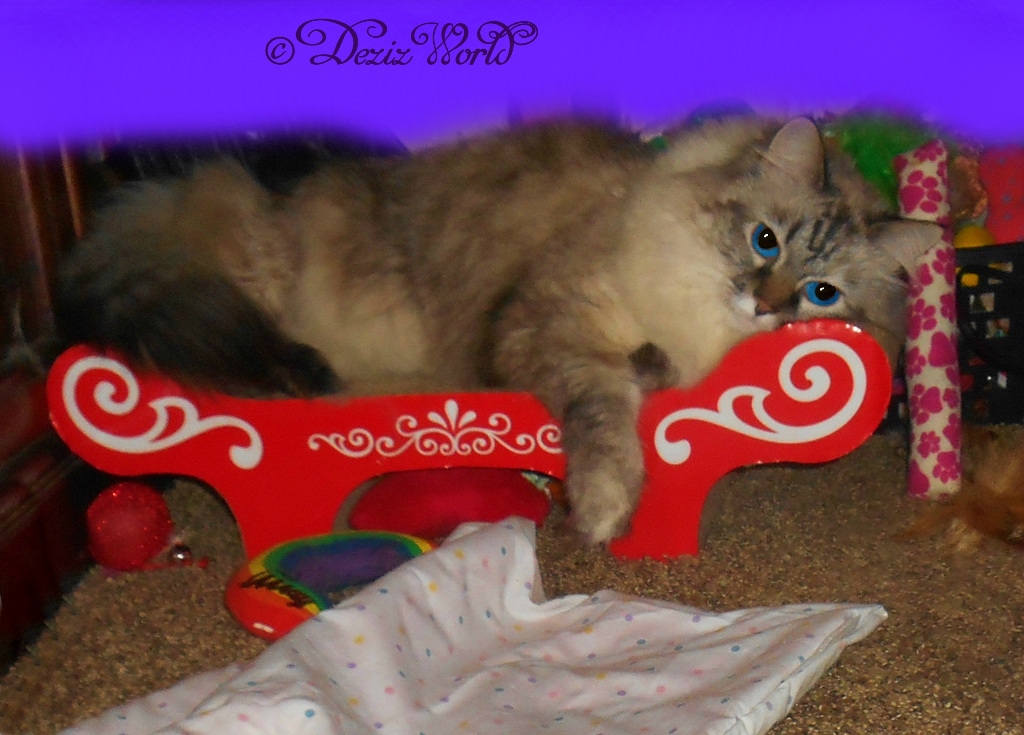
 Dezi lays on cardboard scratcher

Dezi uses sisal scratcher

Raena lays on scratcher

Mommy says that you must speak with a firm tone when training, but Never react in anger. And if there are several people in a household, all parties must be on the training bandwagon. Especially for correcting inappropriate behavior. Now let’s talk a minute about that water bottle so many cat peeps have on hand. And yes, mommy has one too. Here’s mommys’ list of reasons to use the water bottle:

  • To break up a Cat Fight

  • To stop a fight you see coming on by distracting kitties
 Dezi sits on bench

Mommy says NEVER aim the water stream directly at kitty, especially not the head area. Depending on the proximity you are from kitty and where you hit them, kitty could actually be injured. (Mommy has seen some really powerful water bottles and water guns in the market) Instead, spray a few inches above kitty or in between kitties. Mommy says that clapping, snapping fingers, or a shaker can will also work. Again, don’t do this right in kittys’ ears. A clap from across the room is more than sufficient to get kittys’ attention. Whichever action you take, you should include a firm NO at the same time. Mommy always includes our name. She says that doing so makes sure there’s no mistaking who she’s correcting and what behavior is objectionable. There’s a lot of “No Raena’s” going on around here right now.

 Dezi bathing on top of the Liberty cat tree

 Me’s gonna get a quick bath in befur a nap.

Well, me’s just realized this is a really long posty, so me’s gonna wrap it up now and try to get a nap befur Raena starts in again. She’d put dat battery bunny to shame she has so much energy. Anyways, hope you all have a pawsum day.

Till da next time…………………………………..Be Blest!!!

Luv and Hugs and Kitty Kisses

Deztinee and RaenaBelle    

Service Cats: Who Bears The Cost

Dezi in her work harness on cat ledge

Meowllo everypawdy, it’s time fur another Service Cat educational posty. As ya’ know da followin’ will be written in human English. It appears there’s still some confusion ‘bout da difference ‘tween Service Animals, Therapy Animals and Companion Animals. Purrlease see our Service Animal page by clicking on da Service Animal tab on our menu bar or click here to read da full definition of each. Me will give a very brief definition of them later in this posty. It’s very purrtant dat everyone understands da differences. Anyways, we got a few good questions to answer today. And we asked a couple questions dat we think you’re gonna be surprised by da answers. Ifin you’ve missed any of da postys in this series you can get caught up by clickin’ da links below.

Service Cats: What To Look For 

Service Cats: Training Foundation 

Service Cat: How To Train Kitty To Massage Without Claws 

Service Cats: Smelling Disease 

Service Cats: Do You Need One 

So let’s get on with it. First up we need to make a few things clear. Mommy talked to one of our friends this past week and learned there’s a lot of confusion about this subject. First and foremost, If you are breeding your non pedigreed cat, that cat is NOT a Service Animal!!! And please STOP!!! Are there not enough unwanted kitties in the world as it is? True Service animals are spayed or neutered for their health and temperament. Now we know a lot of you just said to yourself, “How can you make that judgment and say that?” Well let us explain. If you need a Service Animal, you need said animal all the time. A mother cat will be out of commission for at least 6 weeks, barring complications; her kittens need her more. And most Service animals are not pedigreed animals but rescues. And to breed your non pedigreed indoor kitty is irresponsible at best, but to supply you with barn cats is the very definition of cruel and unusual punishment. And training is not passed on through DNA.

 Dezi looking out of the house on the Liberty cat tree

Secondly, we’ll repeat this again. Any Cat at any age can be trained. The number one requirement is the bond you share. Please see the Training Foundation post. It isn’t necessary to start with a kitten. We did because mommy requires 2 cats to help her and there was just me after sis Lexi went to heaven. Introducing a kitten into our home is easier than an adult cat. If you already have a cat or three, you can train one of those. There’s no need to adopt a new cat or kitten or to breed any of your existing cats. We hope that clears a few things up.

Now awnty Jean, Shoko and Kali of the Canadian Cats asked a couple of questions about training. Mommy got a great laugh at the wording of the question, so we’re going to copy and paste it in here for all of you to read. Me must say that mommy and awnty Jean have had many a conversation so she knows mommy pretty well.      

Question: Do you ever run across times when Raena just wants to play and is not interested in learning? How long can she get away with not wanting to be taught? Did you ever have a cat that was more interested in playing? 

So this question is specifically asked about Raena because that’s who mommy’s training now, but it could apply to any cat or kitten in training. The answer is Yes, of course there are times when Raena just wants to play, she’s a kitten. The trick is to make learning fun so that at least at first she thinks she’s playing. And remember, training is about repetition not a one shot deal. So it’s better to have many short training sessions than one long one. Altho’ mommy makes a game of training for some tasks, it is very serious, and she doesn’t tolerate nonsense. Mommy looks at these times as an opportunity to “train out” unwanted behaviors; such as, hands are not for biting, toes are not for biting, cords are not for biting, etc.. It’s also a time to train kitty to accept being held down, and other things like pilling and bodily exams. These are things that all pet parents could benefit from not just those that are training Service Cats. Unfortunately as kitty ages, there may be a time when medicine needs to be administered, and it’s so much easier if kitty has been trained to accept whatever you do to them as good.

 Raena reaching out from the perch to alert mommy

 Raena had been playing but jumped on the small cat perch to be closer

to mommy to alert her to sit down. Mommy had been conducting

a photo shoot when Raena and Dezi felt a change and knew

mommy was going to pass out.

Now, we mentioned cost. We asked what you all thought the average cost for a Service Animal is. We also asked who you thought paid for it. We got some mixed answers here, and a couple that mentioned Companion Animals for Service men and women. We realized that most people thought Service animals were given to the disabled free or that some charitable organization paid any fees, and that again, there was some confusion about the differences between Service Animals and Companion Animals. So, here’s a really simple definition of the three classes.

Service animal: An animal that has been specifically trained to perform duties to assist it’s disabled handler/owner.

Therapy animal: An animal that has no particular training other than basic obedience that after certification goes into places like nursing homes, hospitals, etc. to cheer up people by just being there or allowing people to pet it.

Companion animal: A Pet.


These aren’t the full definitions, but hopefully they will help to clear up any confusion anyone still has. Now let’s answer those questions we asked. A few years ago, the average cost of a Service Animal was between $20,000.00 and $50,000.00. This was for a rescue dog purchased through one of the certifying organizations. Dogs trained by individuals could cost exponentially more. Insurance does NOT pay for Service animals. There are organizations one can apply to for financial help, but they’re on a first come first served basis and income based and often require the person in need to pay up to $10,000.00 of the fees. So in the end, the cost of a Service animal is solely on the person needing one. That’s one reason you don’t see more. Most people who need Service animals are on fixed incomes and can’t afford the initial cost. Once a disabled person has a Service animal they can apply to several organizations to receive food and vet care for that animal. These are run by the big pet food companies and are part of their “giving back to the community”. Remember, these organizations only provide for those Service Animals the ADA recognizes as Service Animals.

 Raena up close on top of the stroller

Anyways, we feel like we’ve given you information overload today, so we’ll wrap it up for now and let ya’ digest all of this. Remember to leave any questions you may have or want answered in da comments or feel free to email us. We’re trying to answer them all as best we can. Raena’s getting’ bigger so she’ll be starting to learn how to use da fone in da next week or so. Mommy’s gonna try to get some good fotos, but since she ain’t da bestest with da camera, we’ll settle fur any fotos. MOL  Anyways, da lawn crew’s here. Raena may be fearless, but she hasn’t yet convinced me. Oh, we were asked what mommy did with our fotos in da new editing app yesfurday. She turned our fotos into talking videos. 

 Dezi laying on the bench scratcher

What would you like to learn (know how to teach your cat or dog)?


How do you feel about the cost of and that insurance doesn’t cover the cost of Service Animals?


Do you think that Service Animals make a difference in the lives of their disabled handlers as opposed to those that don’t have one?


Till da next time…………………………………..Be Blest!!!


Luv and Hugs and Kitty Kisses

Deztinee and RaenaBelle       

Service Cats: Smelling Disease

Meowllo and welvome to another Service Cat posty. As with all our educational posts, the followin’ will be in human English so everypawdy can read or translate it. Me does wanna thank ya’ fur your purrayers, mommy’s feelin’ a little better today. Purrayer changes things fur the better. Alrighty then, let’s get on with our posty. Ifin ya’ missed any of the posts in this series, you can ketch up by clickin’ the links below.

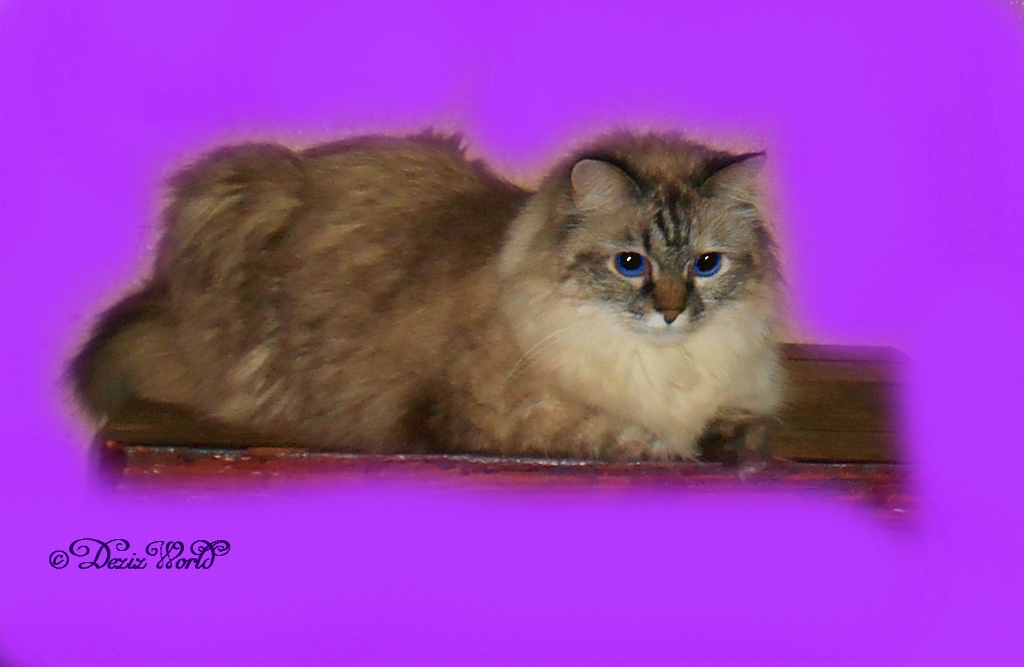
 Dezi in a purple haze

Picking A Service Cat: Pt.1 

Foundations of Training: Pt. 2 

Service Cats: Massage Training: Pt. 3 

Now that you’re all caught up, we have some great questions to answer today. As you read in a previous post, we alert mommy to a Syncope incident (passing out) before it happens. That alert allows her to get to safety before it happens. Otherwise, she would fall and could seriously hurt herself. We received a couple of questions about this. The first was, what actions do we take to alert mommy. Well when me was a teeny tiny kitten, me could barely reach mommy’s ankles. So, me would “dance” around in a circle and pat her ankles. As me’s gotten older, me’s method has changed a bit. Nowadays, me meows and taps on whatever part of mommy is closest. When we’re out in public and me is in the stroller, me sits up, meows and pats the stroller side that is closest to mommy, since me can’t actually touch her.

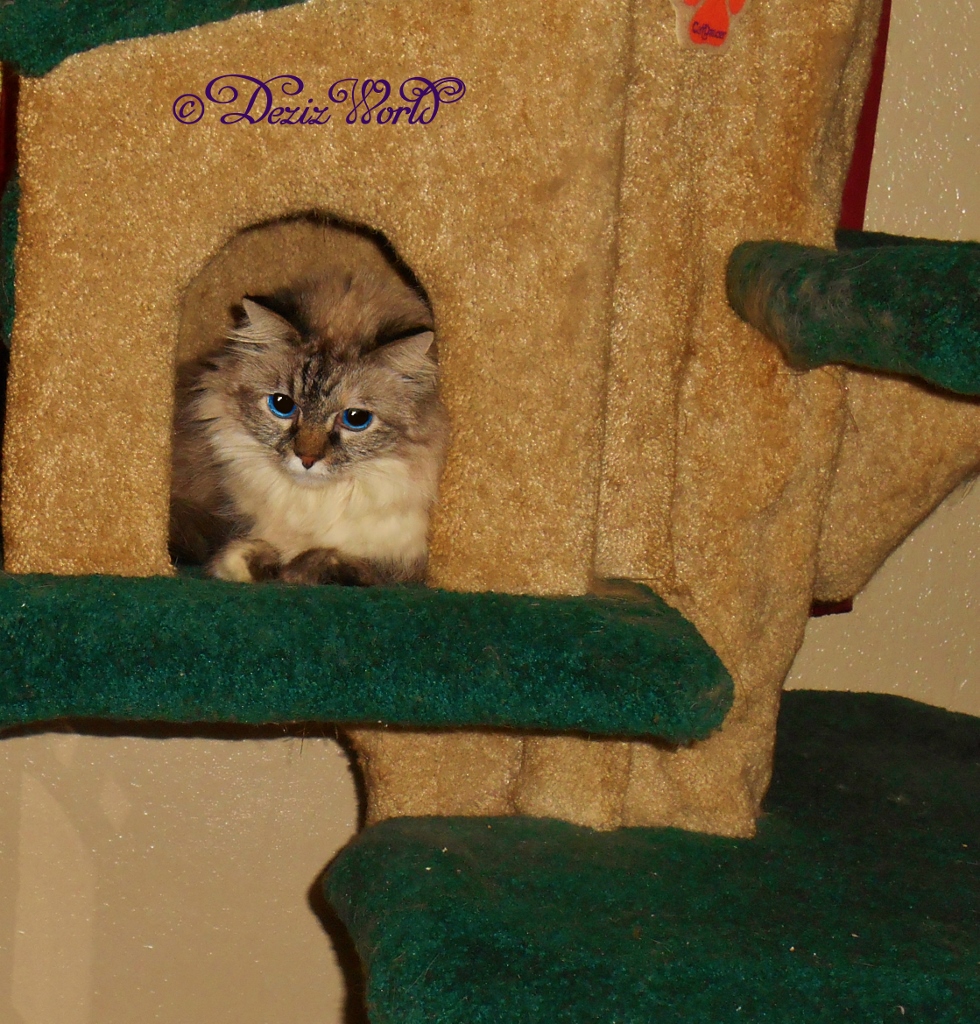
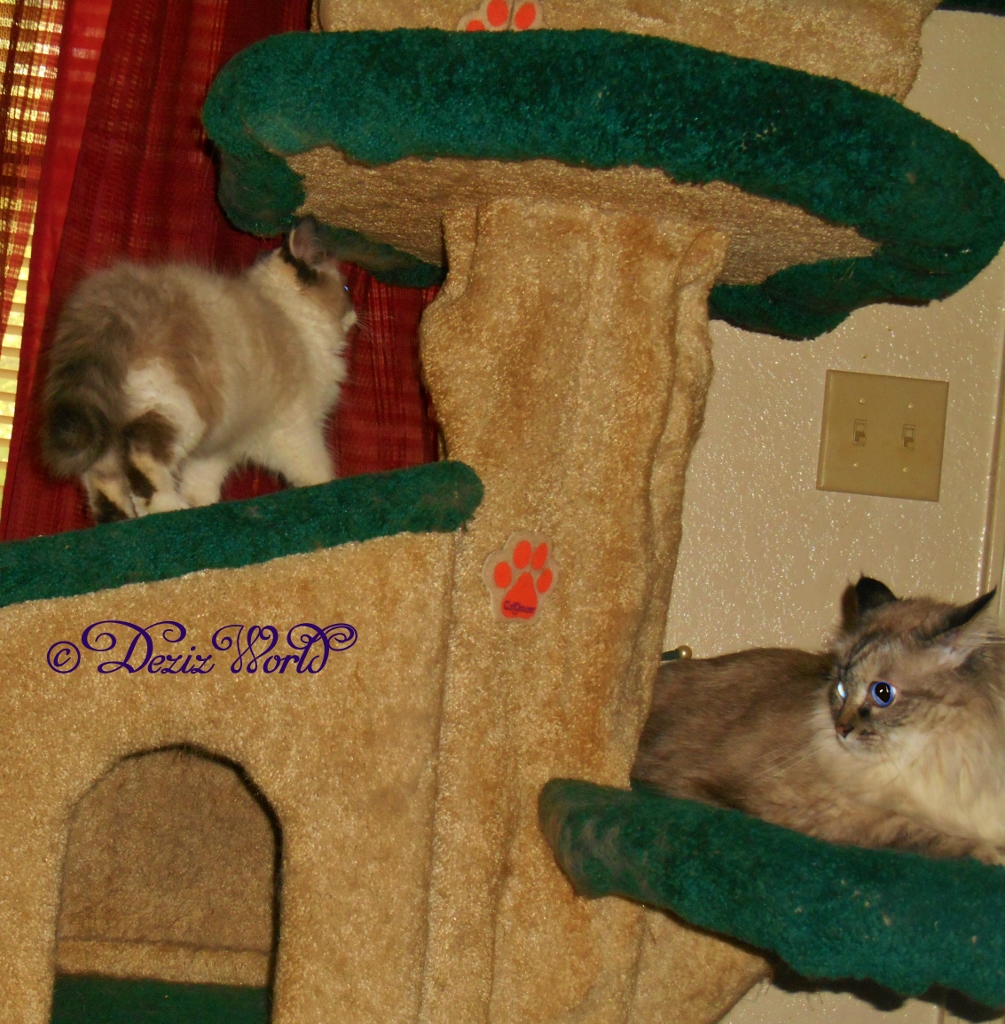
 Dezi on top of cat tree house looking for Raena inside the cat tree house

Raena has started learning to alert as well. She isn’t nearly as cute as me was, dancing around mommy and patting her ankle, but so long as mommy and her know what’s up, it doesn’t really matter. Raena generally meows and touches mommy with her paw. She’s a little small for the stroller yet, so we’ll have to wait and see how she alerts from the stroller. We’ll get back to you on that one. (FYI: Our stroller zips closed and there are 2 kitten sized escape openings on either side. We don’t have a small enough harness to attach her inside. At this time she would need a ferret harness.)

Now, we told you that we know this because we can smell a change in mommy’s body chemistry. Sick/Disease has a smell. We were asked if dogs could smell this too. The answer is Yes. Most all animals can smell sick, disease and death. There are many Service Dogs that alert to seizures, heart attacks and other illnesses; and more cats and other animal species than the general public is aware of. We don’t have permission to divulge names, but one of our facebook friends has a kitty that has alerted her to seizures for years. And of course you can read in the news at least once a month, about a heroic animal that saved his/her owner from _______(fill in the blank).

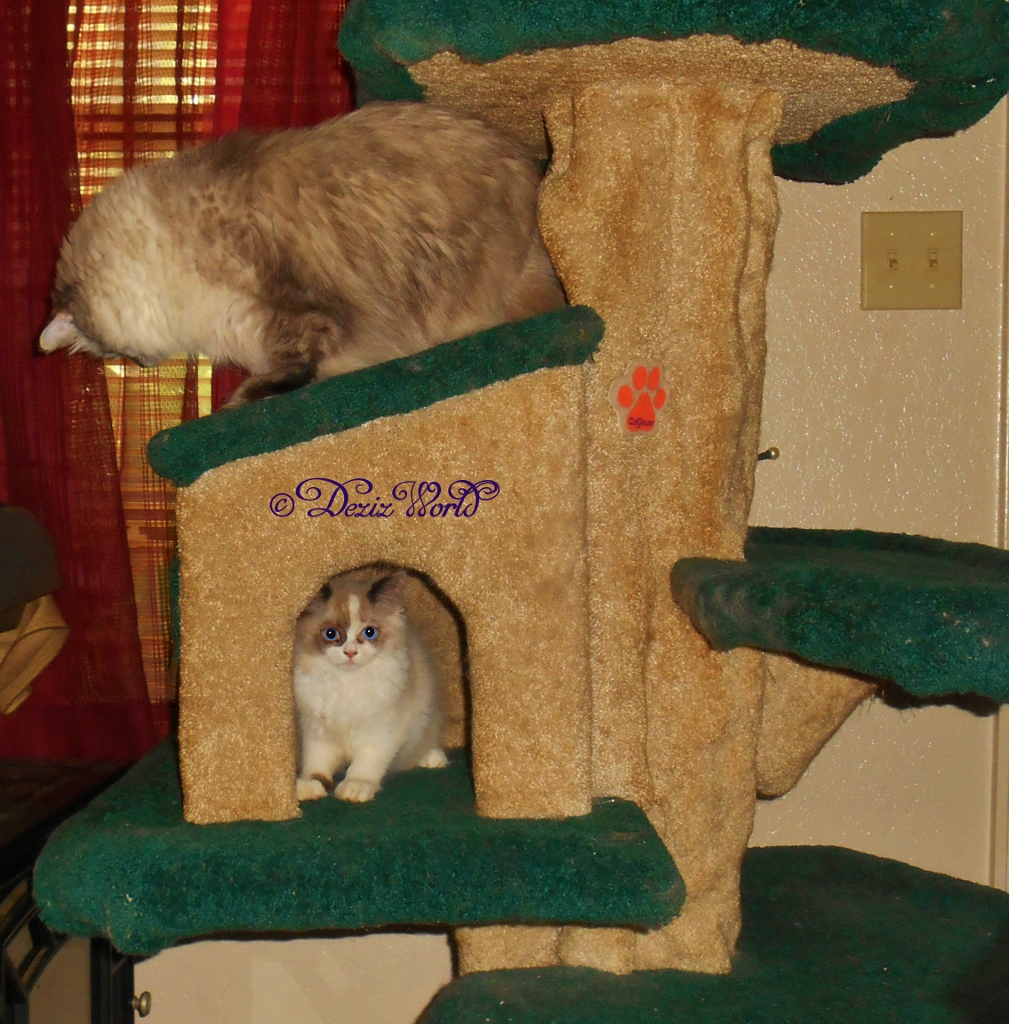
 Dezi and Raena on cat tree

Animals are very smart and intuitive. With a little training most of us can serve a purpose and help the disabled. Because of the stereotypes about cats, we often get overlooked when it comes to training and socialization in general and especially being Service animals, Therapy animals and even Companion animals. Contrary to belief, cats can be trained. And for a lot of people we would make the perfect Service Animal. We can and do groom ourselves, use a litterbox, don’t need to go outside or be walked and are extremely affectionate. We are not loners by choice. We love our humans and love to be with them and please them.

Remember when wee told you that Raena is already learning massage? Well, this morning when we woke up, she immediately took her place and started massaging mommy’s arms. ‘Course she is still a very young kitten so after a few minutes, she started jumping around and playing. First off, that’s okay. Remember, fun training is often more successful than yelling at and being stern all the time. There is a time for stern, but it doesn’t have to be all the time. Mommy says that most disabled people have some form or level of depression; so anything that can make you laugh or smile, is a good thing. Not always with a full bladder, but… Anyways, mommy gently spoke to Raena and got her to focus again, and get the blood circulating and the nerves and muscles to wake up in mommy’s arms so we could get up and get our day started.

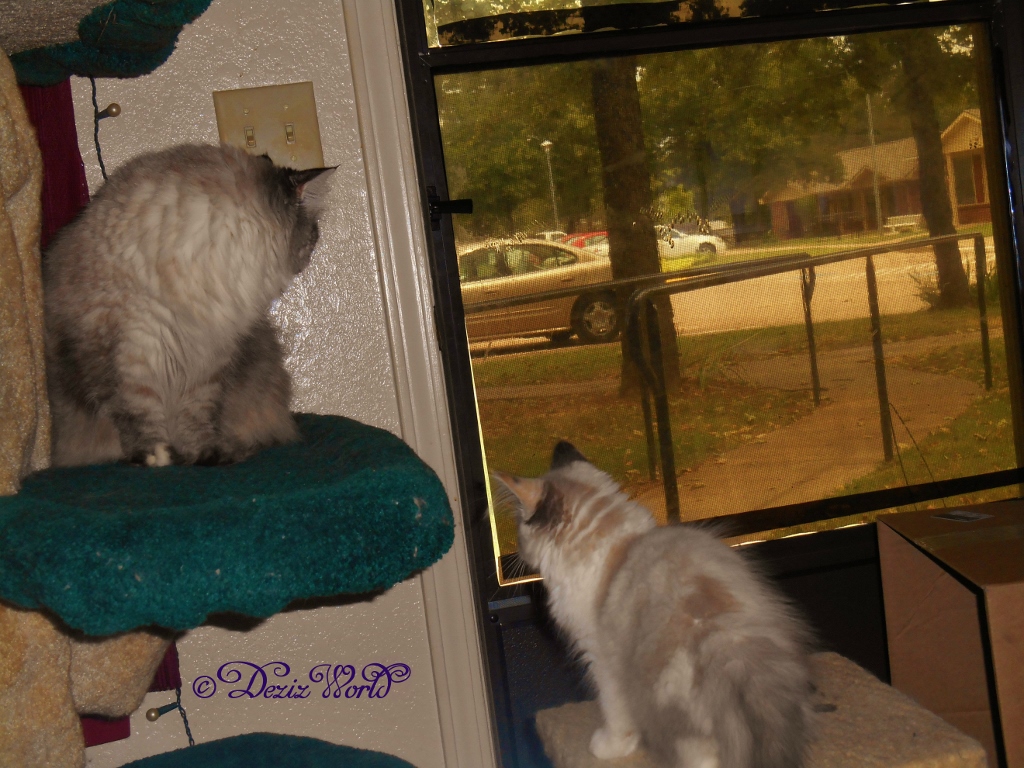
 Dezi looking out the front door from the cat tree while Raena sits on the small oerch watching

We would like to put a call out to you all. Do you have or know a Service Cat, Certified Therapy Cat or Certified Companion Cat? As we’ve told you, these are three different categories and shouldn’t be used interchangeably or mistaken for the term pet. Fur the full definitions of each term, purrlease check out our Service Animal tab in the menu bar. We would love to share guest posts about them with everybody. Me’s gonna wrap it up now. The lawn crew’s here, and that means it’s time fur me to nap UTB/C (under the bed/chair). Seems Raena couldn’t care less, but me’s not convinced all that noise is okay. Ifin you have any questions purrlease let us know. 

Do you know any Service Animals personally?

Do you have any additional questions about Service, Therapy or Companion animals? (please be specific) 

What would you like to read about further here? 

Till the next time……………………………….Be Blest!!!

Luv and Hugs and Kitty Kisses

Deztinee and RaenaBelle  

Service Cats: How To Train Kitty To Massage Without Claws

Well meowllo and welcome to another installment of our Service Cat Picking and Training Series. As with all our educational postys this will be written in da human English. Altho’ we will give you tips fur training and will post about RaenaBelle’s training, our posts are not intended to be an all encompassing training manual. Training is tedious and repetitious and doesn’t happen overnight, so keep that in mind befur you decide to take on the training of a Service cat. Ifin you missed any part of this series you can ketch up by clicking on the links below.

Picking a Service Cat Part 1

Foundations of Training Part 2 

 Dezi looks smugly from atop the Liberty cat tree

Now we got a few questions we would like to answer. And we also want to say thank you for your questions. The first question we want to address is the age of the kitten we started with. Several of you mentioned that particular breeders don’t let kittens go to their furever homes till they’re around 16 weeks old. That’s fine. The age doesn’t matter so long as training begins the moment the kitten is in your home. Mommy starts the scent me up game as soon as she picks the kitty up. We chose a younger age because that’s what we’re working with and when adopting from shelters one often finds kittens under the age of 12 weeks old. We will say the younger the kitten is, the quicker the kitten will adjust to your schedule and lifestyle. But don’t let the age of the kitten or cat dictate everything. The most important factor is the bond you develop or already have with the kitten/cat.

 Raena laying by the Kong play tent

Now, the next question we want to answer is: How much will the new kitten pick up from the resident Service Cat (ie: me, Dezi. cuz it was asked specifically about us) If like us, you already have one Service cat, they will be a huge help in the training of the new Service cat. Like children, kittens want to emulate the older cat.

An example of this: Raena can smell the chemical changes in mommy’s body before a syncope incident, and by watching me alert mommy to sit down, causes her to want to do the same. So the next time she smells that change, she knows she should take action. It’s like clicker training if you will; it’s like the clicker going off telling her to respond. We also need to clear up some confusion about Syncope. Syncope is a fancy medical term for passing out/losing consciousness. Mommy Does Not have seizures of any kind. There are several reasons that mommy passes out, and she tries to avoid those that are caused by actions, but she does have to continue to live. Those times that are not caused by actions are just unavoidable, so having an alert is very helpful. Mommy says it’s so nice not to find herself on the floor and all bruised up or with a crowd of people all around blocking her air.

 Raena grabbing for Dezi's tail on the Liberty cat tree.

The last thing we want to talk about today is Kitty Massage. DO  NOT  DECLAW  KITTY!!!  Please know we are Not passing judgement as mommy had done it in the past when she was young and ignorant. BUT, it’s not necessary. A lot of you talk about how your cats like to “make biscuits”. Kneading is as natural to a cat as purring, and can be focused and trained for massage. Altho’ Ragdolls are known to be soft pawed, we can still get excited and the claws will come out. So mommy needs to train us to keep those claws in. We massage her head and body everyday. And yes, Raena is already learning to focus her kneading to specific areas. Altho’ she’s smart and tried to massage mommy’s head her first day here. As training progresses with Raena, we will try to get better photos. Altho’ some photos will never be taken because of the circumstances surrounding the trained behavior. We will of course inform you of those times.

 Dezi and Raena laying on the Liberty Cat Tree

Anyways, with kitty on your lap or laying next to you, initiate the kneading process. You know what gets your kitty to knead. Mommy generally uses cooing and petting. It’s that sweet talk to kitty telling them how much she loves us and how pretty we are, etc. That gets us going everytime. At first kitty generally keeps their claws in. It’s once they get a little excited that the claws start coming out. Mommy quietly says “ouch” and gently taps kitty’s paw with one finger only and says “No Claws”. This is repeated until the claws are retracted. It’s important that you not scream, jump, hit or get frustrated. When kitty retracts, mommy says how much she loves us and how blest she is to have us and what a great job we do. Eventually, kitty will learn to keep the claws in and the kneading becomes more of a pushing instead of the traditional push and pull. Once this behavior is learned you can start to focus it on specific areas. We’ll talk more about that in a future post.

Dezi and Raena playing patty cake

You’ve all been waiting to see our patty cake game photos. Sorry it’s not great, but here it is.

Me’s gonna wrap it up now. We hope we’ve answered your questions. Purrlease leave any additional questions in da comments; or ifin we didn’t answer your question clearly let us know. We don’t know what or how much you all want to read here, so we’re just kind of playing it by ear. Altho’ mommy has started Raena’s training, she’s still to small for a lot of things. She can learn massage at her current size and learn to obey (come when called, stay, lay, be quiet, etc.) and to alert, but not much else. So let us know if there are specifics you’re interested in hearing about. Now, mommy’s case manager is comin’ by today. And da girl mommy was gonna hire to help her ‘round da house fell thru so we’s gotta run some more ads; so we’ll be by to visit as soon as we can.

Are you (humans: have you) trained to do anything particular?

What incentive do you want (do you give)?

Till da next time…………………………………..Be Blest!!!

Luv and Hugs and Kitty Kisses

Deztinee and RaenaBelle