Service Cats: 6 Tips To Keep Kitty Stress Free While Going To the VET

Stop Kitty’s Peeing, Pooping & Throwing Up In The Car/Carrier:

MeOW Welcome to Service Cats and Everything Feline on Furidays. We’ve got a great topic fur ya’ today, so stay tuned. We’re runnin’ really late cuz mommy didn’t get everythin’ edited befur crashin’ last night and she had her regualr monthly doctor’s ‘pointment today. Anyways, fanks fur your patience. Furstly, we thought we needed to meow a minute ‘bout where our Tips, Tricks and Trainin’ Techniques come from. Mommy was asked this past week just where she got her ideas since she had such purrfect and well behaved kitties (we’re choosing to believe the question is genuine). Altho’ mommy thinks we’re purrfect in every way, we’re far from it. Mommy has dealt with most of the issues we write ‘bout purrsonally at one time or another. And, mommy spent years Trainin’ woofies, horses and kitties. She even Trained a pot bellied pig named Cameron. Mommy fostered bottle baby kittens who had to be taught how to be a cat. Mommy’s always had a bond with animals and still spends much of her time studying their behaviors, and tweaks her Tips as needed. And ifin she doesn’t know somethin’, she’ll research till she gets the answers. Altho’ mommy has experience with many animals, she has chosen at this time in her life to focus on kitties. We’re so fankful fur all our new and old furiends and followers and welcome any and all questions or topic suggestions you may have which can be left in the comments or by sendin’ us a purrivate email via our Contact page. Just ‘member to be as specific as pawssible when askin’ behavioral questions. As always, you can ketch up on any post you’ve missed in this series by clickin’ the links on our Training Tips and Everything Feline page from our menu. So, let’s get the “business” outta the way and get on with today’s topic.  


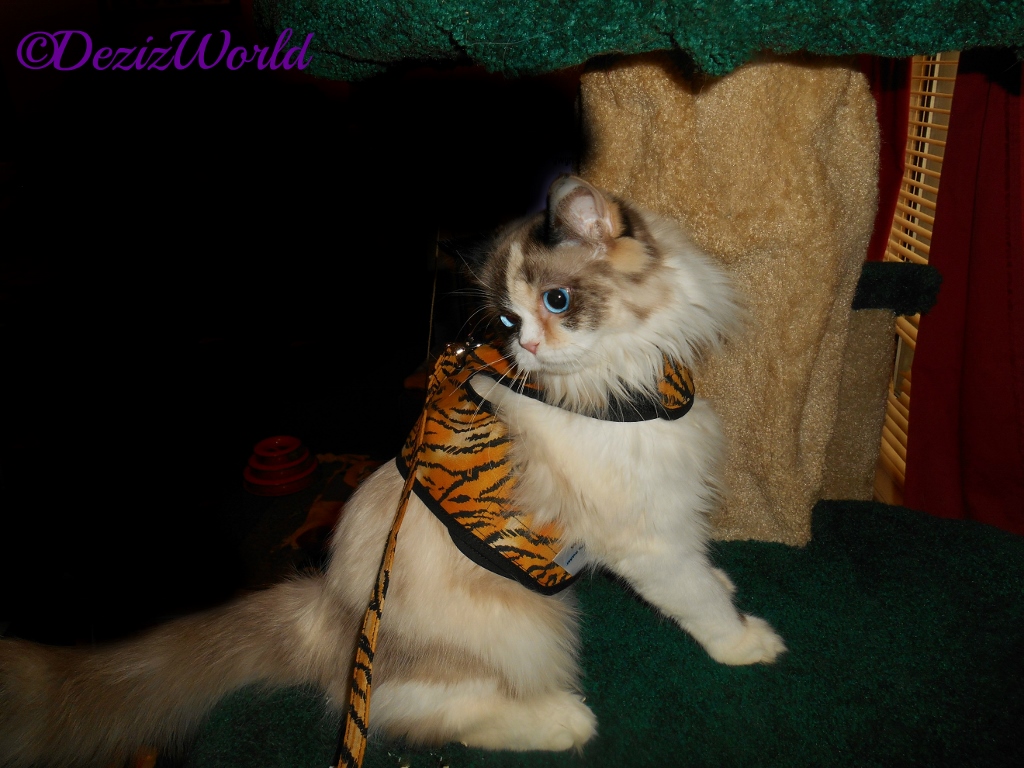
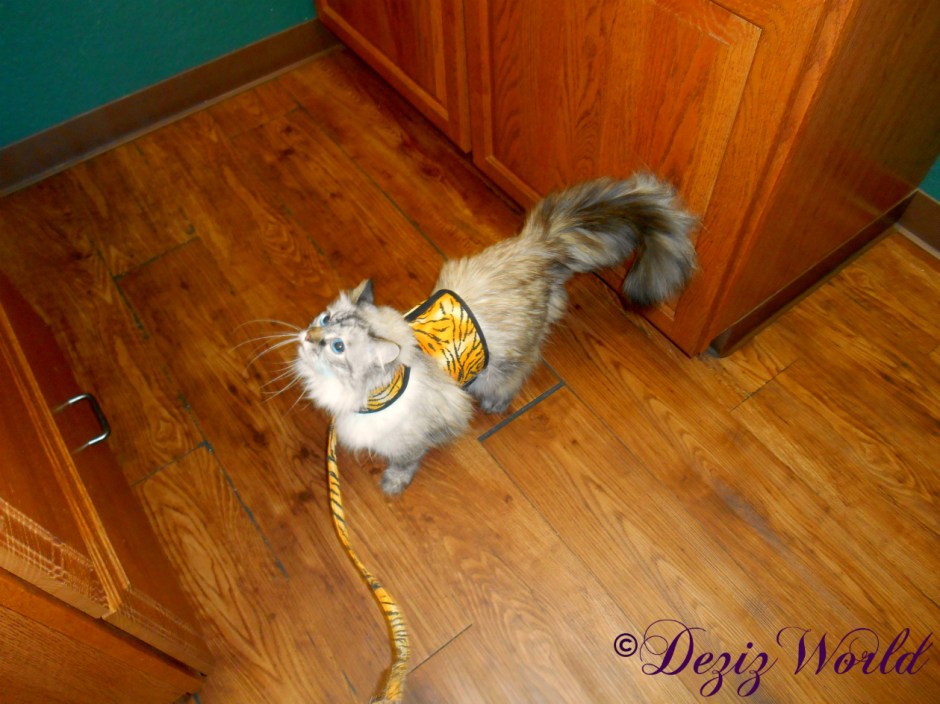
Raena sits posing in her tiger harness


The followin’ post will be written in human English fur reader and translator ease. Our Service Cat posts aren’t intended to be an all inclusive Trainin’ Manual but rather Tips, Tricks and Techniques used/developed by mommy A thru her many years of animal trainin’, cats in purrticular. And to offur insight into your questions about Everything Feline. Always remember, Training is all ‘bout Repetition and Rewards.

Dezi lays on counter at vet office


     We’ve been asked several questions about how to avoid Stress while transporting kitty to the VET. Some of you have kitties that throw up, poop or pee in their carriers every time they have to make that trip, and you want to know how to stop it. Since most of these kitties never go anywhere else, we’re going to focus on how to make this and other trips successfully. Let me tell you a little story about me’s self. For the first two years of me’s life, me would pee every time mommy took me to Ardmore or the VET. Because me did it at the same spot on our trips (7 miles from home), mommy says it would have been funny if it didn’t mean that me was so stressed and stink up the car so bad. However, me can now make that trip and even longer ones without emptying me’s bladder all over the place. So, how did mommy get me to stop? 


Dezi lays in wheelchair watching Raena inside the stroller

Step 1.

     First up, we recommend leaving the carrier/stroller out at all times. Put a towel, blanket, or a previously worn unwashed shirt in the carrier. This will allow kitty/doggy to get used to their transport and even find it comforting. Place the carrier in a quiet spot and give treats or extra loving when kitty/doggy enters or uses the carrier as a bed or hideaway. Place a favorite toy or a little catnip/silvervine in the carrier to entice kitty into using the carrier. Play interactive games that incorporate the carrier. You might also use one of the facial pheromone calming sprays to spray the inside of the carrier. Remember to refresh the scent often. In other words, make the carrier a fun place for kitty to hang out. 


Dezi looks over her shoulder while in the stroller outside
Check out the stroller’s tether (black strap) attached to harness.


Step 2. 

     As most of you know, we highly recommend harness training your kitty and tethering them into their carrier/stroller for safety. You can read our Harness Training Tips here. We also recommend withholding food before a trip especially one to the VET. However, you want to make all trips seem uniform, so all preparations should be the same whether you’re going around the block, to the pet store or the VET’s office.
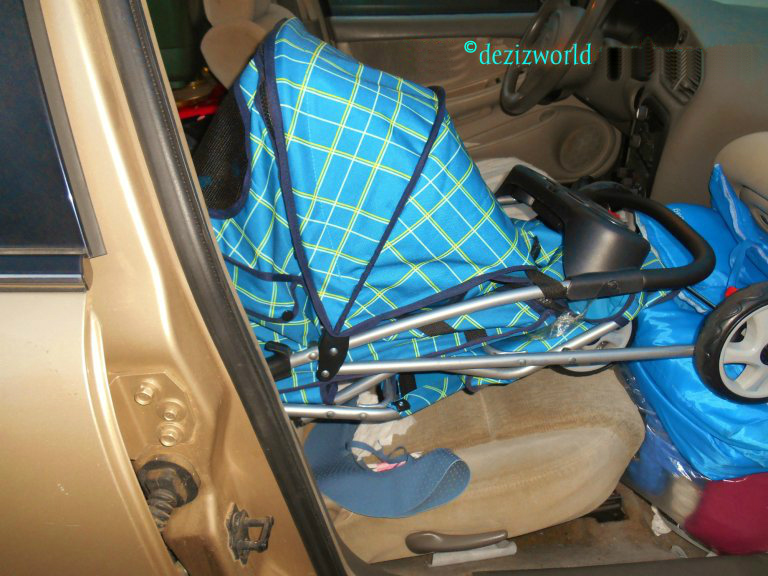
 

Dezi and Lexi inside stroller in the front seat of the car.


Step 3.  

     Take kitty for a drive. It doesn’t have to be far, but you want kitty to get used to going out without ending up at the VET. Remember, you want the carrier to be a fun and comforting place. Speak softly and calmly to kitty while you’re out. Keep your emotions and thoughts in check. Always remember, animals feed off your energy. If you’re stressed and expecting the trip to go badly, kitty/doggy will pick up on that and most assuredly leave a little surprise for you in their carrier. Remember me’s first 2 years? Every time mommy saw the mile marker where me first peed, she would get nervous and start watching me to see if me was going to let loose and flood the car. MOL She had started carrying piddle pads and would put one in her lap underneath me. Me liked to lay in mommy’s lap while we drove down the highway. One day, mommy said enough and decided to Train me to hold it. 
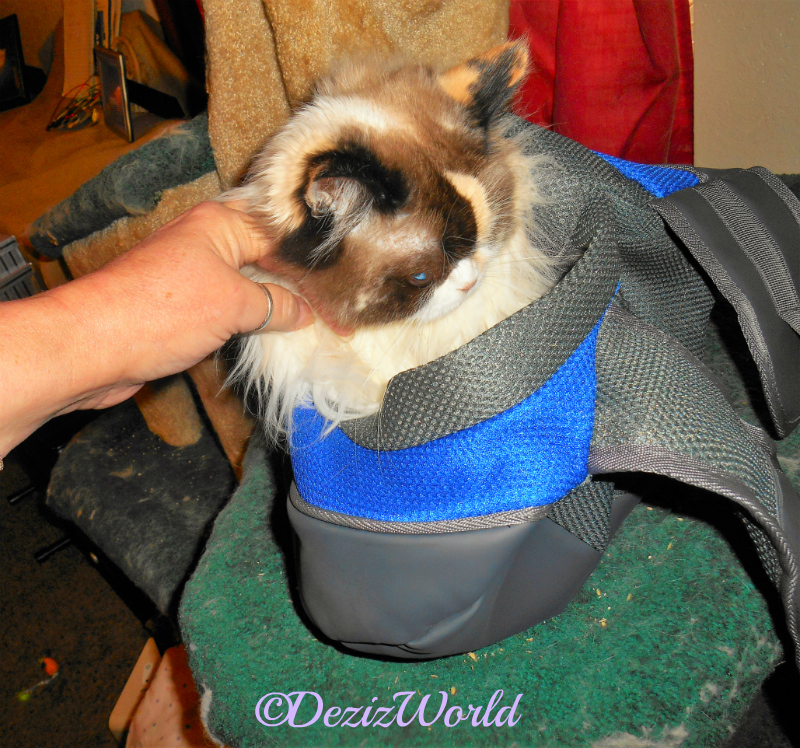
 

 Raena models the new sling carrier


Step 4.  

     Mix things up. What this meant for me, was that mommy put me in a carrier for the last 10 miles of the trip. She chose a small carrier that didn’t allow me room to move around. This step is only temporary, so you don’t need to invest in an expensive carrier, just something small enough to keep kitty from moving around an leaving deposits behind. Kitties are very clean animals. The last thing we want to do is lay in our own pee or poop. If your problem is that kitty is leaving deposits in the carrier, you might want to hold kitty in your lap instead of the carrier. For the first couple of times, you might want to have a piddle pad at the ready. Remember to speak calmly to kitty. Make each outing longer and longer and expose kitty to new and different things. Carry a wand toy/feathers on a stick to help distract kitty from the things going on around them. Keep an eye out for signs that kitty is about the pee/poop/throw up and distract them with the wand toy or feathers on a stick. Obviously this step is much easier with two people, but one can do it in a pinch; after all, mommy has to do it by herself. If she can do it, anybody can. Make stops at the park, pet store or a drive through (ie: bank, fast food, etc.) and reward kitty with treats or extra loving during the trip and after you return home.  
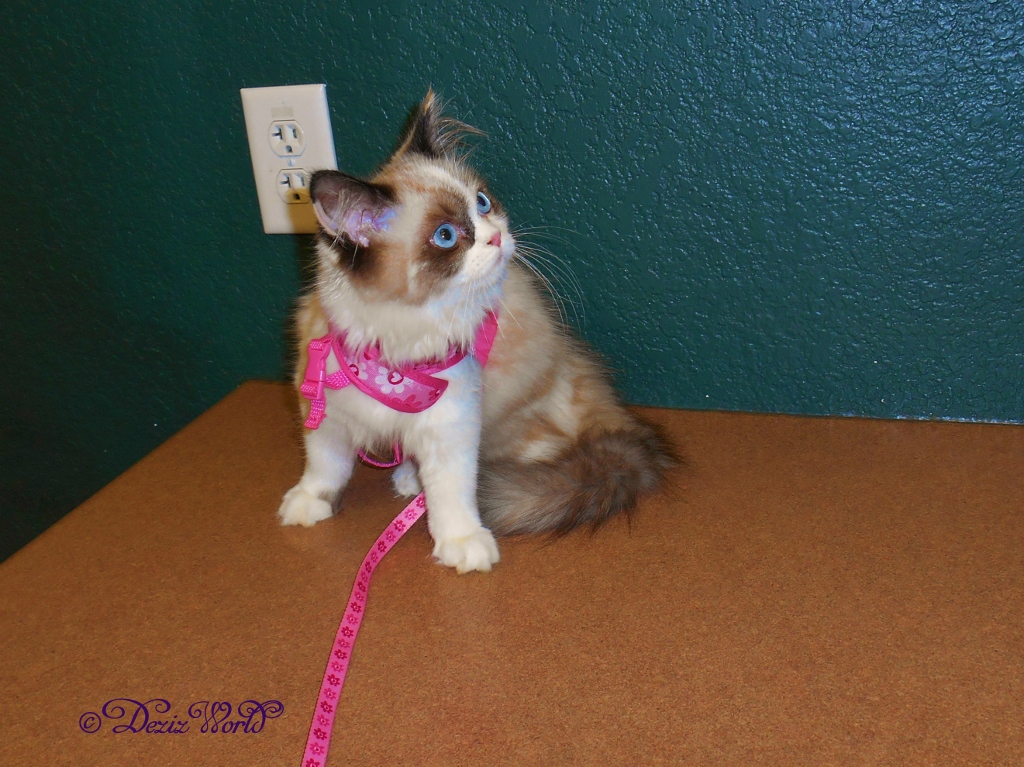
 

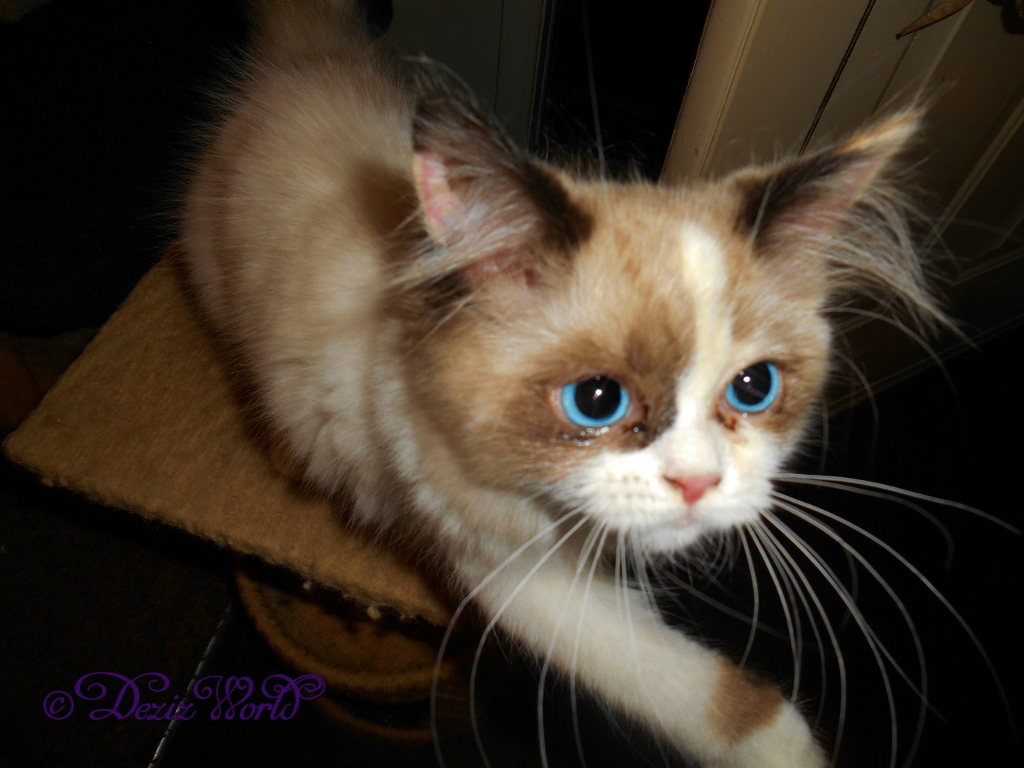
Raena looking around at the vets

Step 5.      

     When the time comes for the trip to the VET, don’t let your stress affect kitty. Remember to always keep your own emotions in check. Keep positive thoughts and treat the trip as if it were any other trip kitty’s been on. Be sure to take along some treats or a favorite toy to distract kitty. Wand toys or feathers on a stick work great for this. You can even take a little bag of catnip for kitty to sniff is you have a nip fiend. Any time you see kitty showing signs of stress, wave the wand/feathers/bag of nip to get kitty’s attention. Praise kitty during the visit. No matter what happens at the VET or what kind of news or health updates you may get, keep your thoughts and voice positive until after you return home. Continue to keep an eye out for stress so you can redirect any unwanted behaviors like peeing/pooping/throwing up on the trip. 


 Sling Pet Carrier

Sling/over the shoulder pet carrier


Step 6.    

     Once you return home, remove kitty from carrier and give them treats or extra loving along with praise about how much fun the trip was. One thing we didn’t mention earlier, is that mommy likes to put a little nip or silvervine in our carrier/stroller before trips. It’s a ready made distraction that we can’t escape. Once kitty has made 2 trips without the offending behavior being present, you may return to kitty’s normal carrier. Altho’ the smaller carrier may not give kitty room to move around, kitty is okay. Kitties actually like tight spaces, they make us feel safe. We thought you might like to know a few of the things mommy has used as a “tiny” carrier over the years. Mommy has used her purse, an overnight bag, make up bag and shoebox. You might want to look into a sling carrier that would allow kitty to rest over your heart. This type of carrier can be extremely soothing to kitty as they are next to your heart and feeling the warmth of your body. It also encloses all but kitty’s head, so there’s less opportunity for kitty to move around and squat.


Dezi lays with arm hanging over edge of the liberty cat tree while Raena bathes on the shelf below her.

Well, we do hope this helps those of you dealing with this purrticular problem. Fankfully, me no longer pees in the car, carrier, stroller or mommy’s lap. Me actually looks forward to trips these days. And, me luvs the new sling carrier mommy got us almost as much as me luvs our new stroller. Ifin there’s somethin’ you feel we’ve left out, or you have further questions on this topic, purrlease say so in the comments below or by sendin’ us a purrivate email via our Contact page. And, as always, you can ketch up on any of the posts in this series by clickin’ Training Tips and Everything Feline from our menu bar above. Befur we go, we wanna link up with Comedy Plus fur Feline Furiday. Join us next week fur another in depth look into the world of cats.


Till the next time…………………………………………….Be Blest!!!


Luv and Hugs and Kitty Kisses 


Deztinee and RaenaBelle

Service Cats: Am I Training My Cat Or Is She Training Me

MeOW Welcome back to Service Cats and Everything Feline on Furidays. We wanna fank you all fur your patience while we try to get caught up from our week off. We’ve been dealin’ with a small flood here in our apartment fur the last couple of days, so we’re still behind. However, t’ween the flood and a couple of emails we received this week, we’ve decided to take a look at the lighter side of Training this week. Me will tell you more ‘bout that in a minute. We’d like to remind you that you can ketch up on any post in this series by clickin’ the links on our Training Tips and Everything Feline page from our menu. You can submit your questions or post suggestions by leaving a comment or sendin’ us a purrivate e-mail via the form on our Contact page. Purrlease ‘member to be as specific as pawssible when askin’ behavioral questions. Now, let’s get the business outta the way and get on with our posty.


Raena posing in her harness on the small cat perch


The followin’ post will be written in human English fur reader and translator ease. Our Service Cat posts aren’t intended to be an all inclusive Trainin’ Manual but rather Tips, Tricks and Techniques used/developed by mommy A thru her many years of animal trainin’, cats in purrticular. And to offur insight into your questions about Everything Feline. Always remember, Training is all ‘bout Repetition and Rewards.

Dezi looks full on at the camera while sitting ion the stroller outside


     We often receive comments like,I’d love to train my cat, but, he/she trained me.”, or “My cat does that, but…”. As you know, mommy says all Training should keep the animal and it’s natural behaviors and size in mind, and to be realistic in your expectations. All of mommy’s Training Tips/Techniques involve things cats/dogs do naturally and just tweaks them a bit to accommodate the human need/desire. Mommy says a cat’s curiosity makes us the perfect animal for Training, just as the dog’s desire to please. We cats also want to please our humans, we just don’t show it the same way a doggy does. So, it’s up to you, our human to understand our language for the gratification you’re looking for. Since we’re cats, we’re going to focus on cats today, but as always, most of our Tips can be used for other species.


Dezi cares for Raena atop the Liberty cat tree


     Most people know that we cats communicate with other animals through scent, rubbing, nose touching, etc.; we reserve most verbal communications for you humans. The more interaction you have with us, the more vocal we will become and the more we will interact with you. The more cat-like you interact with us, the more cat-like responses you will get from us. We’ve told you in earlier posts, that mommy plays the “Scent Me Up” game with all her kitties. It helps us to form a stronger bond with her. It’s also mommy using natural cat behaviors to communicate with us. Let me refresh your memory: Mommy rubs her cheeks, chin and forehead against our faces, chin, ears and forehead in an exchange of scents. This is how we cats would greet one of our family members or beloved housemates; even our larger wilder cousins do this. Our face contains all the good feeling scent glands, so this exchange brings us kitties pleasant and calming feelings. It also makes us very receptive to Training. But, what kind of Training and who’s doing the Training?


 Raena lays in mommys lap and starts to massage


     Let’s take a look at what mommy calls “Massage”. Kitties knead (make biscuits) naturally. We do it the minute we’re born. It helps move our mother’s milk into the teat so we can suckle and eat. Kneading makes us feel good by bringing up good memories. Kneading is most often accompanied by purring and a form of closed or open mouth suckling. So, mommy takes an innate behavior and makes a few adjustments such as where we knead, Training us to keep our claws sheathed and to knead on demand and it becomes a kitty massage. For Training Tips on Kitty Massage click here


 Dezi kneads and suckles the cat bed


     As most of you know, one of the most beneficial Tasks we perform for mommy especially when she’s out and about, is alerting before she passes out. We often get asked just what we do. Mommy says our alerts have become more refined through the years, as she’s learned to read them and her desire to bring less attention to the whole thing has lessened. You know, no need for everybody to know what’s happening. Anyways, as me said before, us kitties typically reserve our verbal communication for you humans. When we first sense that mommy’s going to pass out, we paw at her to get her attention and then we do a little turn when in our stroller, or meow to get her to follow us to a chair when at home/loose. And, if at first you don’t succeed…try, try again. If mommy doesn’t respond the first time, we get a bit more vocal with our next alerts. Meowing and chuffing until mommy complies. Again, mommy’s using a cat’s natural abilities to her benefit.


Raena reaching out from the perch to alert mommy
Raena Alerting to Syncope incident


     A mother cat will chuff at her kittens to call them to her. Chuffing can also be used to alert others to one’s existence or whereabouts as an alarm, such as a male lion or tomcat defending his territory from intruders. A cat or dog wanting another to follow them may touch noses and turn around excitedly in an attempt to get the attention of the other. So, this is a perfect action for us to use to alert mommy to the need to sit down so she doesn’t pass out and hit the floor.


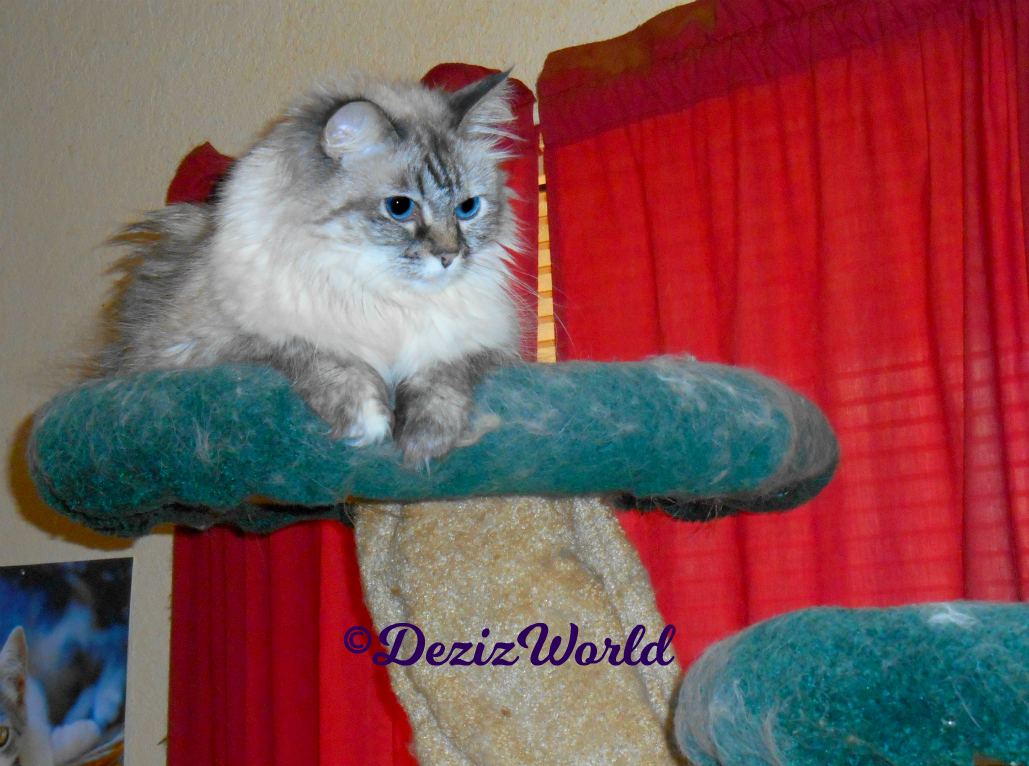
Dezi atop the cat tree looking down


     These are just a couple of examples of our natural abilities being honed to accommodate mommy’s needs as a disabled person. So, to answer the question of Who’s Training Who, we could say a little of both. No doubt your kitty/doggy has Trained you to know when they’re hungry or need to go to the potty. By watching our behaviors, you too can learn how to hone those behaviors to accommodate your needs. We always say every kitty/doggy can use a little Training, even if they’re not going to be a Service Animal. Bonding with your anipal makes both your lives better, and Training helps to form a stronger bond. And, there are plenty of studies to show that cats only enrich the lives of their owners and help their humans to live longer happier lives. 


 Raena stands on scratcher with paw lifted

Who could resist this face?


Well, we hope you enjoyed today’s post. Altho’ Training is a very serious matter, remember to keep it fun and natural. Using your cat/dog’s natural abilities will make Training more successful. Don’t forget you can ketch up on any post in this series by checking out our Training Tips and Everything Feline page. We love hearing your questions and post suggestions and look forward to answering more of them in a future post. We have some great posts coming up, so be sure to meet us here each Furiday fur a new topic. You never know when it just might be something you’re wondering about or the answer to your question. Me so furgot to link up with Comdey Plus fur Feline Furiday, so me had to come back and edit me’s posty. Sorry ifin ya’ got it in your email twice. But, check out all the feline fun here. We’ll see ya’ soon.


Till the next time…………………………………Be Blest!!!


Luv and Hugs and Kitty Kisses 


Deztinee and RaenaBelle     

Service Cats: What Age Should Kitty Be Altered & Preparing For A Trip To The VET

MeOW  We’re late, we’re late fur a very impurrtant date!!! Welcome to Service Cats and Everything Feline on Furidays. And welcome to all our new followers. We say you’re only a visitor once. After that, you’re family. We open this post each week to give you Trainin’ Tips and answer all your questions. So, ifin there’s anythin’ you’ve been wonderin’ ‘bout, just ask. Your questions can be ‘bout health, behavior, Trainin’, or anythin’ else you wanna ask. Nopawdy knows everythin’. And ifin we don’t have an answer, we’ll find one fur ya’. You can ask via the comments below or by sendin’ us a private email via our Contact Page. Purr requests, we’re no longer statin’ who asked the question. But, there is no dumb question, everypawdy needs help sometime. You can ketch up on all the posts in this series by clickin’ Training Tips and Everything Feline from our menu bar. So, let’s get the business outta the way and get this pawrty started.


Dezi laying in cat tree in new harness


The followin’ post will be written in human English fur reader and translator ease. Our Service Cat posts aren’t intended to be an all inclusive Trainin’ Manual but rather Tips, Tricks and Techniques used/developed by mommy A thru her many years of animal trainin’, cats in purrticular. And to offur insight into your questions about Everything Feline. Always remember, Training is all ‘bout Repetition and Rewards.


Dezi lays on counter at vet office


So, we’re going to tackle a couple of questions today because they kind of go hand in hand. Here’s the questions: What age should kitty be spayed or neutered?, And: My kitty hates going out in the car/My kitty gets really stressed when he/she has to go to the VET, what can I do to make it easier on him/her?


 Raena posing at the vets


Regardless of kitty’s age or background, they can be Trained. A really skittish kitty may always be a little fearful, but even they can learn to be calmer and less stressed. And, in the end, that’s all we can ask of them. We gave you Training Tips and Tricks on Harness and Leash Training here. There are numerous reasons to Train kitty to be comfortable with going out/riding in the car. We’ll be covering more of this in a future post. Anyways, we live in something called Tornado Alley; meaning a tornado could appear and wipe out everything in it’s path. Many of you live in areas that could flood or have the ground beneath you quake and open up. Regardless of weather, there are many natural disasters that could occur making it necessary for kitty to have to leave the home and ride in a car. So, Harness and Leash Training are always a good idea. You should always secure kitty inside their carrier with any provided tethers, or by clasping the leash to a zipper, handle or carrier grate. This step will ensure that kitty doesn’t escape even if they manage to get their carrier open. The last thing you need is a scared kitty running loose in an unfamiliar place possibly surrounded by unfamiliar people/other anipals.


 Raena sits on the scratchers at petco


We highly recommend keeping kitty familiar with going out throughout their lives. We also recommend taking kitty to places other than the VET. Think about it, if the only place you ever went when you went for a ride in the car was to some place you didn’t like, how eager would you be to continue to go? So often kitties only go out when they need to visit the VET. Even the calmest of kitties will eventually get a little stressed out by these outings. Our prayer would be that no kitty ever got sick or needed regular doctor’s visits, but the reality is that as kitty ages VET visits become more frequent. And, since we can’t all live in areas that have VETs that make house calls, a kitty that’s comfortable going out makes those visits much less stressful for all involved.


Me thinks me’ll take a little nap in here.


Remember, kitty also feeds off your emotions. More than a few times we’ve heard, “My cat seems to know I need to take them to the VET.” The answer is, of course we know. We’ve already felt your stress about having to corral us into our carrier and make the drive while listening to us sing the song of our people. Take control of your own emotions and start sending “positive vibes” instead of nervousness or stress. No matter how small your home may be, we recommend leaving kitty’s carrier/stroller out at all times. The more comfortable kitty is with their carrier/stroller, the less stressed they’ll be when you close them up in it. You should make closing kitty in their carrier a game you play off and on throughout their lives. Once kitty is in their carrier, calmly close it up for just a few minutes at a time. Once kitty is comfortable with this, start taking kitty out to the car and drive around the block and back home again. You can eventually make these trips longer and longer. And remember, all trips in the car shouldn’t end up at the VETs. We often go through the drive thru at the bank, just to say hey to the tellers in the windows. We’ve also gone with mommy to buy gas. We stay in the car while she pumps the gas and then we either go inside with her to pay or go thru the drive thru window. Again, we’ll cover more of this in a later post.


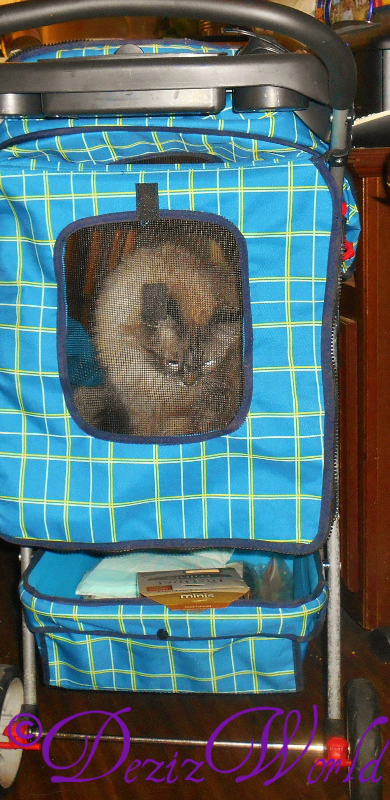
 Raena sleeps in Gen7 stroller

Ifin I’s stay here long enuff, maybe I’s can go fur a stroll later.


Now to the question of when kitty should be altered. In recent years all surgical procedures have advanced and become safer. Lots of VETs perform what is called a Gonodectomy (removal of the ovaries or testes) on very young kittens, beginning around 6 weeks of age. Most require the kitten to weigh at least 2 pounds. This procedure is more common in rescue and shelter kittens in an attempt to make sure adopted kitties actually get the surgery and can’t reproduce. While we totally understand the need for this, mommy is personally against this procedure on such a young and small animal. That being said, we also don’t believe kitty/doggy should be allowed to mature and “go thru a heat cycle” before being altered. We certainly don’t believe kitty should have to experience the birthing process. It is not necessary and increases the risk of mammary cancer, cervical cancer and other medical issues. We tend to favor the spay/neuter surgery occur when kitty/doggy is about 5 to 6 months of age. By this time the male testes have fully dropped, the female ovaries have fully formed and there’s less chance of “missing/leaving” behind an ovary or testicle. Altho’ rare, this has and does happen.


 Mommy A waking Raena after her spay surgery

Raena’s spay day at 5 1/2 months old.


We were also asked if we believed that a female kitty in heat was in some form of pain and should be given pain meds. Our answer to this is absolutely not. But, that being our opinion, we researched said topic and could find nothing to substantiate that kitty is in actual pain. The yowling and contorting of her body is not due to pain, but her desire to mate. She doesn’t need pain meds, she needs to be altered as does the spraying male tom that’s yowling, fighting and stinking up the house/yard/neighborhood. It is our opinion that we often over medicate these days whether it be human or animal. That being said, kitty should be altered before she has to go into heat. Again, it’s much healthier to spay kitty before a heat cycle. However, don’t let that stop you from adopting a mature kitty who hasn’t been spayed. It’s never too late. And it’s never too late to start Training your kitty. Remember, Training is all about Repetition and Rewards. To revisit Training kitty to go out, you should take kitty out at least once a week throughout their life. This will help insure that VET visits go smoothly and kitty isn’t bouncing off the walls when you take them in the car.


Dezi sits in stroller

Dezi in stroller in the car.


Don’t furget, you can ketch up or refresh your memory on any of the posts in this series by clickin’ the links on our Training Tips and Everything Feline page in our menu bar. And keep the questions coming, we luv writing these posts and hope you find them helpful. Meet us back here each Furiday fur topics to help make your relationship with the anipals in your life better. We’re also joinin’ Comedy Plus fur Feline Friday.


Till the next time……………………………………Be Blest!!!


Luv and Hugs and Kitty Kisses


Deztinee and RaenaBelle

Service Cats: How Do We Respond To The 911 Operator

MeOW Welcome to Service Cats and Everything Feline on Furidays. We spent the last 3 weeks givin’ ya’ll a little background into how long it took fur us to learn some of the tasks we purrform fur mommy. Ifin ya’ missed any of those posts you can read them here, here and here. And don’t furget you can check out all our Trainin’ posts by clickin’ Training Tips and Everything Feline from our menu. We’ve covered lots of great topics and offured tons of Training Tips that are good fur not only kitties but woofies too. Keep those questions comin’. We dedicate these posts to answering any and all questions you may have regarding the health, behavior or anything else you wanna know ‘bout your anipals, cats in purrticular. Leave your questions and/or post suggestions in the comments below or send us an email via our Contact page. Let’s get the business outta the way and get to today’s topic.


Raena in tiger kitty holster


The followin’ post will be written in human English fur reader and translator ease. Our Service Cat posts aren’t intended to be an all inclusive Trainin’ Manual but rather Tips, Tricks and Techniques used/developed by mommy A thru her many years of animal trainin’, cats in purrticular. And to offur insight into your questions about Everything Feline. Always remember, Training is all ‘bout Repetition and Rewards.

We’ve discussed our Training to call for help by using a land line telephone many times. In response to that we were asked,What do you do when a call is answered? Are you trained to meow a certain number of times?As we stated last week, part of our telephone training is learning to listen for the voice on the other end of the phone signaling that our call has been successfully made. Mommy says she’s been blessed with chatty kitties. Meaning, we love to chat it up…all the time. MOL


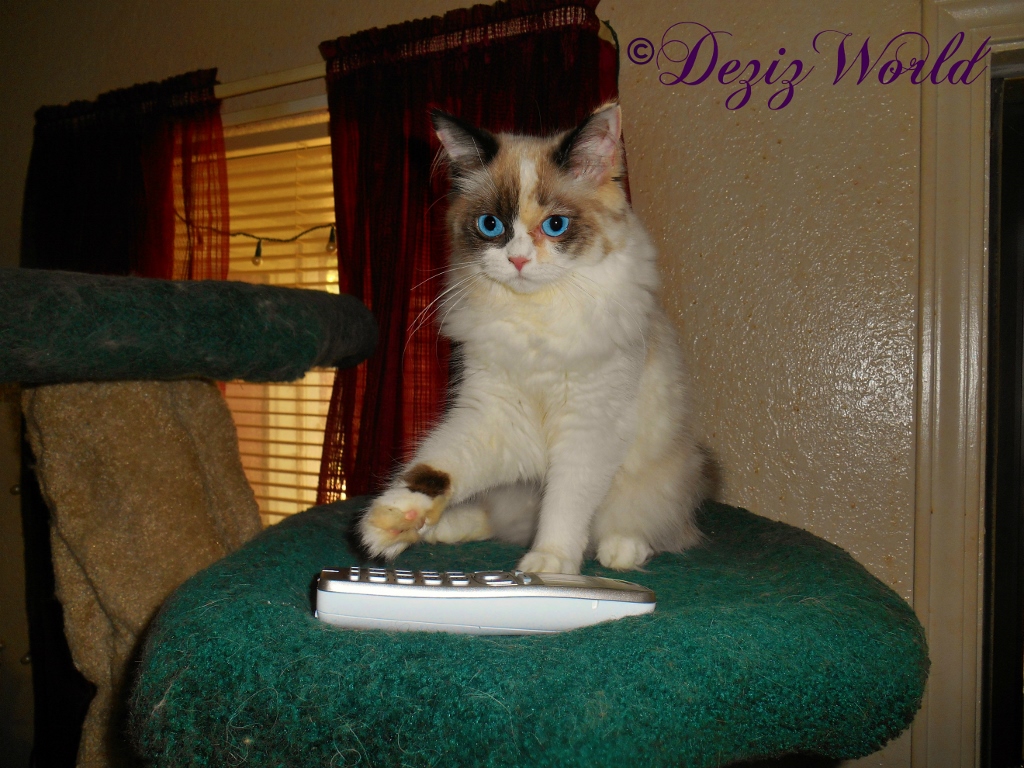
Raena learning to dial the phone.


Anyways, before we answer this question, let’s take a look at how emergency calls are handled. And remember, It’s a Crime to call 911 if you don’t have an emergency. So, if you’re Training your anipal to call for help, be sure the phone has been disconnected, or better yet, use a pre-programmed number to a friend or family member that can imitate the response of an emergency operator. Or maybe you would rather have a friend or family member be your emergency call. With the ability to pre-program numbers into your land lines, it makes calling for help that much easier. There’s fewer buttons to Train your anipal to dial. It is our opinion that cell phones can’t be used by your anipal to call for help. So, if you need your Service Animal to perform this task, you must have a land line with basic service. We use Magic Jack at a cost of about $40.00 billed yearly for unlimited calling anywhere in the U.S. and Canada.


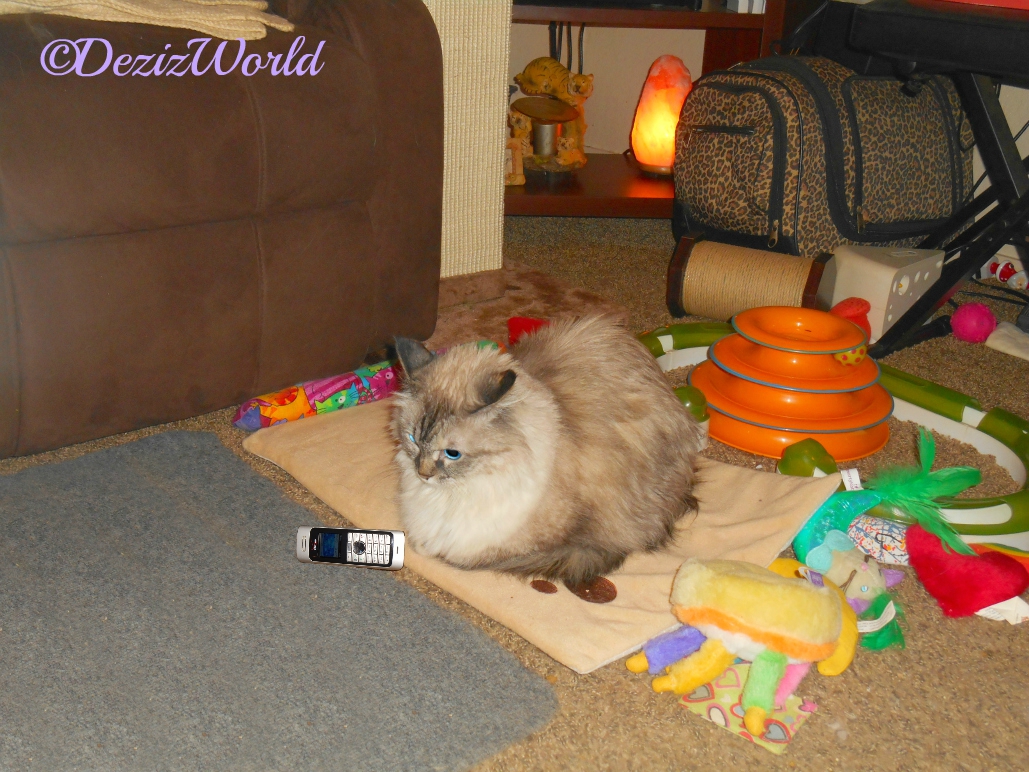
Dezi lays on the heated cat mat with the phone

Now, let’s take a look at that Emergency Service call. When a call comes in to an Emergency Services operator, they can see the number the call is made from and the name and  address associated with that number. That means they already know where they should send emergency personnel. Again, this is when using a land line. Altho’ most places have implemented GPS locators for cell phone users calling 911. Some telephone companies work in conjunction with Emergency Services to provide additional instructions displayed to the 911 operator when an Emergency call comes in from certain numbers. Years ago mommy filled out one such form that told the 911 operator to send an ambulance if they received a call from our number and either heard nothing or only meowing. You might check with your local phone company or Emergency Services to see what options may be available to you in your area.


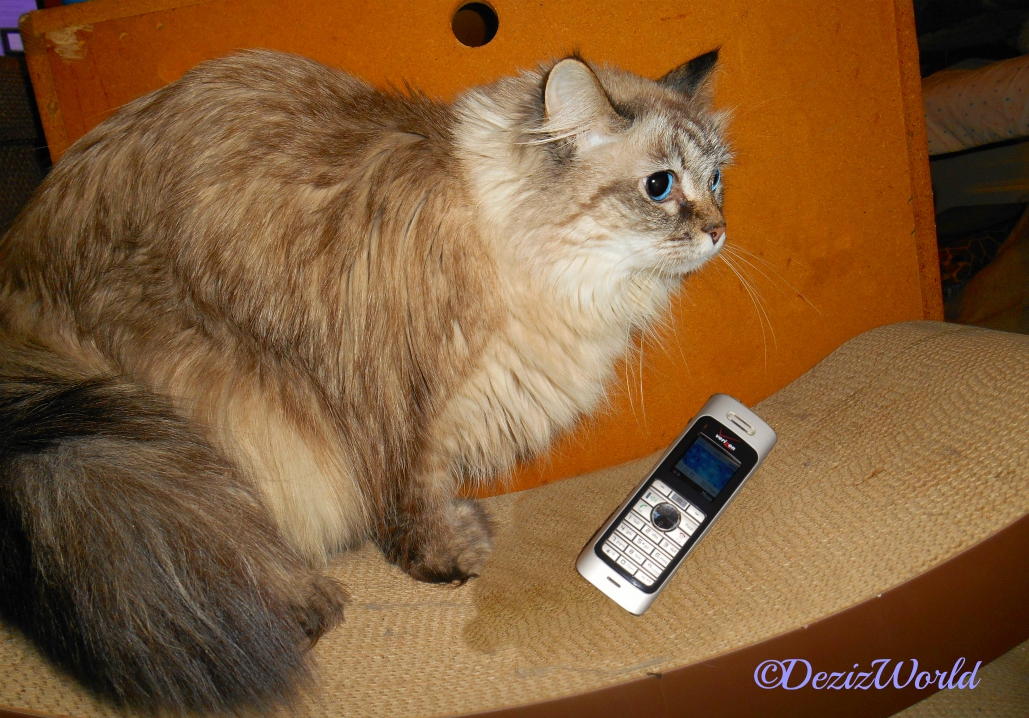
 Dezi stands on cat scratcher with phone


So, what is it that we do when we call for help? First let me tell you that in all the time me’s been with mommy, we’ve thankfully not had any such emergencies. However, mommy makes sure to keep our Training current just in case. When mommy falls or passes out, we get quite worried and don’t like to leave her side. That being said, we’re Trained to make that emergency call and start meowing when we hear a voice on the other end. Altho’ it’s not uncommon for us to start meowing the minute mommy falls or passes out. Typically, we meow in the direction of the phone, run to mommy, back to the phone and then back to mommy again. We are Trained to repeat these steps a few times before finally settling in beside mommy until help arrives or she can get up and around. Me’s particular love of the phone means that me will often bring the phone with me to rest at mommy’s side. And, like Shad and sis Lexi before me, me has been known to make calls to other pre-programmed numbers from time to time. As me’s told you before, me does love the telephone. Mommy says me’s a typical teenage girly curious cat.


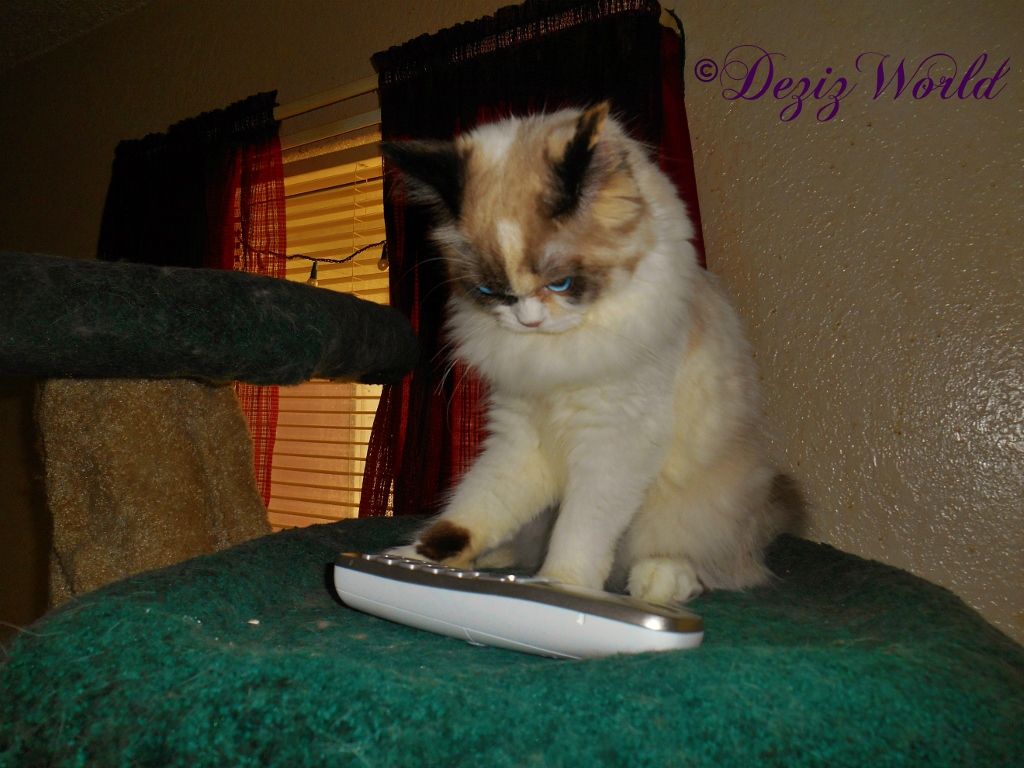
Raena learning to dial the phone.

As for Raena, she has this signature “hum” sound that she’s made from day one when she jumps up/down or starts to run. She tends to “hum” a couple of times before starting to meow. She’s not nearly as obsessed with the phone as me is. Mommy says that’s a good thing. At least we don’t fight over who’s going to make the call. The bottom line is that if you want to Train your anipal, you must have a land line phone. What they do after making the call is up to you. Any call made to Emergency Services must be investigated. So, even if your anipal doesn’t meow or bark, police will be sent out to the address on file. 


 Dezi laying in cat tree in new harness


Well, that’s a wrap for today. Always remember, Training is all about Repetition and Rewards. If you’d like to read the Training Tips on how to Train your anipal, click here. We also discussed options like the “I’ve fallen and can’t get up” buttons/boxes here. Remember to leave your questions and/or topic suggestions in the comments below or send us an email. When asking behavioral questions, purrlease be as specific as pawsible. You can check out all the Training Tips we’ve covered so far by clicking on Training Tips and Everything Feline from our menu. We look forward to hearing from you. And don’t furget to meet us here each week when we answer all your questions about the furry purrers in your life. We’re also linking up with Comedy Plus fur Feline Friday


Till the next time…………………………………………..Be Blest!!!


Luv and Hugs and Kitty Kisses


Deztinee and RaenaBelle