Service Cats: Why Cats Shouldn’t Eat Grains And Vegetables

Pet Food Ingredients Pt. 2

MeOW  Welcome to another installment of Service Cats and Everything Feline on Furidays. We return today to our mini-series on Pet Food ingredients. It is our intention to present this in a way that everyone can understand it and to reveal the lies and misinformation pet pawrents are being “fed” by the pet food/feed industry, including the AAFCO. We intend to list as many ingredients as possible so that you will be better equipped to read labels and make the best choice fur your pets. It’s a shame that this topic has been so confusing fur so long. We hope to be able to shed a little light on all that confusion. Please remember, not all foods/feeds will contain every ingredient we will be listing. Ifin you’ve missed any of the posts in our Service Cat series, you can find them on our Training Tips and Everything Feline page. And remember to submit your questions and topic suggestions in the comments below or by sendin’ us an email via our Contact page. 


Dezi laying in cat tree in new harness


The following post will be written in human English for reader and translator ease. Our Service Cat posts aren’t intended to be an all inclusive Training Manual but rather Tips, Tricks and Techniques used/developed by mommy A thru her many years of animal training, cats in purr-ticular. And to offer insight into your questions about Everything Feline. Always remember, successful Training is all about Repetition and Rewards.
 

Raena sits and poses in her new tiger harness


     Our first post in this mini-series talked about a cat’s need for Protein. Cats are Obligate Carnivores/True Carnivores (Those whose survival depends on nutrients which are found only in animal flesh and organs/meat protein. While Obligate Carnivores may be able to ingest small amounts of plant matter, due to their evolution they lack the necessary physiology required to digest and use the nutrients in that plant matter.) We’re going to try to break down a little science for you now. Digestion requires enzymes created by the body:


  • Protease: Necessary to break down Proteins 

  • Lipase: Necessary to digest Fat 

  • Amylase: Necessary to process Carbohydrates (Usually found in the saliva and pancreas)
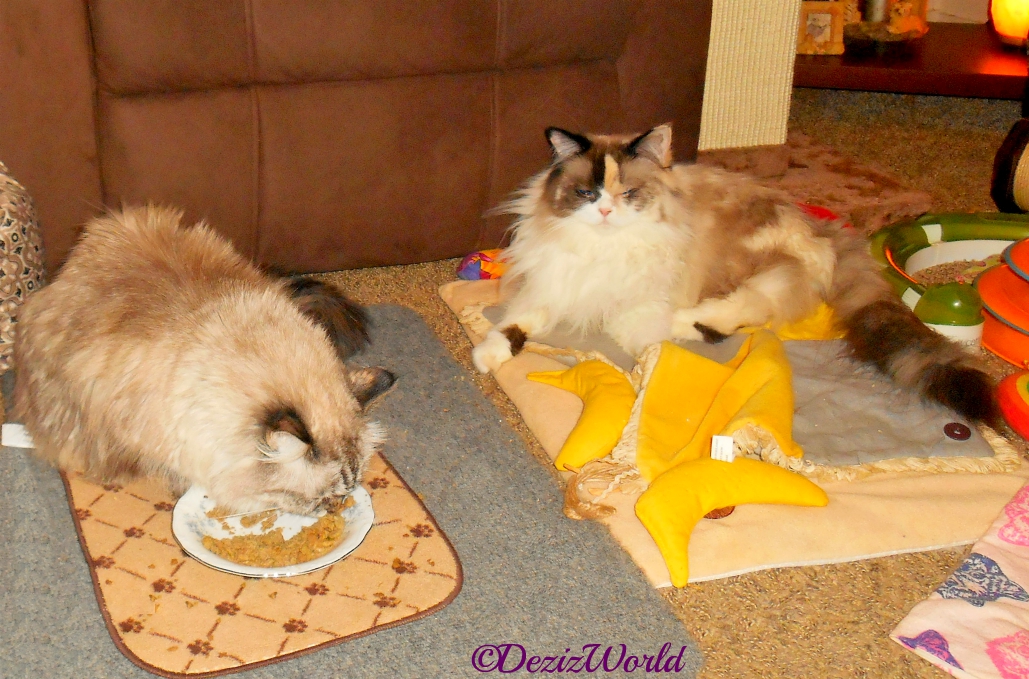
Dezi and Raena eat out of their new dishesDid you know your food is already bein’ digested, Raena?


Digestion:

     Digestion starts in the mouth with enzymes created by saliva (spit). However, cat and dog saliva lack the enzyme Amylase; it’s only found in their pancreas. That means the pancreas has to work overtime to process Carbohydrates present in most commercial pet foods/feeds. There is some evidence that points to this as being part of the cause for pancreatitis, diabetes, obesity and other chronic illnesses in cats. Humans and other mammals have flat top teeth meant for chewing. Cats however, have sharp fangs meant for ripping and tearing flesh. That’s a crude way to look at it, but think about it; when was the last time you saw kitty gnawing on a cob of corn? Everything about a cat says it’s meant to hunt, catch and rip it’s prey to shreds. And yet, most pet food companies lace their foods with corn, peas and carrots. I had a garden a few years back; and let me tell you, it wasn’t the neighborhood cats digging up my carrots and eating them.


     We mentioned in our earlier post that cats do much better when they don’t have food available all the time. Grains and veggies are ideal for grazing animals such as cows, goats, etc., but typically when a cat eats grass, it’s followed by hurling/horking/vomiting or whatever you want to call it. Cats were never meant to graze or eat veggies. But, what about the vitamins and nutrients those vegetables could offer? First of all, they’re often cooked so long they no longer contain any of the nutrients originally present. The reality is that a cat’s natural prey animal, the herbivore, provides those nutrients in the form of previously eaten and digested grains and vegetables. While it sounds really gross to us humans, a cat in the wild would consume the whole animal (excluding bones, fur, feathers, beaks, eyes, hooves), including it’s stomach and the contents therein.
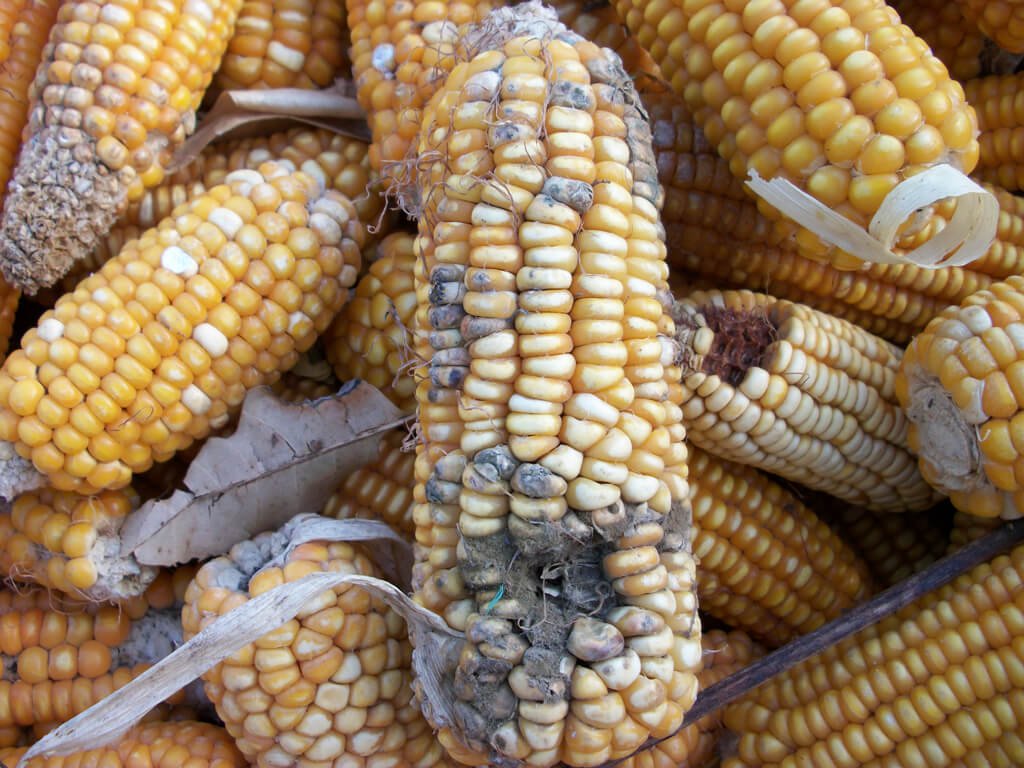


Corn with mycotoxin


Mycotoxins:

     Let’s talk a minute about Grains and their toxicity. Mycotoxins are mold and a huge concern often found in foods like corn, corn meal, peas, millet, nuts, and other grains and types of food. There are 3 main mycotoxins that the FDA has established rules for the following 3, but they are not the only mycotoxins of concern:

  • Aflatoxins:

  • Fumonosin:   

  • Deoxynivalenol  

     Mycotoxins can cause lethargy, anorexia, jaundice, intravascular coagulation, liver damage, weight loss, dehydration, renal and hepatic damage, gastrointestinal dysfunction and death.


Ingredients:

     Most pet food/feed is formulated without oversight by the FDA or even the AAFCO. The laws that are supposed to protect our pets are often ignored, broken, unenforced or completely non existent. Don’t be fooled by “voluntary” recalls. Those recalls are an “after the fact” and often the result of an animal getting sick or dying due to something in their food. Let’s look at some of the ingredients found in pet foods.  

  • Wheat: One of the top allergens in pet food, may contain mycotoxins, can contribute to canine obesity  

  • Corn: Totally useless. As discussed above, neither cats or dogs have the ability to process it and covert it to useable energy in it’s raw state, and it has no nutrients after being cooked at high temps. May contain mycotoxins  

  • Corn Gluten Meal: Even worse than corn. Patented as a weed killer in 1991. May include mycotoxins  

  • By-Product-Meal: Bones, blood, intestines, lungs, ligaments, heads, feathers, beaks, feet, hooves, etc.. Can be anything left over from processing, Not fit for human consumption. Most of these are things a cat or dog in the wild wouldn’t eat. 

  • Soy: Considered a Protein. However it’s totally useless for the obligate carnivore and can cause allergies and cancer  

  • Brewers Rice: Broken rice shells containing no nutrients 

  • Egg Product: Eggshells (not easily digestible), may contain rancid or spoiled eggs not fit for human consumption, may contain salmonella,  

  • Sugar: Completely useless addition of empty calories. Cats can’t even taste sweet things  

  • Peas/Pea Fiber/Pea Meal/Legumes/Lentils: May contain mycotoxins, may cause heart disease 

  • Potatoes: May cause heart disease 

  • Cellulose: Sawdust, floor sweepings, totally useless 

  • Carrots: Hard for cats to digest, no useable nutrients after cooking at high temps.  

  • Cracked Barley: Grain, may contain mycotoxins 

  • Garlic/Garlic Oil/Garlic Extract/Garlic Powder: Toxic to cats especially  

  • Oats/Oat Bran/Oat Meal/Oat Groat: Grain, may contain mycotoxins  

  • Chicken Meal/Fish Meal/Lamb Meal/Beef Meal: All Meals are the leftovers after processing and Not fit for human consumption. May contain parts from animals killed by means other than slaughter, such as road kill, illness, poisoning, natural disaster deaths (such as drowning), phenobarbital, culling, etc.  

  • White Fish/Ocean Whitefish: May be any number of fish

  • Cranberries: Typically not enough present to have actual health benefits 

  • Whey: Milk protein, used in lower grade foods, possible allergen, especially for cats 

  • Whole Eggs: Contains the shells which are not easily digestible 

  • Celery: Unnecessary, not easily digestible 

  • Lamb: Lamb meat is filled with water and therefore not as high in protein as other meats 

  • Beef: Natural source of Glucosamine (will define and expound on in future post) High in “water weight” (will expound in future post) 

  • Spinach: Unnecessary, not easily digested 

  • Basil: Member of the mint family, safe but unnecessary  

  • Blueberries: Not enough present to be beneficial, unnecessary 

  • Veal: Alternative to beef 

  • Beef Liver: Natural source of iron and flavor. However, in large quantities can be toxic. Best as a secondary ingredient  

  • Soybeans/Soybean Meal: Can NOT be digested by dogs and can cause bloating and death

  • Soybean Oil: Source of fat and good for coat, safe for dogs and cats

  • Ginger: Aids in digestion if listed high on label  

  • Carrot Powder: Cheap source of fiber  

  • Ground Flax Seed: May be lacking in fatty acids  

  • Sunflower Oil (preserved with mixed tocopherols <expounded on in future post>): Cheap source of fat  

  • Sweet Potatoes/Yams: Alternative to regular potatoes 

  • Green Tea: Not enough to have any health benefits unless listed in the top 5 ingredients  

  • Wild Rice: Good alternative to white rice 

  • Dried Kelp: Accepted industry source of iodine 

  • Egg Noodles: Unnecessary, source or carbohydrates 

  • Rabbit: Great alternative Meat/protein source  

  • Duck: Great alternative meat/protein source, Less water weight than chicken 

  • Shrimp: Source of protein  

  • Cod: Alternative source of protein 

  • Catfish: Alternative source of protein and fatty acids 

  • Venison Meal: Alternative source of protein, in concentrated form, more protein availability than standard meats 
Raena bathes atop the liberty cat tree


     I realize this is a lot of information, but we haven’t even scratched the surface, so to speak. Most herbs listed on labels and found in pet food are useless and should be left out. There’s a lot of “gimmicky” ingredients these days and gimmicky names to boot. When shopping for our pet’s food, we need to remember to pay no attention to the photos on the packaging, as they’re not a true representation of what’s actually inside. Dry kibble is worse than canned or wet food in most respects since any natural nutrients have been cooked out of their original sources. But, this mini-series isn’t about making you choose one type of food or even one food over another. It’s merely to help you be better equipped at understanding what you’re buying and feeding your furry family member. We will be defining and explaining more of the terminology and ingredients in future posts, so if you have specific questions, please let us know. I’m going to turn it back over to Dezi to close us out. 
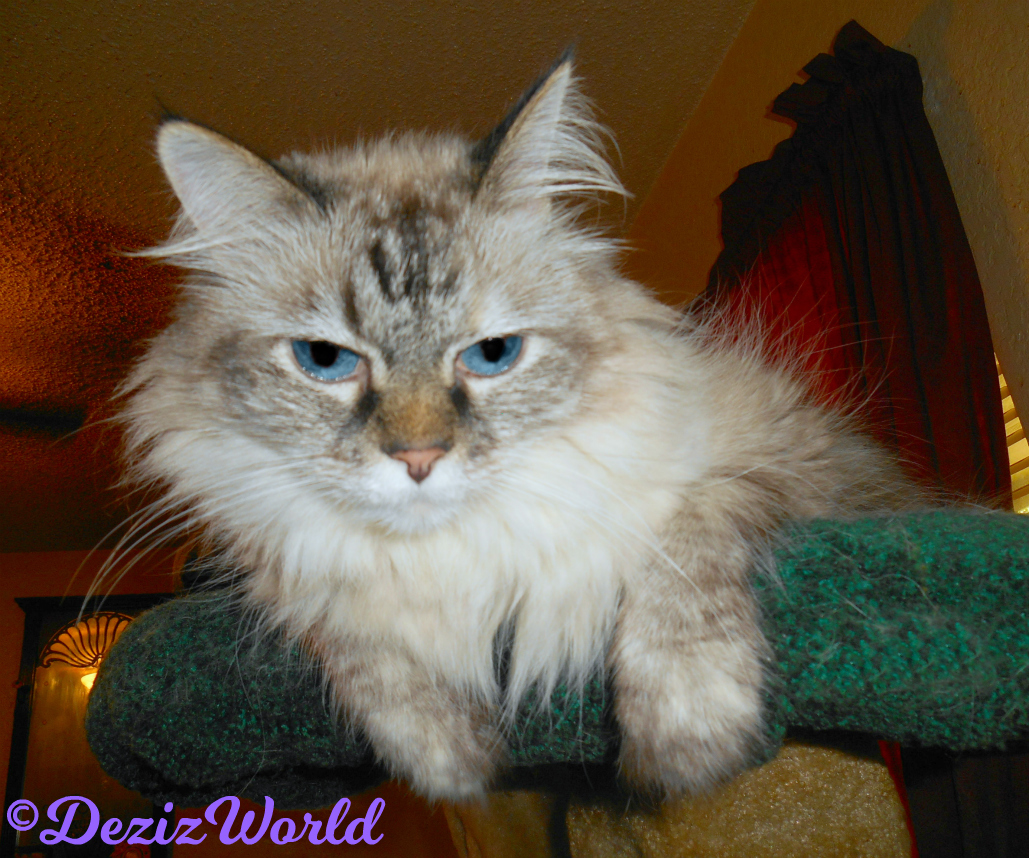
 

Dezi lays atop the cat tree selfie


Fanks mommy. Lots of big words and stuff us kitties don’t unnerstand ‘bout what goes on our plates. Anyways, remember, you can ketch up on any post you may have missed by clickin’ Training Tips and Everything Feline. We got a lot of great questions after Pt. 1 of Pet Food Ingredients, so if you have any just let us know in the comments below or send us an email. We purromiss, we will be answering them all. This is a huge topic and we’d rather take our time and cover it properly than to mislead you further. Other than the sources listed below, mommy also used her common sense, past experience as a V-E-T tech and information she got from some local V-E-Ts via chat.
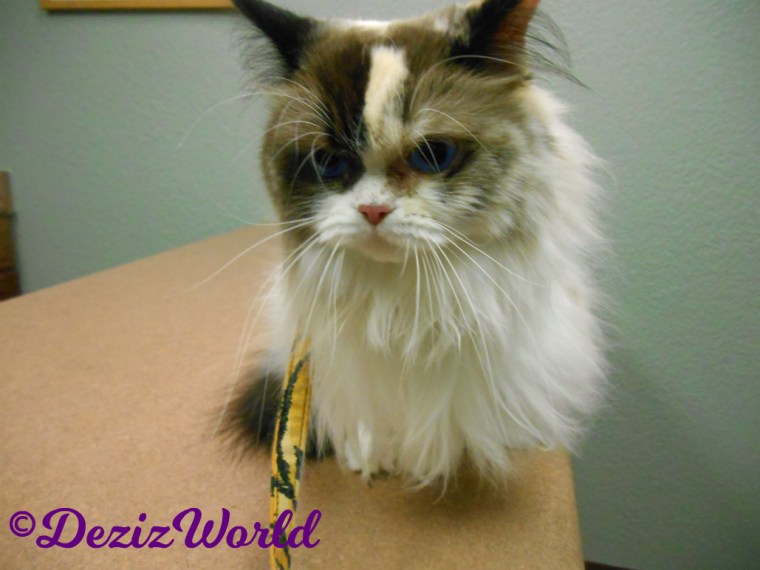
 

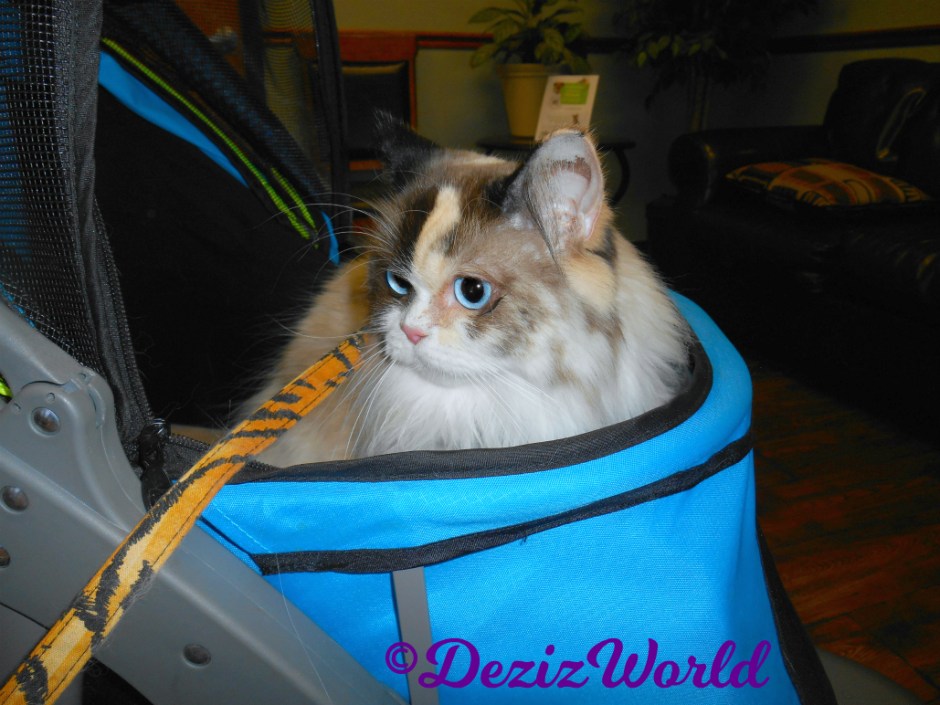
Raena sits on table at vet-blooperI’s look purretty ruff, so we call this a blooper. MOL


Due to the holidays and Raena’s upcomin’ surgery, this will be our last Service Cat posty fur the year, but don’t worry, we’ll be pickin’ up right where we left off next year (a few months). We’re also linkin’ up today with Comedy Plus fur Feline Furiday. And, it’s also Blooper time with our pals the Cuddlywumps


Till the next time……………………………………………Be Blest!!!


Luv and Hugs and Kitty Kisses


Deztinee and RaenaBelle 


Sources:
mycotoxins.info
petfoodindustry.com
Vetinfo.com
Truthaboutpetfood.com
Petmd.com
petsnmore.org
ivcjournal.com
ncbi.nlm.nh.gov

Service Cats: Feline Nutrition: The Obligate Carnivore

MeOW Welcome to Service Cat Monday. What started out as a simple Training day post quickly evolved to encompass all things Feline. It’s the one day a week, we focus on educating and writing fur the humans in our lives. We wanna thank all of you fur your questions, comments and readership this past year. Keep the questions comin’. ‘Member, the only dumb question is the one not asked. This will be the last Service Cat Monday post of the year 2017. But, don’t worry, this series will return fur 2018. We haven’t even begun to scratch the surface of the complexities of the Feline Behavior (pun intended). That bein’ said, let’s get the business outta the way and get on with today’s post. The followin’ post will be written in human English fur reader and translator ease. Our Service Cat Monday posts aren’t intended to be an all inclusive Trainin’ Manual but rather Tips, Tricks and Techniques used/developed by mommy A thru her many years of animal trainin’, cats in purrticular. And to offur insight into your questions about Feline Behavior. Ifin you have any questions or topics you would like us to cover, purrlease let us know in the comments section or send us an email. When asking behavioral questions, purrlease be as specific as pawssible. And, ifin you’ve missed any of the posts in this series, you can ketch up by clickin’ the links at the end of this post. Always remember, Training is all ‘bout Repetition and Rewards.


 Dezi laying in cat tree in new harness


We get asked a lot about food and proper nutrition for us kitties. As most of you know, we eat a raw freeze dried food and are adamantly opposed to feeding any kitty a kibble only diet. And as most of you also know, we have semi scheduled feedings and don’t believe in leaving food out all the time for kitty. What we mean by Semi-Scheduled, is that we eat at specific times a day. Altho’ breakfast is served when mommy can get up and make our plates, dinner is almost always served within a hour of the same time each day. Those plates are available for a limited time and then empty or not, they disappear until the next meal time when they are replaced with a fresh plate of food. One comparison you can make between kitties and humans is, if you can sleep without getting up to eat, so can we.


Dezi watching Raena while they eat

To understand kitty’s nutritional needs, we must look at the feline roots, the wildcat from whence we came. We believe in creation, and that God created the first cats. However, you want to see it, Cats exist and are among the few True Carnivores. We call them Obligate Carnivores, meaning they MUST eat meat to survive. The dictionary says this about Obligate: Biologically essential for survival. Cats Can Not live much less Thrive on a vegan or vegetarian diet. A cat’s teeth are designed to rip flesh and chew meat, muscle and tendons. The cat’s tongue is barbed to help it remove fur and feathers from their prey. Cats lack the physiology required to break down or digest vegetation, starches and/or some carbohydrates.


Veggie clip art


Cats’ require certain Amino Acids such as Taurine, Tryptophan and Arginine that is found in animal flesh. While the human body is capable of breaking down carbs and producing certain Amino Acids on it’s own, the cat must get those from their food. A cat who doesn’t get the required nutrients in their diet, may go blind, suffer muscle loss, other illnesses and even die. A cat in the wild, will also get moisture from their prey. Cats consume blood, predigested vegetation and other wet contents from their kill. This practice has led to a smaller liquid intake by cats and more concentrated urine. We’re all familiar with the overwhelming smell of cat urine. However, fresh water should still be available for kitty at all times.


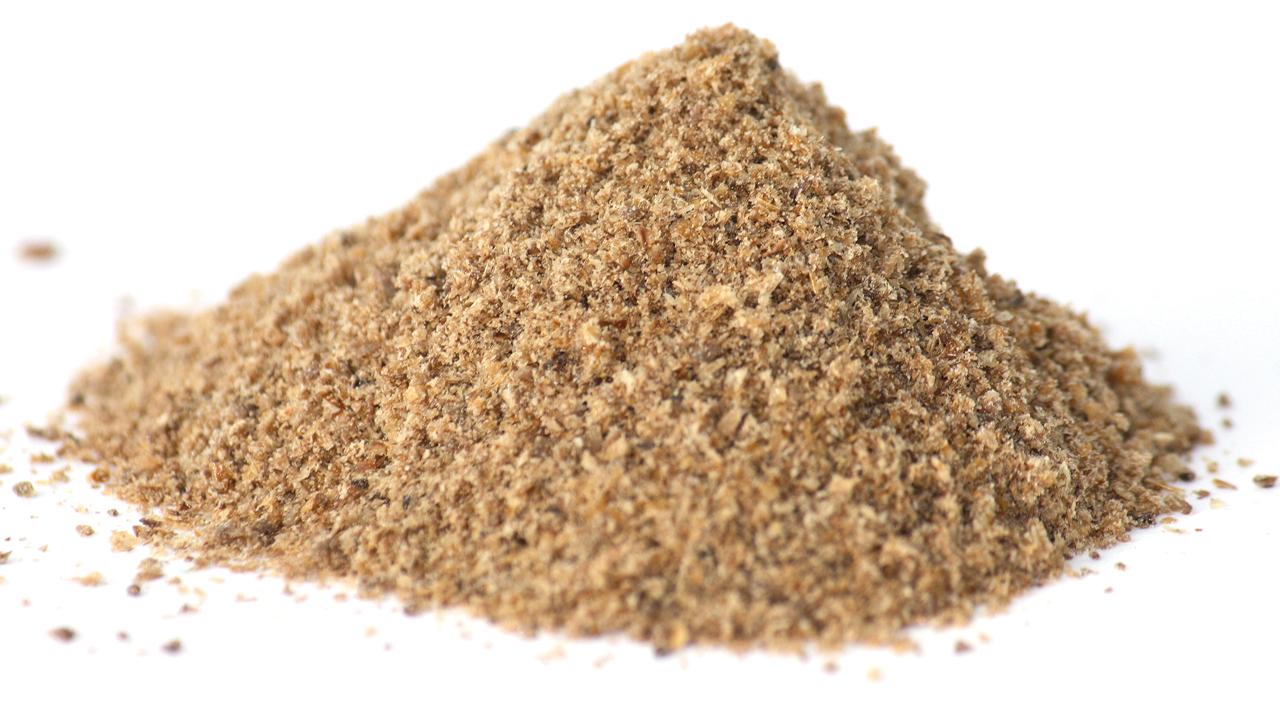
 Meat Meal for pet food

(Meat Meal) Looks more like chicken feed than somethin’ us

kitties can sink our teethies into.


So, let’s take a look at Kibble. It’s a well known fact that the first three ingredients listed make up the largest part of a food/feed. Now we know every bag of kibble lists a moisture content. But, we also know anyone who has ever touched a piece knows there’s nothing moist about kibble. If you were to put a piece of kibble in a spoon full of water, the kibble would soak up all the liquid in no time. So, imagine what it’s doing inside kitty who never drinks their 8 glasses of water a day (mol). No, kitties don’t need 8 glasses of water a day, that part was a joke. But seriously, cats don’t always drink enough water, so when kitty eats something that will absorb any liquid around it, it’s a disaster waiting to happen.


 Veggie clip art

Some grain free options. Does a kitty look like a rabbit?


There are 2 basic diets available, regular and grain free. Grain free diets commonly include starches such as potatoes. As we pointed out earlier, cat’s generally Do Not have the ability to break these down. An inability to digest these starches in cats may cause kitty to become gassy, have diarrhea or bloat. Kibble may also cause kitty to gain weight and be at risk of becoming obese. Kibble only diets also increase kitty’s risk of Urinary problems. For many years now, it’s been known that a lot of the pet food manufacturers use less than desirable ingredients in their kibble and even canned feeds. The laws protecting animals and ensuring the quality of food are too often not enforced. Animals that have been euthanized or died from illnesses/disease are often used in the manufacturing of pet feed. Even companies that charge outrageously for their products are guilty of these practices.


 Dezi eats Raena's left overs

Me hopes mommy doesn’t ketch me cleanin’ Raena’s plate.


Even more alarming than the above is what happens to a kitty when kibble is left available at all times. Contrary to the belief that kitty will go hungry overnight, or while you’re away at work, we kitty’s were never intended to eat 24/7. And believe it or not, we can even last a few extra hours when you’re running late. Most kitties can safely go without a meal every now and then without any harm or danger to their health (Only healthy cats, not those affected by an illness or disease. Please speak with a VET before fasting any cat who is sick). Let’s talk about kitty’s sniffer and food for a minute. When kitty smells food, a chemical reaction happens that causes kitty’s body to produce needed acids to break down the food for use. When food is left out all the time, kitty’s brain is on overload. The body can quit producing those acids or over produce them which can lead to illness, obesity and even death. A hunting cat isn’t always successful and may not eat every day. We’re not suggesting you fast kitty, but we are saying, kitty doesn’t need to eat all day and night.


 Dezi and Raena eat

Dry Freeze dried Primal (not recommended by manufacturer).

Now we luv the gravy. 


A few years ago, me was a grain free kibble eating kitty. Until that is, me got sick and mommy learned me’s urine pH was off the Alkaline charts. Me was on a Semi-Scheduled feeding, but me’s body just couldn’t break down all those potatoes. Me was stubborn and didn’t want to give up me’s kibble. Thankfully, mommy’s more stubborn than me and knew what was best. While we don’t recommend it, mommy began to feed me the Freeze Dried Raw food…DRY. Freeze Dried raw should be reconstituted with water or broth. However, me just wouldn’t eat it, so mommy left it as is. About a week later, mommy began serving me’s freeze dried raw on a damp/wet plate. A week later she used her fingers to sprinkle water across the top. The next week, she added a spoonful of water and so on. Now me can’t imagine eating a food without that delicious gravy. The more the better me meows.


 Raena watches Dezi sniff the Thirsty Cat fountain


We also added water fountains to make drinking more appealing and fun. After much research and many calls to pet food manufacturers about their ingredients and manufacturing policies, we eat and recommend the Primal line of foods. They truly use human grade ingredients. Yes, it costs a bit more than kibble or canned, but it’s the next best thing to mommy making our food herself. And, for those who don’t want to touch raw ingredients or need easy raw food due to travel, it’s convenient. Me’s urine pH is healthy and normal now, and Raena and me are generally healthy and happy.


 Dezi eats while Raena watches from the side.

Me’s lappin’ up the last of the gravy so mommy can add more.


If you’re not ready to make the Raw leap, canned food is the next best choice. It is a myth that kibble cleans kitty’s teeth. It is also a myth that a Persian cat and a Siamese cat have different nutritional needs or require breed specific formulas. That’s one of the craziest money grabbing schemes we’ve ever heard. All Cats are Obligate Carnivores and therefore require the same nutrition…MEAT. Not meat by products or meat meal made up of some unknown animal parts or plant proteins. Mommy says when deciding what meats to feed us, she likes to think about our wild ancestors. She asks the question, What kind of meat would kitty hunt for if left to their own devices? Very few cats actually fish. Most of a cat’s food sources come from land mammals who eat both meat and vegetation and supply kitty with all the nutrition he/she requires. 


 The Blessing Train


Well we do hope this has helped some of ya’. Obviously, this is a huge topic and there’s much more we could have added. So, ifin ya’ want us to expound more, let us know. Fur now, we’re gonna wrap this up and do some more Christmas purrep. Don’t furget to leave your questions, comments and/or topics below or send us an email. And, you can ketch up on any posty you may have missed by clickin’ the links below. One last thing, our Blessing today is Good Food and Nutrition. Fanks mommy, fur lookin’ out fur us.


Till the next time…………………………………………Be Blest!!!


Luv and Hugs and Kitty Kisses


Deztinee and RaenaBelle


Service Cats  

What to Look For      Training Foundations      Train Kitty To Massage

Smelling Disease      Do You Need One      Who Bears the Cost

Housing Laws & Exceptions      Accommodations & Common Sense

When the Handler Dies      Proper Training Methods Pt. 1 & Pt. 2

Easiest Task to Train      Getting Kitty Ready for an Outing

Discipline: Stop Countersurfing Kitty      Internal Disputes

Calling Emergency Help      Just What Is Kitty Capable of

Shad: Original Service Cat      Harness, Vest, Leash or Stroller

Dezi, the Wheelchair & Chest      Round and Round We Go

Tumble & Fall Response      Raena Calls for Help

The Rest of the Story     Raena & the Wheelchair Pt. 1 Pt. 2 Pt. 3 Pt. 4

When to Train      Explaining Rewards & Kitty’s Feelings

Stop Kitty’s Begging     Calling For Help Options Pt. 1

Medicating Kitty

Training the Pig Headed, Stallion Strong, Submissive Pup & Conniving Cat

Cats Love Training & Social Media Downfalls

Reintegrating the Scared or Bullied Cat      There’s No Bully Cat Breed

Going for a Walk When in a Wheelchair     Calming the Tiger Pt.1 Pt. 2 Pt. 3

Surviving A Remodel      Taming A Feral Cat

Designer Cats & Scent      DNA Doesn’t Change      Fighting or Posturing

Clicker Training & Operant Conditioning      Wheelchair Training

Basic Training Continues      Managing Without A Wheelchair

Are Spray Bottles Effective      Hands Are Not Toys

Does My Cat Need A Friend      Helping Your Bullied Shy Cat

Why Cats Scratch      Halloween Safety      Stop Cord Chewing

Pica: Unusual Habits      Holiday Safety Tips     Feline Urinary Habits