Service Cats: Pet Food Ingredients Part 4

Meow-llo It’s time fur Service Cats Furiday. We’ll be wrapping up this mini-series on Pet Feed/Food over the next couple of weeks. So ifin ya’ have any specific questions or questions ‘bout somethin’ we did or didn’t cover, purrlease let us know. ‘Member, you can submit any feline related question or topic you’d like to read ‘bout here by usin’ the form on our Contact page or simply leaving a comment in the comments section below. You can also ketch up on any post you may have missed in this series by clickin’ the links on our Training Tips and Everything Feline page.    


Dezi lays on tree with harness and Service Cat logo


The following post will be written in human English for reader and translator ease. Our Service Cat posts aren’t intended to be an all inclusive Training Manual but rather Tips, Tricks and Techniques used/developed by mommy A thru her many years of animal training, cats in purr-ticular. And to offer insight into your questions about Everything Feline. Always remember, successful Training is all about Repetition and Rewards.


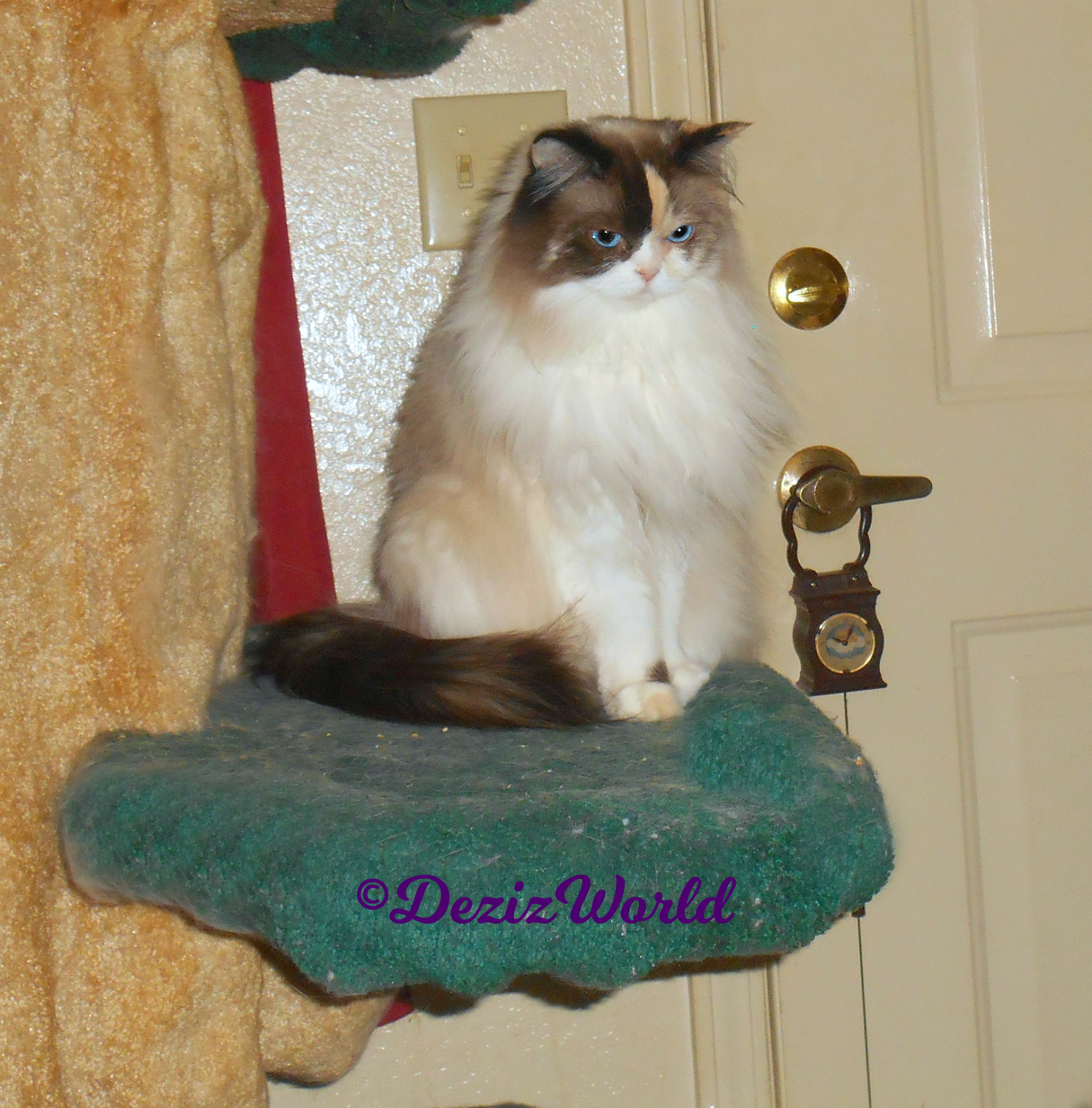
Raena sits posing in her tiger harness


Food vs. Feed:


     The point of this mini-series isn’t to tell you what you need to feed your pets, or to pass judgment on anyone. We’re merely trying to help educate pet owners to recognize ingredients and make the best choices for your pets. As long as pet owners continue to support big pet companies and remain silent about the quality of pet feed, those companies will continue to provide sub par feed that cause illnesses and kill thousands of pets every day. You may have noticed we refer to these pet foods as feed and not food. The following excerpts were taken directly from Truthaboutpetfood.com with permission. It’s a great article that you might want to read. 


Examples of the differences between feed and food…

FDA’s Compliance Policy “CPG Sec. 675.100 Diversion of Contaminated Food for Animal Use” states “FDA does not object to the diversion to animal feed of human food adulterated with rodent, roach, or bird excreta.”

Compliance Policy “CPG Sec. 675.200 Diversion of Adulterated Food to Acceptable Animal Feed Use” states “The Center will consider the requests for diversion of food considered adulterated for human use in all situations where the diverted food will be acceptable for its intended animal food use. Such situations may include:
a. Pesticide contamination in excess of the permitted tolerance or action level.
b. Pesticide contamination where the pesticide involved is unapproved for use on a food or feed commodity.
c. Contamination by industrial chemicals.
d. Contamination by natural toxicants.
e. Contamination by filth.
f. Microbiological contamination.
g. Over tolerance or unpermitted drug residues.

One more, Compliance Policy “CPG Sec. 690.300 Canned Pet Food” states “Pet food consisting of material from diseased animals or animals which have died otherwise than by slaughter, which is in violation of 402(a)(5) will not ordinarily be actionable, if it is not otherwise in violation of the law. It will be considered fit for animal consumption.”


     One commenter said that in the past many pets lived to be in their teens eating big pet feeds; have they changed that much?. The answer is YES, they have changed that much. The beginning of that change was in the late 1950’s when the AAFCO established a committee to oversee and establish regulations over pet food. Once upon a time, canned meat was the only pet food available. It was mostly horse meat, but it didn’t contain a list of fillers and unnecessary ingredients. A lot of those same pets were routinely fed table scraps as well. Mommy remembers her grandmother throwing out left overs to the barn cats and strays and even to the house poodle, who lived to be 19 years old. Her name was Pepper, and she never ate kibble.


Design and Intention of Teeth:


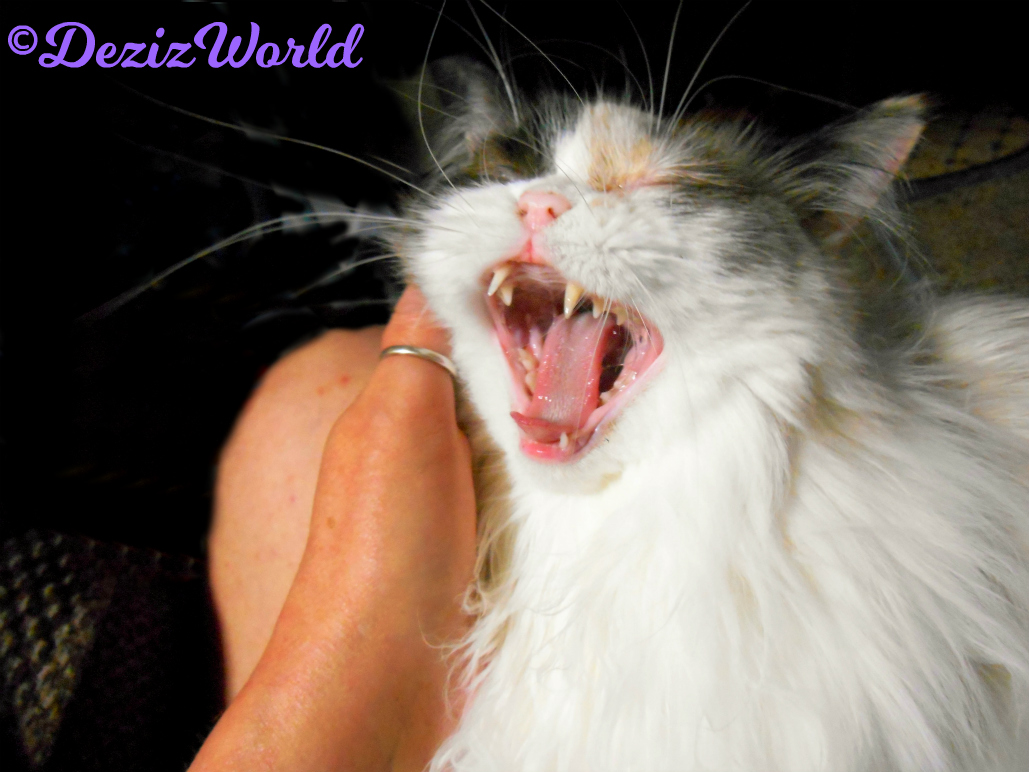
     If you look at your kitty’s teeth, you’ll notice almost all of them are pointed. They’ve been designed to rip and tear meat, skin, muscle, bone, tendons, etc., not chew. A cow on the other hand, has flat teeth like humans. Those teeth are meant to chew food before it gets digested. Often you’ll notice kitty’s regurgitated food looks much like it did in kitty’s plate. That’s because kitties basically swallow their food whole. They don’t have the ability to chew it up. Kitties were never intended to eat pellets or kibble.
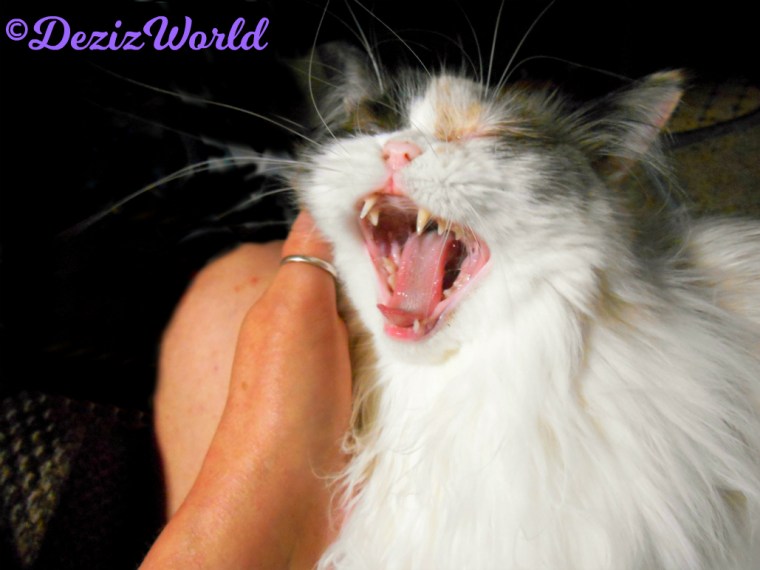


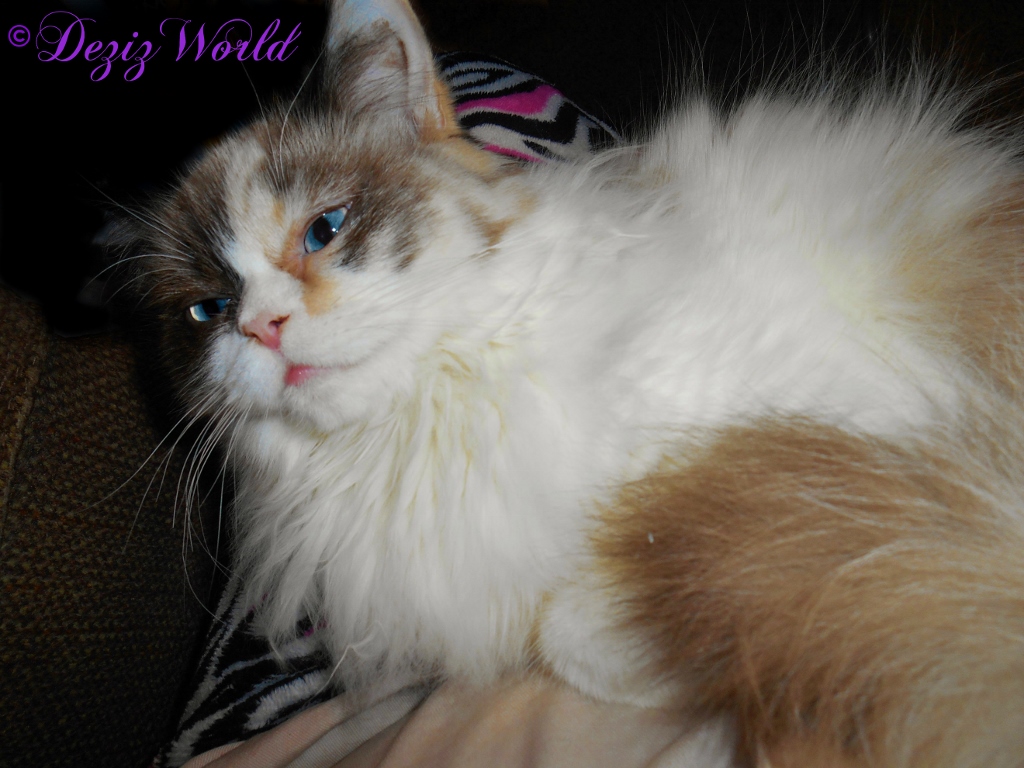
Raena gets loving while laying in mommy A's lap with her mouth open in a yawn p selfieThese teethies are made fur ripping and tearing, not chewing.


Vit. K (Menadione) and Fish:


     We received a question with regard to Vitamin K and fish. The question: Vit. K (Menadione: the only approved source and is toxic to humans and animals) is required by the AAFCO to be added to any food containing 25% or more of fish even though it’s dangerous and can cause illness and/or death. Is that why we don’t/are against eat(ing) fish? The answer isn’t quite as simple as yes. Until recent years we weren’t aware of the dangers of Vitamin K, but still didn’t eat fish. Certainly now that we know, it plays a factor in our choice.


     However, mommy never liked to feed fish because she didn’t think it was truly part of a kitty’s proper diet, given that most cats have an aversion to water. The fish used in cat food is generally a cheap substitution for a better meat and brought on by it’s addictive nature by pet food companies trying to sway pet parents from feeding table scraps and human foods. And yes, even when she was feeding kibble or canned pet feed, she stayed away from fish. Long ago when she was a Vet tech, the Vet she worked for told her that fish was a horrible food for cats and caused illnesses because it lacked the proper nutrients. Mommy says most cats left to their own devices aren’t out fishing (there are some wildcats that do fish, but they also hunt land prey as the bulk of their diet). We should also take into account the pollutants and carcinogens found in wild fish and more so in farm raised fish when making decisions about feeding fish to our cats. Occasional fish might be okay, but it shouldn’t make up the bulk of any kitties diet. 


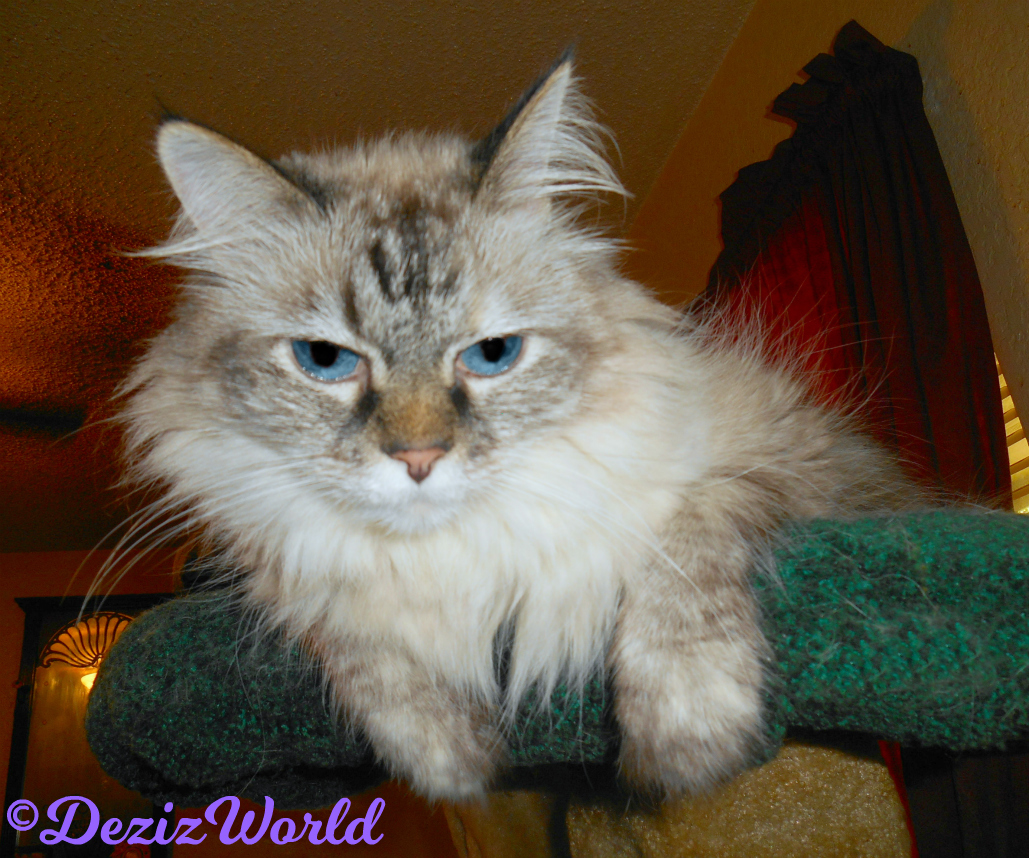
Dezi sits pretty profile full face


We’re gonna wrap fur today, but don’t furget to get your questions in. We’ve got a few more questions on this topic we’ll be discussing next week. Ifin you’ve missed any post in this mini-series or our Service Cat series you can check them out by clickin’ the links on our Training Tips and Everything Feline page. As we do each week, we’re joinin’ Comedy Plus fur Feline Furiday.


Till the next time………………………………………………………Be Blest!!!


Luv and Hugs and Kitty Kisses 


Deztinee and RaenaBelle

Service Cats: Pet Food Ingredients Part 3

MeOW-llo  Welcome to our furst Service Cats and Everything Feline Friday of 2019. As promised, we’ll be pickin’ up where we left off, talking about pet feeds/food and propurr nutrition for the little Obligate Carnivore in your house. Ifin you missed any of the posts in this mini series, you can check them out here and here. You can see all the posts in our Service Cats series by checking out the links on our Training Tips and Everything Feline page. Ifin you have any questions or topics you’d like to see posted, purrlease ask in the comments section below or send us a message via the contact form on our Contact page. 


 ,Dezi lays on tree with harness and Service Cat logo


The following post will be written in human English for reader and translator ease. Our Service Cat posts aren’t intended to be an all inclusive Training Manual but rather Tips, Tricks and Techniques used/developed by mommy A thru her many years of animal training, cats in purr-ticular. And to offer insight into your questions about Everything Feline. Always remember, successful Training is all about Repetition and Rewards.

We would like to remind everyone to consult your VET or Pet Nutritionist when making food choices for any kitty whose health is compromised. That being said, remember, their opinions can be biased based on kickbacks and/or other benefits provided by Big Pet Food companies. The truth is that most “Prescription Diets” are formulated based on one study performed by one company on Canine Nutrition and not actually the needs of Felines. As for the AAFCO whose job is to regulate and enforce pet food regulations, they are not looking out for your pet’s best interest. So it’s up to each pet owner to educate themselves and decide what is best for your little furries.  


Dezi walks


Minimum/Maximum Meat Proteins in Pet Feed/Food:

     We did discuss Proteins in part 1, but we received an email asking about the amount of meat proteins pet foods contain. Since a lot of pet food companies now list meat, meat meals, etc. in the first 3 ingredients on the packaging a lot of pet owners are led to believe a particular food contains mostly whatever protein is listed. However, ingredients are required to be listed in order by weight. Obviously, meat weighs far more than rice, corm or most other ingredients. Most meats contain a lot of water (almost 75%) which makes them heavier.


     So, what do the pet feed regulations say? Any feed that contains the word “with” in it’s name, such as with chicken or with beef, is required to contain only 3% to 9% (chicken/beef) of said meat to the total weight of feed. No more and no less, no exception. So the photo on the package of a pile of chicken breasts or steaks is misleading. The total amount of chicken in a 12 pound bag of kibble could be no more than 6 to 18 ounces. And trust us, it’s definitely not the choice cuts of that meat. For pet feeds that contain the words “Recipe”, “Formula” or “Dinner”, they must contain a minimum amount of 10% and may include a maximum amount of 70%. These numbers are based on raw weight. Once cooked, not only does the meat lose all of it’s nutrients, it also shrinks. Thus the need for all those added ingredients.


Raena sits pretty on cat tree profile


     So, if you buy a 12 pound bag of kibble, kitty/woofy is only getting a maximum of 1 pound of meat protein and often less for the duration of the bag (1 pound of meat a month). If you feed wet food, the maximum amount of meat for a 3 oz can would be 1/4 ounce but could be as low as  0.08  ounces. And we wonder why our little carnivores are plagued by health issues. The truth is that commercially prepared pet feed kibble and canned contains many inedible ingredients such as sawdust, styrofoam, plastics, animal feces, and more. It really isn’t balanced or healthy for kitties or woofies.


Dezi sits pretty on floor


Added Supplements/Nutrients:

     Due to the loss of nutrients during manufacturing, these companies are required to put them back in through supplements. Listed below are some of those supplements and what they’re for. Proteinates are more expensive than sulfates and easier for the animal’s body to break down and use. However, one might see an ingredient listed in both forms. It’s a way for the company to produce the feed cheaper, not what’s best for your pet. 


Zinc Proteinate (trace minerals): Protects against cell damage and stimulates the immune system. However, it indicates a lack of well rounded supplementation. 

Mixed Tocopherols: A source of Vitamin E  

Iron proteinate: Needed for red blood cell production  It’s cheaper form is iron sulfate or ferrous sulfate. The best choice is: Iron Amino Acid Chelate  

Manganese proteinate:  Needed to develop strong bones, and enzyme activators. Enhances the immune system  May see cheaper form Manganese sulfate 

Mangonous proteinate:  Nourishes nerve and brain function. May see cheaper form Mangonous sulfate 

Flax Seed:  Best source of omega – 3 fatty acids and nutritive fiber 

Fish oil: Source of fatty acids 

Alpha-lipoic Acid:  Added for healthy skin and coat 

Copper Amino Acid Chelate: Best form of copper, needed for iron absorption and blood clotting. May see in cheaper forms, copper proteinate or sulfate. The latter may be dangerous. 

Cobalt Amino Acid Chelate: Needed for B12 synthesis. May see cheaper forms listed as proteinate or sulfate. 

Citric Acid: Source of Vitamin C and may be harsh on the digestive tract 

Chicken Fat: Source of energy for cats, dogs do better with oils 

Beta Carotene: Source of Vitamin A 

Potassium Amino Acid Complex/Potassium Citrate: Source of potassium, Not to be confused with Potassium Sorbate which is a preservative and mold inhibitor. 

Gelatin: No nutritious value. Only used as a binder for ingredients 

Potassium Chloride: Source of potassium 

Pantothenate: Vitamin B-complex  

DL-Methionine: Found naturally in meats before processing. Needed for skin, nails, and immune system 

Maganese Oxide:  Aids in fat and sugar metabolism 

All “Gums”:  No nutrition, used as fillers and binders 

Lactobacillus Acidophilos (including all other pre and pro biotics): Generally not enough added to be beneficial

A & D3 Supplements:  Needed for immune function, eye sight, and calcium absorption  

Niacin:  Aids in digestion

Inositol: Non vit. B complex metabolizes blood fats

Mineral Supplements: aka: Zinc Sulfate, sub par source of minerals 

Thiamine Mononitrate/Thiamine:  Source of B-1 

Taurine: found naturally in muscle meats, Required for nervous system function, thyroid, cardiovascular, and eye sight health  

Calcium Pantothenate: Source of B-complex and Vit. B-5 Supports adrenal activity  

Glucosamine Hydrochloride: Not enough to be effective. Cooking may also alter it’s efficacy 

Calcium Iodate:  Promotes Strong Bones, teeth, skeletal strength and cardiovascular health 

Tricalcium Phosphate: Anti caking agent, also supplies phosphate for the body

Biotin:  Promotes healthy skin and coat  

Riboflavin:  Source of Vitamin B-2 

Pyridoxine Hydrochloride: Source of Vitamin B-6  

Vitamin K: Found mostly in foods made up predominantly of fish. Can be very dangerous causing blood clotting issues in cats 


Raena sits pretty on cat tree with head tucked coyly


Well, there’s a list of the most commonly used supplements. Most of which can be found naturally in meat proteins, the foods us kitties were meant to eat naturally. We’re gonna wrap it up fur today, as this is a lot of infurmation to digest. “Member, you can see any of the posts in our Service Cat series or this mini series on our Training tips and Everything Feline page from our menu above. And we’d luv to hear from you. What questions do you have about your kitty or kitties in general? What topics would you like to see us cover? Just let us know in the comments below or by sendin’ us a purrivate message via our Contact page, also in the menu above.


          We’re also linkin’ up with Comedy Plus fur Feline Furiday sissy. You didn’t think I’s was gonna let you have the posty all to yourself, did you? 


One can dream Raena, one can dream.  


Till the next time…………………………………………………Be Blest!!!  


Luv and Hugs and Kitty Kisses  
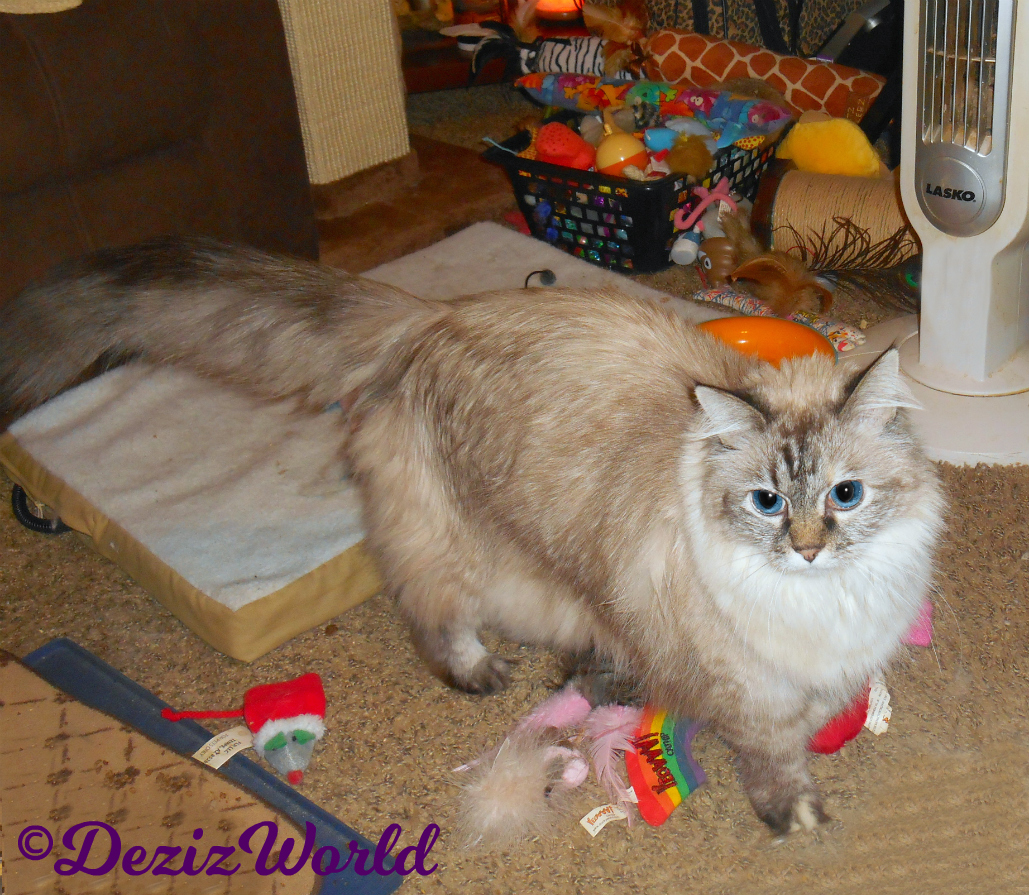
 

Deztinee and RaenaBelle

Service Cats: Why Cats Shouldn’t Eat Grains And Vegetables

Pet Food Ingredients Pt. 2

MeOW  Welcome to another installment of Service Cats and Everything Feline on Furidays. We return today to our mini-series on Pet Food ingredients. It is our intention to present this in a way that everyone can understand it and to reveal the lies and misinformation pet pawrents are being “fed” by the pet food/feed industry, including the AAFCO. We intend to list as many ingredients as possible so that you will be better equipped to read labels and make the best choice fur your pets. It’s a shame that this topic has been so confusing fur so long. We hope to be able to shed a little light on all that confusion. Please remember, not all foods/feeds will contain every ingredient we will be listing. Ifin you’ve missed any of the posts in our Service Cat series, you can find them on our Training Tips and Everything Feline page. And remember to submit your questions and topic suggestions in the comments below or by sendin’ us an email via our Contact page. 


Dezi laying in cat tree in new harness


The following post will be written in human English for reader and translator ease. Our Service Cat posts aren’t intended to be an all inclusive Training Manual but rather Tips, Tricks and Techniques used/developed by mommy A thru her many years of animal training, cats in purr-ticular. And to offer insight into your questions about Everything Feline. Always remember, successful Training is all about Repetition and Rewards.


Raena sits and poses in her new tiger harness


     Our first post in this mini-series talked about a cat’s need for Protein. Cats are Obligate Carnivores/True Carnivores (Those whose survival depends on nutrients which are found only in animal flesh and organs/meat protein. While Obligate Carnivores may be able to ingest small amounts of plant matter, due to their evolution they lack the necessary physiology required to digest and use the nutrients in that plant matter.) We’re going to try to break down a little science for you now. Digestion requires enzymes created by the body:


  • Protease: Necessary to break down Proteins 

  • Lipase: Necessary to digest Fat 

  • Amylase: Necessary to process Carbohydrates (Usually found in the saliva and pancreas)

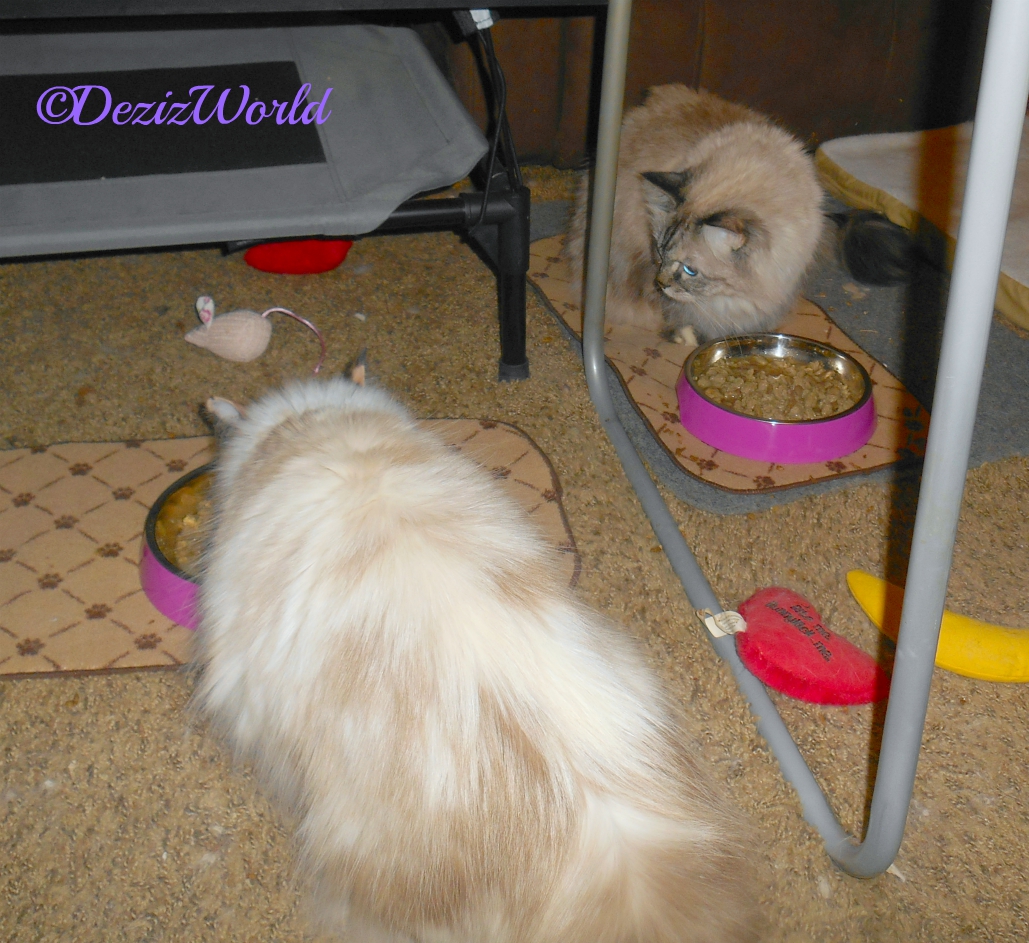
Dezi and Raena eat out of their new dishesDid you know your food is already bein’ digested, Raena?


Digestion:

     Digestion starts in the mouth with enzymes created by saliva (spit). However, cat and dog saliva lack the enzyme Amylase; it’s only found in their pancreas. That means the pancreas has to work overtime to process Carbohydrates present in most commercial pet foods/feeds. There is some evidence that points to this as being part of the cause for pancreatitis, diabetes, obesity and other chronic illnesses in cats. Humans and other mammals have flat top teeth meant for chewing. Cats however, have sharp fangs meant for ripping and tearing flesh. That’s a crude way to look at it, but think about it; when was the last time you saw kitty gnawing on a cob of corn? Everything about a cat says it’s meant to hunt, catch and rip it’s prey to shreds. And yet, most pet food companies lace their foods with corn, peas and carrots. I had a garden a few years back; and let me tell you, it wasn’t the neighborhood cats digging up my carrots and eating them.


     We mentioned in our earlier post that cats do much better when they don’t have food available all the time. Grains and veggies are ideal for grazing animals such as cows, goats, etc., but typically when a cat eats grass, it’s followed by hurling/horking/vomiting or whatever you want to call it. Cats were never meant to graze or eat veggies. But, what about the vitamins and nutrients those vegetables could offer? First of all, they’re often cooked so long they no longer contain any of the nutrients originally present. The reality is that a cat’s natural prey animal, the herbivore, provides those nutrients in the form of previously eaten and digested grains and vegetables. While it sounds really gross to us humans, a cat in the wild would consume the whole animal (excluding bones, fur, feathers, beaks, eyes, hooves), including it’s stomach and the contents therein.


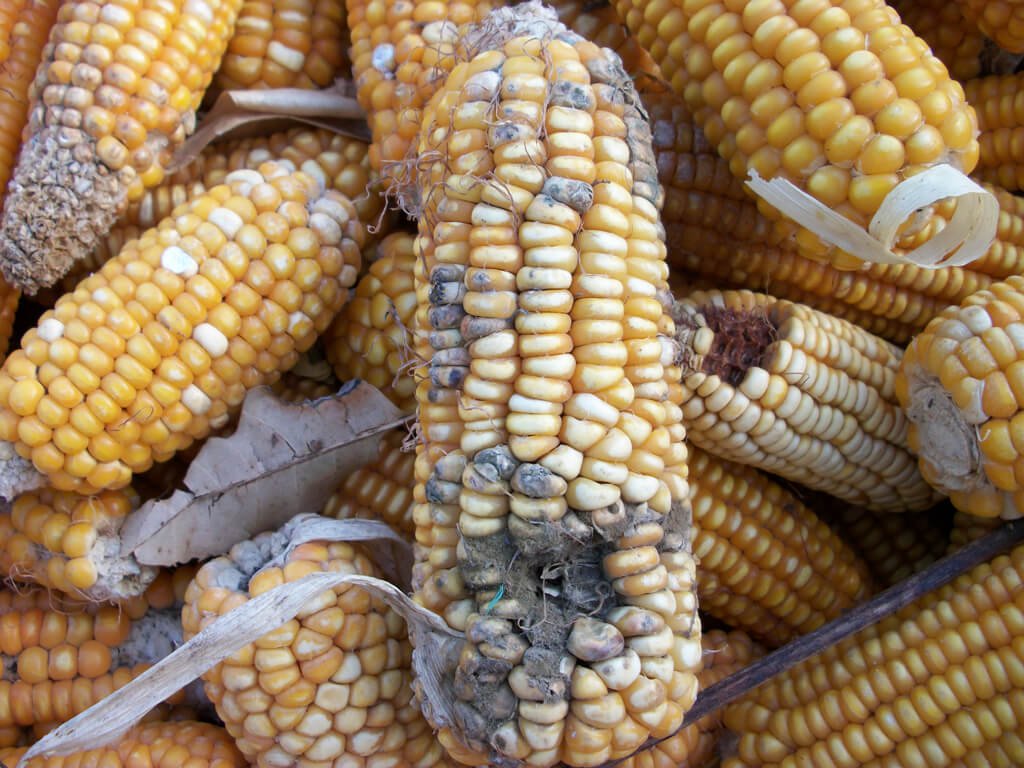
Corn with mycotoxin


Mycotoxins:

     Let’s talk a minute about Grains and their toxicity. Mycotoxins are mold and a huge concern often found in foods like corn, corn meal, peas, millet, nuts, and other grains and types of food. There are 3 main mycotoxins that the FDA has established rules for the following 3, but they are not the only mycotoxins of concern:

  • Aflatoxins:

  • Fumonosin:   

  • Deoxynivalenol  

     Mycotoxins can cause lethargy, anorexia, jaundice, intravascular coagulation, liver damage, weight loss, dehydration, renal and hepatic damage, gastrointestinal dysfunction and death.


Ingredients:

     Most pet food/feed is formulated without oversight by the FDA or even the AAFCO. The laws that are supposed to protect our pets are often ignored, broken, unenforced or completely non existent. Don’t be fooled by “voluntary” recalls. Those recalls are an “after the fact” and often the result of an animal getting sick or dying due to something in their food. Let’s look at some of the ingredients found in pet foods.  

  • Wheat: One of the top allergens in pet food, may contain mycotoxins, can contribute to canine obesity  

  • Corn: Totally useless. As discussed above, neither cats or dogs have the ability to process it and covert it to useable energy in it’s raw state, and it has no nutrients after being cooked at high temps. May contain mycotoxins  

  • Corn Gluten Meal: Even worse than corn. Patented as a weed killer in 1991. May include mycotoxins  

  • By-Product-Meal: Bones, blood, intestines, lungs, ligaments, heads, feathers, beaks, feet, hooves, etc.. Can be anything left over from processing, Not fit for human consumption. Most of these are things a cat or dog in the wild wouldn’t eat. 

  • Soy: Considered a Protein. However it’s totally useless for the obligate carnivore and can cause allergies and cancer  

  • Brewers Rice: Broken rice shells containing no nutrients 

  • Egg Product: Eggshells (not easily digestible), may contain rancid or spoiled eggs not fit for human consumption, may contain salmonella,  

  • Sugar: Completely useless addition of empty calories. Cats can’t even taste sweet things  

  • Peas/Pea Fiber/Pea Meal/Legumes/Lentils: May contain mycotoxins, may cause heart disease 

  • Potatoes: May cause heart disease 

  • Cellulose: Sawdust, floor sweepings, totally useless 

  • Carrots: Hard for cats to digest, no useable nutrients after cooking at high temps.  

  • Cracked Barley: Grain, may contain mycotoxins 

  • Garlic/Garlic Oil/Garlic Extract/Garlic Powder: Toxic to cats especially  

  • Oats/Oat Bran/Oat Meal/Oat Groat: Grain, may contain mycotoxins  

  • Chicken Meal/Fish Meal/Lamb Meal/Beef Meal: All Meals are the leftovers after processing and Not fit for human consumption. May contain parts from animals killed by means other than slaughter, such as road kill, illness, poisoning, natural disaster deaths (such as drowning), phenobarbital, culling, etc.  

  • White Fish/Ocean Whitefish: May be any number of fish

  • Cranberries: Typically not enough present to have actual health benefits 

  • Whey: Milk protein, used in lower grade foods, possible allergen, especially for cats 

  • Whole Eggs: Contains the shells which are not easily digestible 

  • Celery: Unnecessary, not easily digestible 

  • Lamb: Lamb meat is filled with water and therefore not as high in protein as other meats 

  • Beef: Natural source of Glucosamine (will define and expound on in future post) High in “water weight” (will expound in future post) 

  • Spinach: Unnecessary, not easily digested 

  • Basil: Member of the mint family, safe but unnecessary  

  • Blueberries: Not enough present to be beneficial, unnecessary 

  • Veal: Alternative to beef 

  • Beef Liver: Natural source of iron and flavor. However, in large quantities can be toxic. Best as a secondary ingredient  

  • Soybeans/Soybean Meal: Can NOT be digested by dogs and can cause bloating and death

  • Soybean Oil: Source of fat and good for coat, safe for dogs and cats

  • Ginger: Aids in digestion if listed high on label  

  • Carrot Powder: Cheap source of fiber  

  • Ground Flax Seed: May be lacking in fatty acids  

  • Sunflower Oil (preserved with mixed tocopherols <expounded on in future post>): Cheap source of fat  

  • Sweet Potatoes/Yams: Alternative to regular potatoes 

  • Green Tea: Not enough to have any health benefits unless listed in the top 5 ingredients  

  • Wild Rice: Good alternative to white rice 

  • Dried Kelp: Accepted industry source of iodine 

  • Egg Noodles: Unnecessary, source or carbohydrates 

  • Rabbit: Great alternative Meat/protein source  

  • Duck: Great alternative meat/protein source, Less water weight than chicken 

  • Shrimp: Source of protein  

  • Cod: Alternative source of protein 

  • Catfish: Alternative source of protein and fatty acids 

  • Venison Meal: Alternative source of protein, in concentrated form, more protein availability than standard meats 

Raena bathes atop the liberty cat tree


     I realize this is a lot of information, but we haven’t even scratched the surface, so to speak. Most herbs listed on labels and found in pet food are useless and should be left out. There’s a lot of “gimmicky” ingredients these days and gimmicky names to boot. When shopping for our pet’s food, we need to remember to pay no attention to the photos on the packaging, as they’re not a true representation of what’s actually inside. Dry kibble is worse than canned or wet food in most respects since any natural nutrients have been cooked out of their original sources. But, this mini-series isn’t about making you choose one type of food or even one food over another. It’s merely to help you be better equipped at understanding what you’re buying and feeding your furry family member. We will be defining and explaining more of the terminology and ingredients in future posts, so if you have specific questions, please let us know. I’m going to turn it back over to Dezi to close us out. 


Dezi lays atop the cat tree selfie


Fanks mommy. Lots of big words and stuff us kitties don’t unnerstand ‘bout what goes on our plates. Anyways, remember, you can ketch up on any post you may have missed by clickin’ Training Tips and Everything Feline. We got a lot of great questions after Pt. 1 of Pet Food Ingredients, so if you have any just let us know in the comments below or send us an email. We purromiss, we will be answering them all. This is a huge topic and we’d rather take our time and cover it properly than to mislead you further. Other than the sources listed below, mommy also used her common sense, past experience as a V-E-T tech and information she got from some local V-E-Ts via chat.


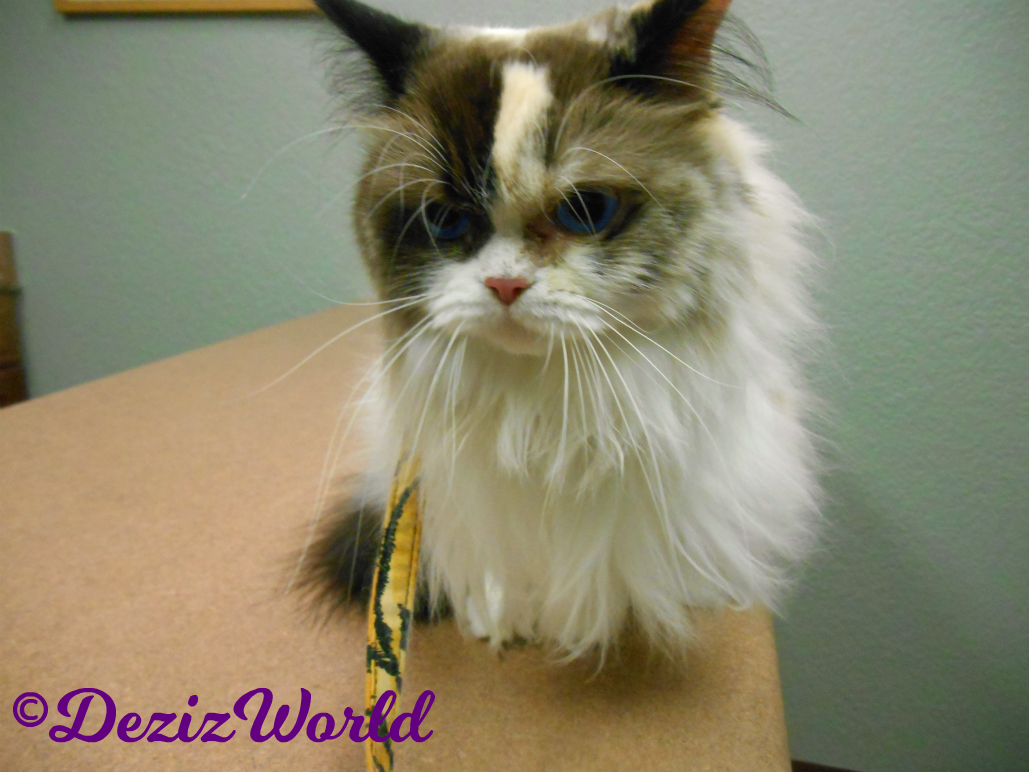
Raena sits on table at vet-blooperI’s look purretty ruff, so we call this a blooper. MOL


Due to the holidays and Raena’s upcomin’ surgery, this will be our last Service Cat posty fur the year, but don’t worry, we’ll be pickin’ up right where we left off next year (a few months). We’re also linkin’ up today with Comedy Plus fur Feline Furiday. And, it’s also Blooper time with our pals the Cuddlywumps


Till the next time……………………………………………Be Blest!!!


Luv and Hugs and Kitty Kisses


Deztinee and RaenaBelle 


Sources:
mycotoxins.info
petfoodindustry.com
Vetinfo.com
Truthaboutpetfood.com
Petmd.com
petsnmore.org
ivcjournal.com
ncbi.nlm.nh.gov

Service Cats: The Stoic Cat

Animal Pain And Suffering Often Go Unnoticed

Dezi laying in cat tree in new harness


MeOW  Welcome to Service Cats and Everything Feline on Furidays. Each week we tackle questions and topics you’ve suggested. If you’ve missed any posts in this series or want to re-read one or more, you can always find them on our Training Tips and Everything Feline page. If you have questions or topic suggestions, purrlease leave them in the comments below or send us an email via our Contact page. Last week we started a mini-series on Pet Food Ingredients and what you need to know about the food you’re buying and feeding your pets. You can read it here. It’s unfortunate that this has to be such a confusing topic and that money and not the health of animals are what drive the pet food industry. That being said, mommy’s had a very heavy heart this week and is hijackin’ today’s post fur another very ‘purrtant subject. Me will be back next week with Pt. 2 of our Pet Food Ingredients mini-series.


Please understand, this is not a pity me post. The point of this post is to hopefully help you understand how amazing and miraculous our furry family members are.


Raena sits in tiger kitty holster cat harness


     Hello everyone, mommy A here. As most of you know by now, Raena’s annual medical appointment didn’t turn out quite like we had planned. Altho’ I am certainly happy that we finally have an answer as to why her eyes have been bothering her for her entire life; I’m furious it took so long. After all, I’ve taken her in several times a year every year trying to find out why they were so irritated and trying to find a way to help her. Yes, I know it’s not my fault and I’ve done the best I could with the information I had. However, that doesn’t mean I don’t blame myself to some extent. That’s on me, but most of you loving pet parents totally understand where I’m coming from.


     Raena’s diagnosis is that she has a mild case of Entropion, which can be successfully treated with surgery. That means her lower lids fold inward causing the small hairs to scratch her eyes constantly. This is a very painful condition. I ought to know. I had an eyelash embed in my eyelid once and had to have surgery to remove it. Before it was diagnosed however, the pain was almost unbearable. You can’t stop blinking, which causes the cornea/eyeball to be scratched over and over again and the eyes to water. Wiping the discharge hurts even more, because the hairs are pushed into the cornea even more. I had only 1 eyelash scratching mine and it was found within 2 weeks of it embedding in the lid. But those 2 weeks were miserable. It affected my mood, and everything I did. I could barely see out of the affected eye, and everything hurt, sunshine, lights, sleeping, blinking, etc..


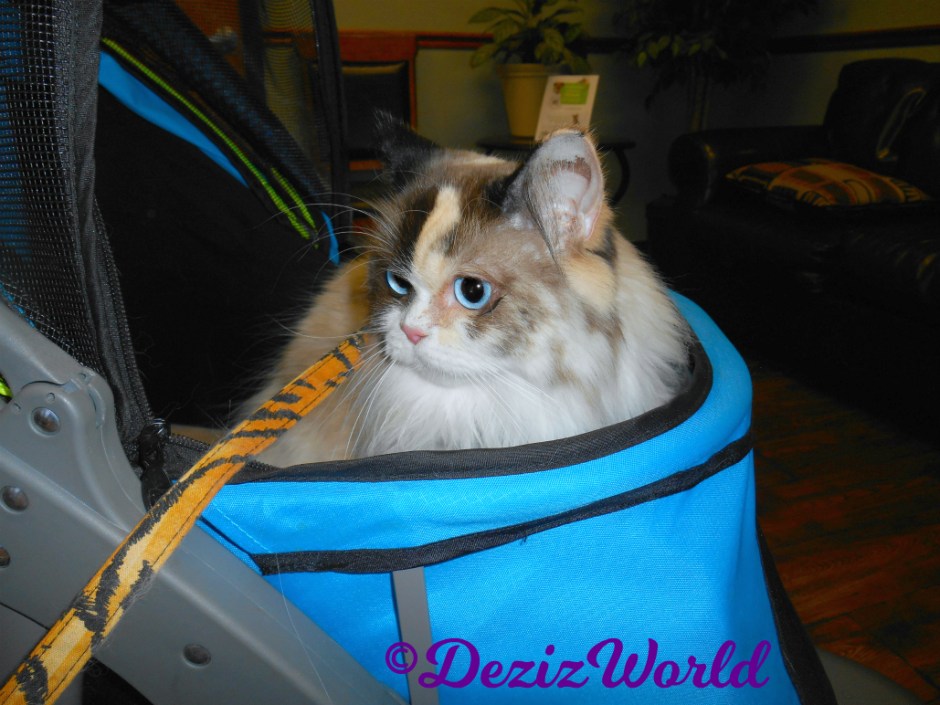
Raena in stroller


     Another issue Raena has is a mild case of gingivitis and plaque build up. We won’t know until she has a dental if there are other issues going on such as, tooth resorption or some other periodontal disease. Having been through my own dental issues recently, I know what that kind of pain can be like and how it can affect everything in your life. Both of these conditions are fairly common in both cats and dogs, and can and should be treated. 


     Basically, Raena has been in enormous pain her entire life. Why is that so remarkable you ask? Well, I love my girls more than anything in this world, and over the last few days I thought about how much they love me. And then I thought about all the furry family members out there, including the ones who are being abused by their not so loving families. Whether you believe our animals love us because we’re their source for food or because they choose too is irrelevant because the truth is, even when they’re in enormous pain and discomfort, they will still love us and try to please us.


Raena lays in mommy's lap


     Over the last 2 1/2 years of Raena’s life, she has endured Service Cat Training while living in constant pain. Never once did she get angry or refuse to train. As always, she’s willing to please and puts forth every effort to complete whatever task she’s given. Even on days when her eyes were so gunky she could barely open them, she was always right beside me doing whatever she could to make my life easier. She’s always there for a snuggle and purr. There have been many days when she couldn’t open one of her eyes at all, and still, she was ever present to alert or massage or whatever might be needed.


     It makes me so angry to think about, but an abused animal will show love and devotion to their abuser, the person who hurts them. With halloween approaching my thoughts race to those animals who through no fault of their own may be tortured or killed just because. My thoughts go to those animals who have been rescued from perilous situations and regardless of their physical pain still have the capacity to love and try to please us humans.


Dezi lays on scratcher with mouth openBe our voice. Take away our pain.


     Animals are so good at hiding their pain, we humans often take their medical conditions for granted. I’ll be honest and tell you that I feel horrible and disgusting for making Raena continue to suffer so that we can try to raise the money needed for her surgery; because when it happened to me, I wanted it fixed ASAP. I guess the point I’m trying to make today, is to stop thinking of these “common” ailments as trivial. The animal is in an enormous amount of pain. If it were you suffering, you wouldn’t want to wait and see, or put off procedures for weeks, months or years. If you suspect an animal is being abused, don’t keep quiet, please be their voice. And, keep your pets inside during the halloween holidays. You can read our halloween safety tips here. Remember, animals hide their pain, so if you’re given pain meds for them, give them as prescribed, don’t rely on your animals to tell you they need them. Didn’t they suffer enough before the procedure?


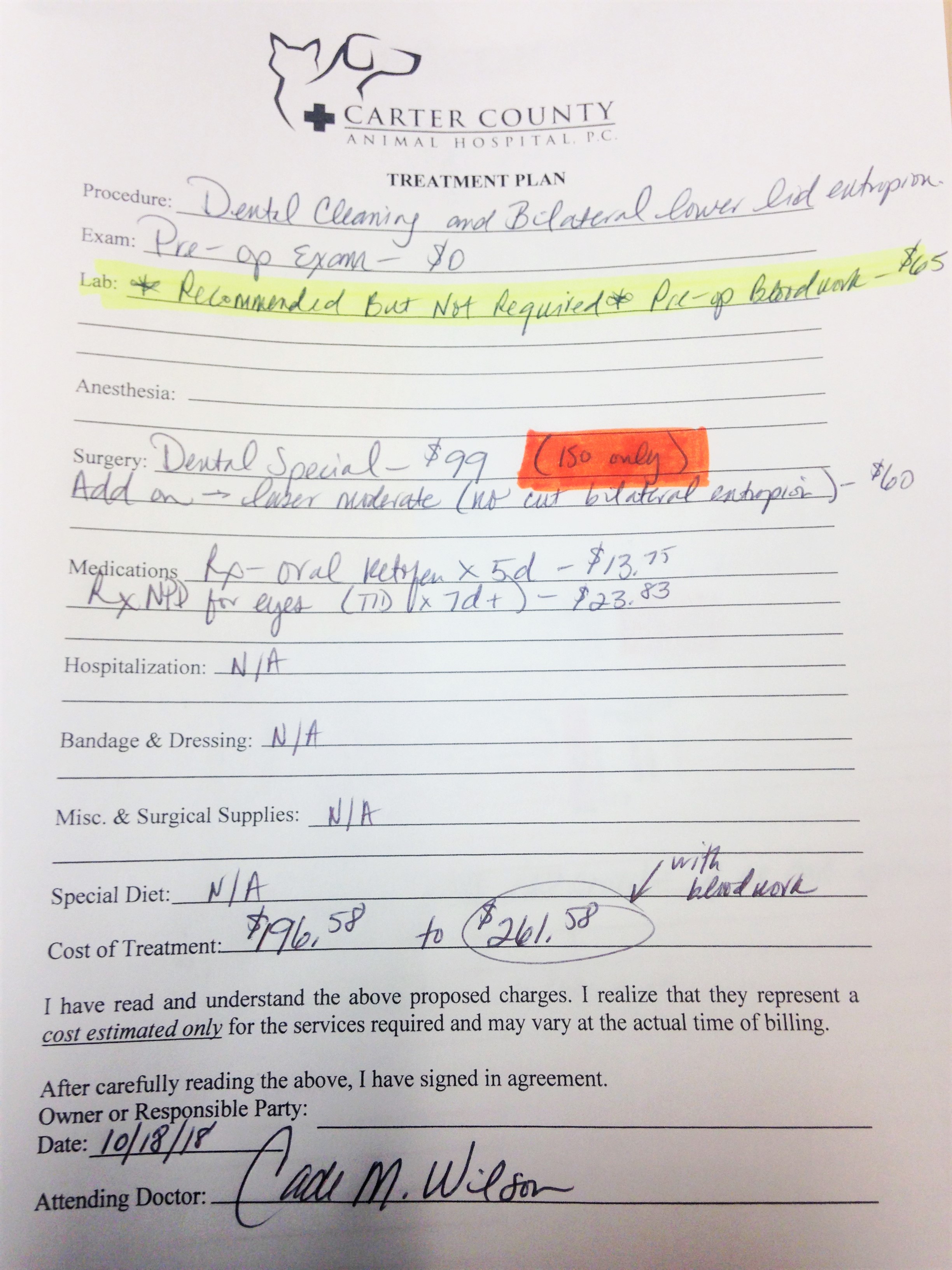
     Part of the reason Raena has these problems are genetic. Backyard breeders care more about the money than they do the animal’s health. But even respectable breeders can sometimes be at fault. Attempts to breed more desirable traits or appearances often come with a cost to the animal’s overall health. Yes, we need help paying for Raena’s surgery and dental. As promised, below you’ll find the vet’s estimate.


Raena's surgical estimate for entropion and dental


     Because Raena has a semi “smashed” face, blood work really isn’t optional, so we need the whole $261.58. This total doesn’t include any possible extractions, and we certainly hope and pray that she doesn’t require any. We also ask that you keep her in your prayers. Anytime anesthesia is used, there are risks. Certainly, those risks increase  for animals with the shorter noses (smashed faces). Her appointment is November 15th. However, if we get the money before then, we’ll schedule her in sooner. I don’t want her to suffer any longer than she has too. You can help by donating to our paypal at: lexi.dezi@yahoo.com. If you’d prefer, you can donate directly to our account by calling Carter County Animal Hospital at: 580-226-1001. The account is under Audra High. Please, hug your fur babies a little longer and tell them how much you love and appreciate them. And if you suspect they may be ill or having problems, see the vet immediately. Just because they don’t act like they’re in pain, doesn’t mean they aren’t. Don’t let them suffer.


Fank you mommy. Pain and Suffering come in many forms, and just cuz ya’ don’t see it doesn’t mean it ain’t there. We’re blest to have a mommy who cares and tries to do whatever she can to help us and make sure we stay healthy. We really ‘purreciate all of you and fank you fur your help. Me also wants to remind you that you can ketch up on any post in our Service Cats series by clickin’ the links on our Training Tips and Everything Feline page. Don’t furget to ask your questions and post topic suggestions by leaving a comment below or sending us an email via our Contact page. Fanks fur your patience and allowing us to deviate today. This is a topic that deserved attention. Me will be back next week with more food ingredients you need to know ‘bout.


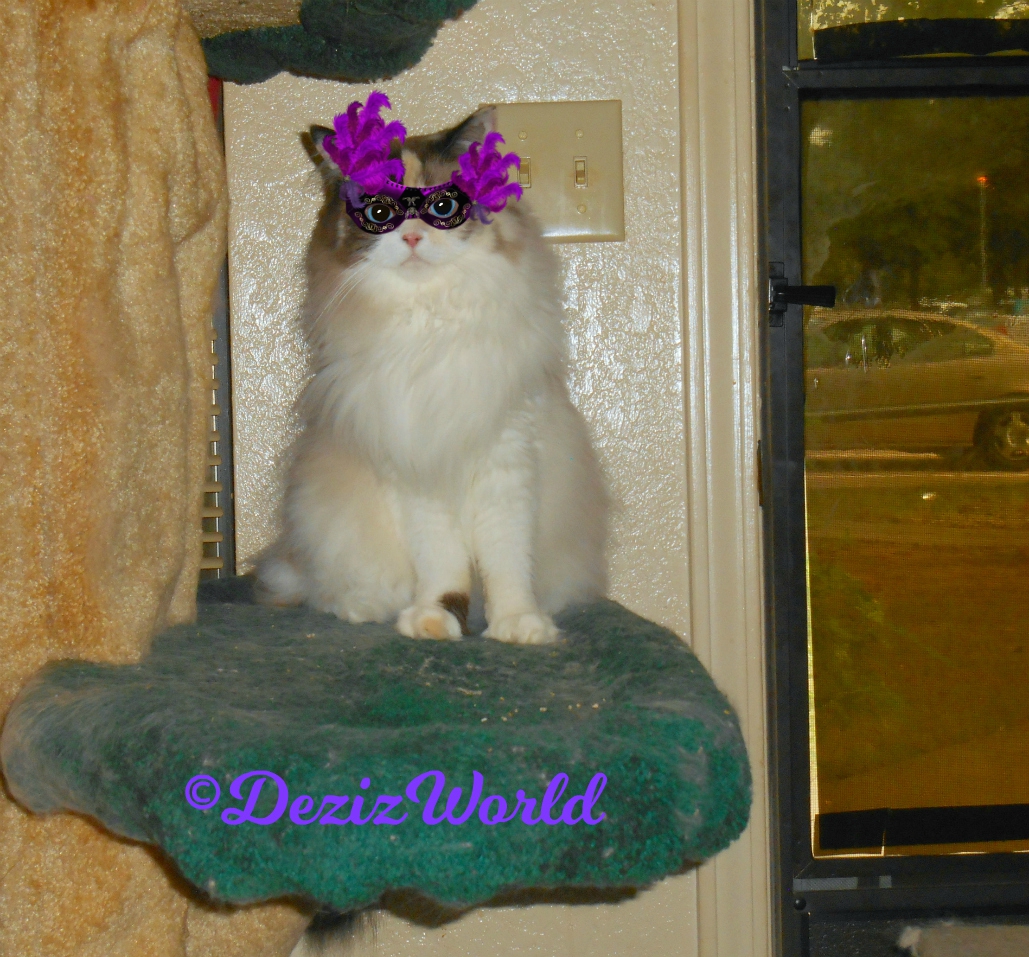
Raena sits on cat tree with her carnival mask onPut on your mask and get ready fur sissy’s pawrty!!!


And don’t furget, Raena’s throwin’ me a Venetian/Rio Carnival Themed Birthday/Gotchaday pawrty on Wednesday November 14, 2018. Put on your masks and send your fotos to our email to be included in the festivities. We’re gonna have a contest fur bestest mask/costume. We’re also joinin’ Comdey plus fur Feline Furiday today. 


Do you know what signs to look for when your pet is in pain?


Till the next time………………………………………………..Be Blest!!!


Dezi: Vibrant Blue 

Mommy A: Black


Luv and Hugs and Kitty Kisses
 

Deztinee and RaenaBelle